食材與季節 · 2026年8月10日

Hamo: Kyoto's Summer Pike Conger and the Bone-Cutting Knife

撰文 SHOKU NOREN Team · 事實最後查核 August 2026 · 查核方式

重點Hamo is the daggertooth pike conger, Kyoto's defining summer fish. Its first season opens around June and runs through high summer, with a second window in autumn. Fine intramuscular bones make honekiri — scoring the flesh without cutting the skin — essential. Eat it as hamo otoshi with plum sauce in Kyoto and Osaka.

Hamo — the daggertooth pike conger, Muraenesox cinereus — is the fish that tells a diner in Kyoto that it is summer. It is a long, muscular sea eel with several thousand fine bones threaded through its flesh, and it cannot be eaten until those bones are dealt with. The answer is honekiri: a specialist scores the fillet at roughly millimetre intervals with a heavy knife, cutting through every bone but stopping at the skin. Blanched and chilled, the scored flesh curls open into pale petals and is eaten with a sharp umeboshi plum sauce. Today, in the second week of August, the fish is squarely in season — though the festival that made it famous has already passed for the year.

What hamo is

Hamo is an Indo-West Pacific eel, caught in Japan mainly in the Seto Inland Sea, Osaka Bay and the waters around Awaji Island, Tokushima and Kyushu. It grows well past a metre, and reaches the kitchen opened along the belly and filleted flat.

The flesh is white, lean and firm, with a clean sweetness rather than the richness of unagi. Two things distinguish it. The first is the bone structure: hamo carries an unusual density of fine intramuscular bones, hard and needle-like, set through the fillet in a way that makes hand-picking impractical. The second is its vitality — hamo survives out of water far longer than most sea fish, and that stubbornness, more than flavour, made it a Kyoto ingredient.

When the season runs

Hamo has two seasons, and travellers should know which one they are in.

The first opens around June and carries through high summer. Fish taken before spawning have fed heavily and the flesh is at its best; the Japanese phrase has it that hamo drinks the rainy season's water and turns delicious. This is the window Kyoto builds its summer menus around, and it is where we are now, in August 2026.

The second comes in autumn, roughly October and November, when fish feeding up for winter carry more fat. That version travels under several names — nagori hamo, the lingering hamo, and matsutake hamo, for the pine mushroom it is paired with. The classic autumn dish is dobin mushi, a clear broth steamed and served in a small teapot with hamo and matsutake together; our matsutake season guide covers that side of the calendar, and the broader rhythm is set out in our seasonal sushi calendar. Hamo shares the early-summer stage with ayu, the river sweetfish.

Honekiri: the cut that makes the fish edible

Honekiri — literally bone-cutting — is the technique that turns an inedible fish into a delicacy, and it is the reason hamo is a restaurant ingredient rather than a home one.

The fish is opened from the belly and the backbone removed, leaving the fine bones in place. The chef then draws a hamo-kiri bocho, a dedicated bone-cutting knife, down the fillet in a rapid sequence of cuts. The knife is unlike a yanagiba: taller in the blade and deliberately heavy, so that the weight of the steel does the cutting through hard bone rather than the arm. Each stroke must pass through every bone in its path and stop at the skin, which holds the fillet together.

The standard commonly cited in the trade is roughly 24 to 26 cuts per sun — the old Japanese unit of about 3 centimetres — without breaking the skin. Treat that as the traditional benchmark of a competent hand — quoted in cookbooks, knife shops and food writing — rather than a regulated measurement. What it describes is the tolerance: cuts a millimetre or so apart, at speed, on a fillet that must arrive whole. Japanese accounts routinely put the training at close to a decade before a cook is trusted with hamo in a serious kitchen. At a counter in summer you hear the work before you see the dish, a fast even rhythm of blade against board that stops abruptly when the fillet is done.

How hamo is served

The canonical preparation is hamo otoshi, also called yubiki: the scored fillet is cut into portions and dropped into boiling water, whereupon the flesh contracts and blooms open like a white flower. Hence the alternative name botan hamo, peony hamo. It is chilled in ice water and served cold with bainiku, a salted-plum paste, or with mustard vinegar miso. The plum's acidity against the fish's faint sweetness is the whole point of the dish.

From there the repertoire opens out. Hamo shabu swirls the fillets briefly in dashi with seasonal vegetables. Hamo no yakimono — grilled, often glazed — brings out a rounder flavour. Kyoto also eats it in clear soups, as hamo sushi and as tempura. Nothing is wasted: Osaka kitchens use the flesh for one course, the bones for dashi, the roe and liver for a simmered dish.

Why Kyoto, and why the Gion connection

Kyoto is inland. Before refrigeration, almost no sea fish reached the old capital in edible condition; what did arrive came salted, dried or half-spoiled. Hamo was the exception. Porters carried it up from the Seto Inland Sea and Osaka Bay in boxes and buckets of seawater, and its hardiness meant it arrived alive. A city with no coast built a thousand-year appetite around the one sea creature tough enough to make the journey — and then developed the knife technique required to eat it.

That is also why hamo is bound to the Gion Matsuri. The festival runs through July, with the great Yamahoko Junko float processions on 17 and 24 July, and it coincides so exactly with the first hamo season that Kyoto people call it the hamo festival. Note the timing: in August the festival is over for the year. The fish is not.

Where to eat it

Hamo is a kaiseki and kappo ingredient: to eat it well, book a house that cooks the season rather than a menu.

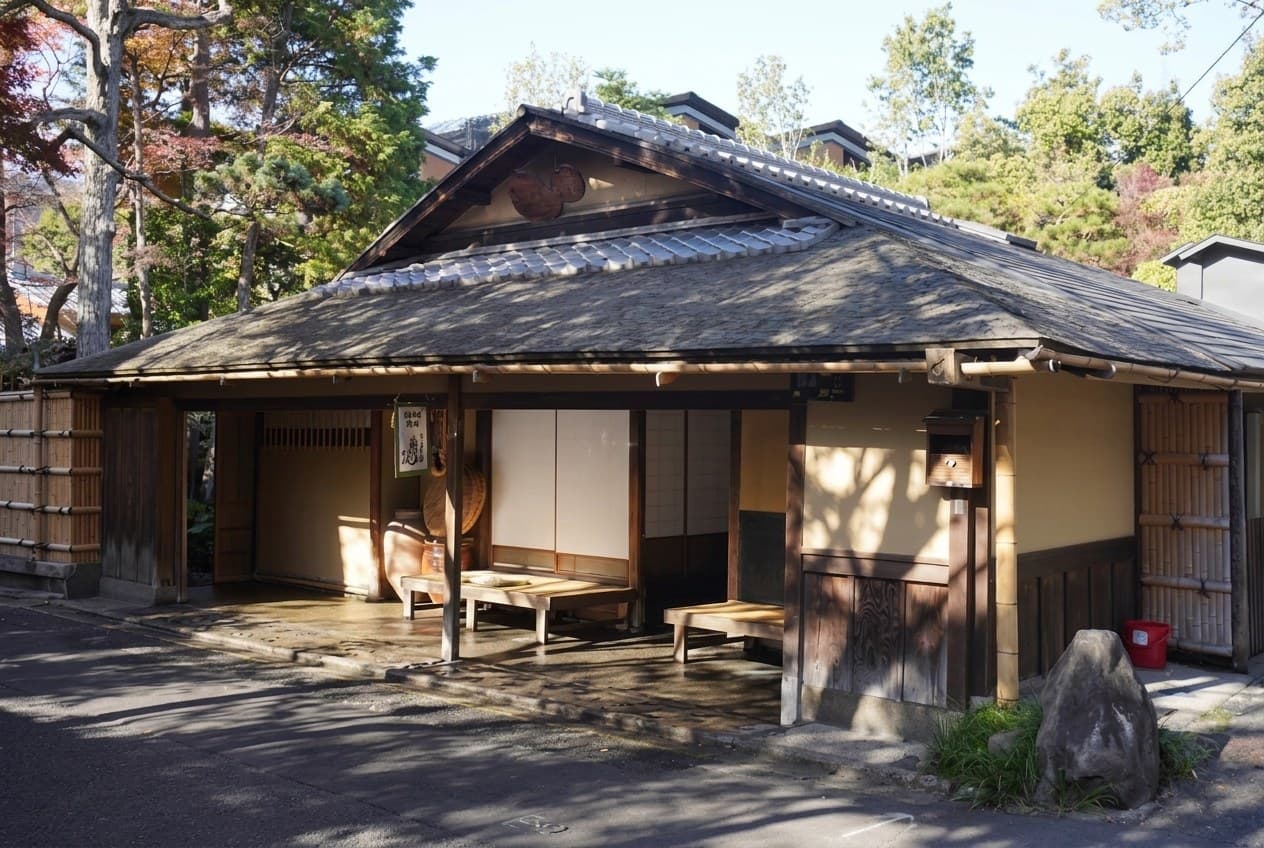
In Kyoto, Hyotei is the deepest end of that tradition — a teahouse at the gate of Nanzenji that became a restaurant in 1837, with some four centuries of continuity behind it. It held three stars in the Michelin Guide Kyoto-Osaka for many years from 2009. Its summer fixture is the morning rice gruel, served alongside the seasonal kaiseki. Booking is by phone and largely in Japanese, which is the subject of our guide to booking Hyotei; for alternatives, see the best kaiseki in Kyoto you can actually book and our 48 hours of eating in Kyoto.

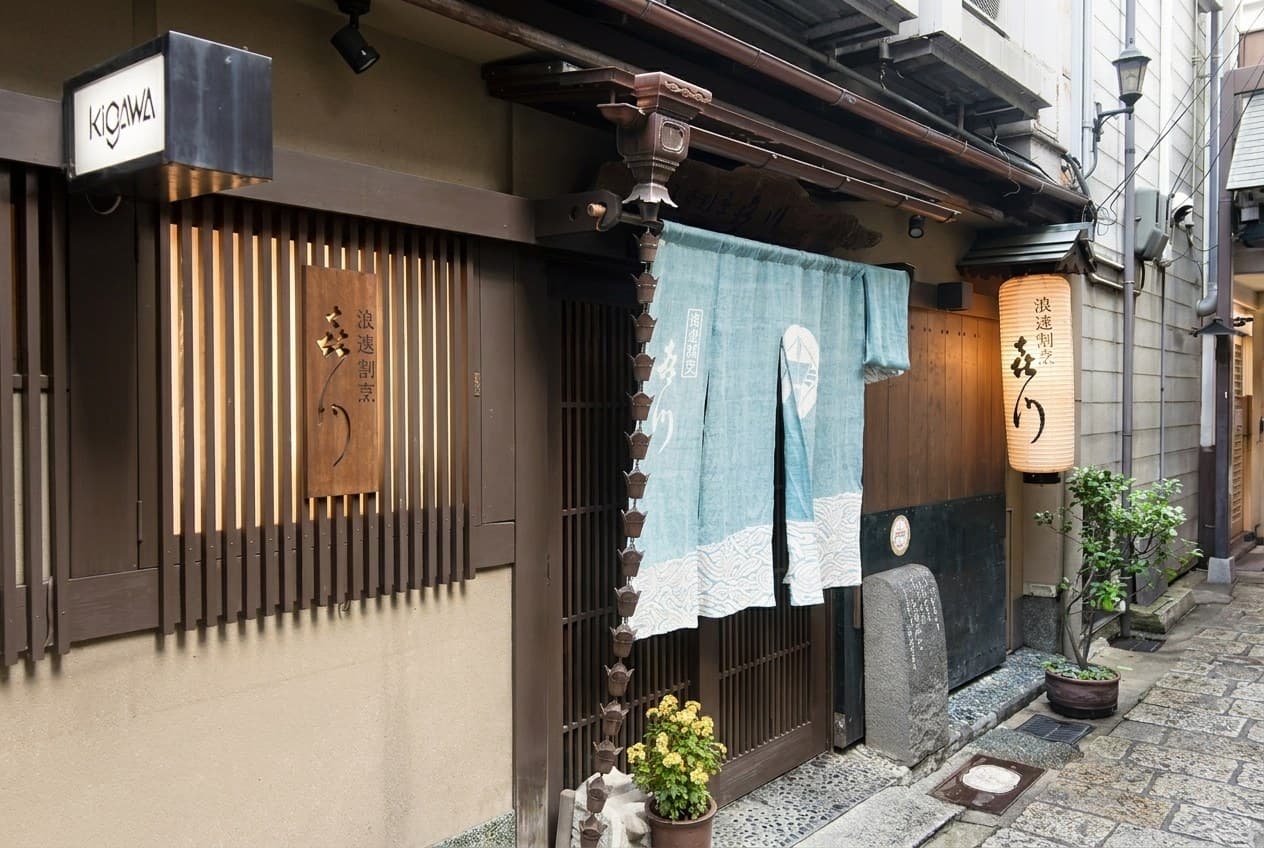
In Osaka — closer to the boats, and arguably the fish's other home — Naniwa Kappo Kigawa was opened in 1965 by Shuzo Ueno and has stood in the lanes of Hozenji Yokocho since 1977 — a 23-seat counter of Naniwa kappo, now run by his son Osamu. Hamo has long been part of its early-summer repertoire, cooked in the Osaka manner: the fish used end to end, nothing discarded.

Both book by phone in Japanese, and neither appears on the international platforms. If you want a seat during the season, our reservation desk can make the call.

常見問題

What is hamo?

Hamo is the daggertooth pike conger, Muraenesox cinereus, a long sea eel caught in the Seto Inland Sea, Osaka Bay and nearby waters. Its white flesh is lean, firm and cleanly sweet, but it is threaded with thousands of fine intramuscular bones, so it can only be eaten after the knife technique called honekiri.

When is hamo season in Kyoto?

There are two windows. The first opens around June and runs through high summer, coinciding with the Gion Matsuri in July, and August is still firmly within it. The second comes in autumn, roughly October and November, when fatter fish are known as nagori hamo or matsutake hamo and paired with pine mushrooms in dobin mushi.

What is honekiri bone cutting?

Honekiri is the practice of scoring a hamo fillet with a heavy dedicated knife, the hamo-kiri bocho, cutting through every fine bone while leaving the skin intact. The figure traditionally cited in the trade is roughly 24 to 26 cuts per sun, about 3 centimetres. It is a benchmark of skill rather than a regulated standard, and Japanese accounts put the training at close to a decade.

Where can I eat hamo?

In kaiseki houses in Kyoto and kappo counters in Osaka during the season. Hyotei in Kyoto and Naniwa Kappo Kigawa in Osaka both cook to the season and both book by phone in Japanese; our reservation desk can make the call.

來自精選收錄

要交給我們處理嗎? 我們的東京團隊每天預約只接電話的餐廳——日語電話線、與店家的關係,以及App無法為您進行的開放日爭奪。訂不到,不收費。
預約訂位

季節快訊

螃蟹解禁、河豚開季——只在值得專程飛來的季節開幕時,寄出一封短信。絕不打擾,隨時可取消。

訂不到,不收費預約訂位
Hamo: Kyoto's Summer Pike Conger and the Bone-Cutting Knife — Shoku Noren