Eat certified Kobe beef where the supply is deepest — Kobe city, in Hyogo Prefecture, where teppanyaki counters sear it to order — or in Tokyo, where a small number of specialist steakhouses carry the genuine article. "Wagyu" is the broad category; "Kobe beef" is a single, tightly regulated brand within it. Knowing that distinction is the difference between an informed meal and an expensive assumption.
What Kobe beef actually is
Kobe beef is wagyu from the Tajima strain of Japanese Black cattle, born and raised in Hyogo Prefecture, and certified under rules set by the Kobe Beef Marketing and Distribution Promotion Association. It is not a grade, a cooking style, or a loose descriptor — it is a specific, traceable designation.
To carry the name, a carcass must clear defined thresholds. The marbling score — the Beef Marbling Standard, or BMS — must reach level 6 or above. The meat quality score must be 4 or 5, and the yield grade must be A or B. Carcass weight is capped, and the animal must be a heifer or a castrated male processed at authorized slaughterhouses within the prefecture. Only around 3,000 head qualify as Kobe in a typical year, and every certified animal can be traced through a ten-digit identification number, with certified beef carrying an official seal. This is why "A5 Kobe" appears so often on menus: A5 is the top combination of yield and quality grade, though the Kobe standard itself admits A4 and B-yield beef that clears the marbling bar.
The practical takeaway for a traveler: the word alone means little. Certification, traceability, and the seal are what verify it.
Kobe, Matsusaka, Omi — and the rest of wagyu
Kobe is the best-known name abroad, but it is one of Japan's three historic wagyu brands, collectively called the Nihon Sandai Wagyu. The other two are worth understanding because they are genuine peers, not imitations.
Matsusaka beef comes from Mie Prefecture and is drawn, under its strictest classification, exclusively from cattle that have never calved. It is prized for the quality and sweetness of its fat. Omi beef, from Shiga Prefecture, is the oldest of the branded wagyu, with a history reaching back centuries; it tends toward a lighter, more elegant profile. Each brand sets its own regional and pedigree rules, so a fair comparison is brand-to-brand, not "Kobe versus wagyu" — Kobe is wagyu.
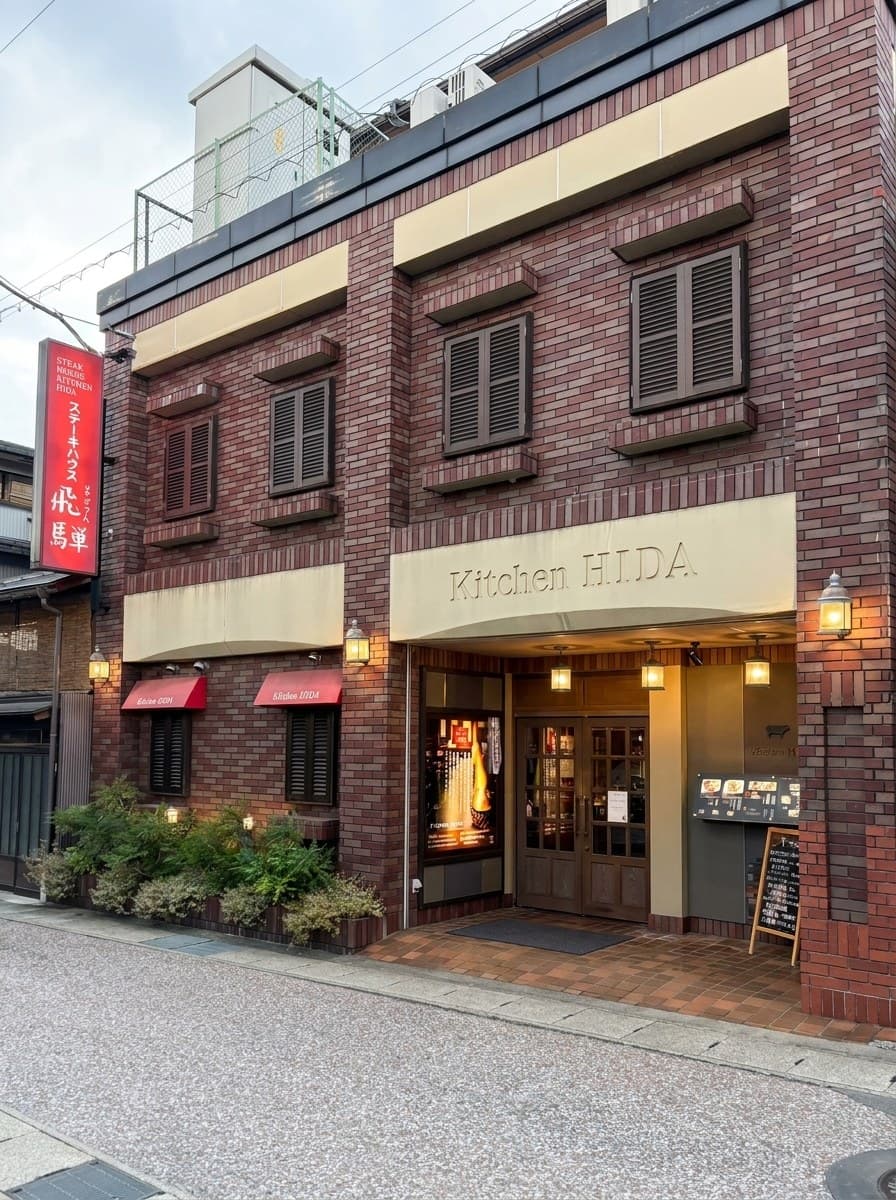
Beyond the big three sit dozens of regional brands. Hida beef, from Gifu Prefecture, is one of the most respected, and it anchors the dining rooms of Takayama in the northern Alps. If your route runs through that region, Kitchen Hida is a long-running house built around it — a useful reminder that superb wagyu is not confined to the famous three names.
How it is served
Three preparations dominate, and each frames the beef differently.
Teppanyaki is the most iconic setting: a chef cooks the steak on a flat iron griddle directly in front of you, controlling the sear, the rest, and the portioning of an intensely rich cut into a few restrained bites. In Kobe, this is the default way to eat the local beef, and the counter itself is part of the experience — Misono, a Kobe teppanyaki house, is one example of the format in its home city.
Sukiyaki and shabu-shabu move the beef into hot pots at the table. In sukiyaki, thin slices simmer in a sweet-savory broth of soy, sugar, and mirin; in shabu-shabu, they are swished briefly through hot stock. Both suit wagyu's marbling, because a short cook renders the fat without overwhelming the palate. You will also encounter it as steak, and occasionally as sashimi or sushi, though these are more specialized.
Because the fat content is so high, portions are deliberately small. A tasting of a few carefully cut pieces is the norm, and it is the right way to experience beef this rich. For how these formats fit into the wider landscape of Japanese dining, our guide to Japanese restaurant types is a useful orientation.
Where travelers actually eat it
Two cities carry the strongest case.
Kobe, in Hyogo Prefecture, is the source, and the district around Sannomiya Station holds the deepest concentration of certified specialists — teppanyaki counters, yakiniku grills where you cook over charcoal, and steak houses across a range of price points. Eating it here has a provenance logic: you are closest to the supply, and lunch sets often make the experience more accessible than dinner.
Tokyo is the other anchor. A limited number of dedicated steakhouses and specialist restaurants serve certified Kobe beef, several clustered in Ginza and Aoyama, and the best of them source with the same traceability you would expect at the origin. For visitors building an itinerary around the capital, this means you do not have to detour to Hyogo to eat verified Kobe beef — though the pilgrimage has its own appeal.
Wherever you book, ask two questions: is the beef certified Kobe with its identification number, and how is it being served. A reputable house answers both without hesitation.
A note on cost and planning
Kobe beef is expensive by design — the supply is capped, and certification is rigorous. Prices vary widely by preparation and by lunch versus dinner, so it helps to set expectations before you sit down; our overview of what fine dining in Japan costs frames the range. The counters and specialist rooms that serve the genuine article are also small, and the best seats move quickly, particularly in Kobe and central Tokyo.
If you would like a certified Kobe or regional-wagyu experience secured — the right house, the right format, on the right night — our reservation desk can arrange it and confirm the provenance before you arrive.