Tokyo’s oldest restaurants are not sushi counters. They are hot pot houses — single‑dish specialists that have simmered one animal in one shallow iron pan for two and three centuries, through the fires, the 1923 earthquake and the war, and will do it again this winter. Five survive in and around the city: anglerfish in Kanda, wild boar at Ryōgoku, loach in Asakusa, horse at the gate of the old Yoshiwara, beef in Yokohama. Each has a season, a euphemism, and a telephone line answered in Japanese.
Why the pots have flower names
Meat‑eating sat awkwardly with Buddhist custom for most of Japanese history, and prohibitions recurred to the end of the Edo period. The workaround was language. Boar became botan, the peony — thin slices fanned around a platter look like petals. Horse became sakura, cherry blossom, for the pink of the flesh. Venison became momiji, autumn maple, after a classical poem about a deer calling among the leaves. Boar was also sold outright as yama‑kujira, mountain whale, and eating it was excused as kusuri‑gui — meat taken as medicine against the cold. The shops licensed to trade in four‑legged meat were known collectively as momonjiya, from a word meaning roughly the hundred beasts. All that vocabulary is still printed on the menus. Our note on Edo‑period food culture sets out the world these houses came from.
Ankō — the anglerfish pot, Kanda
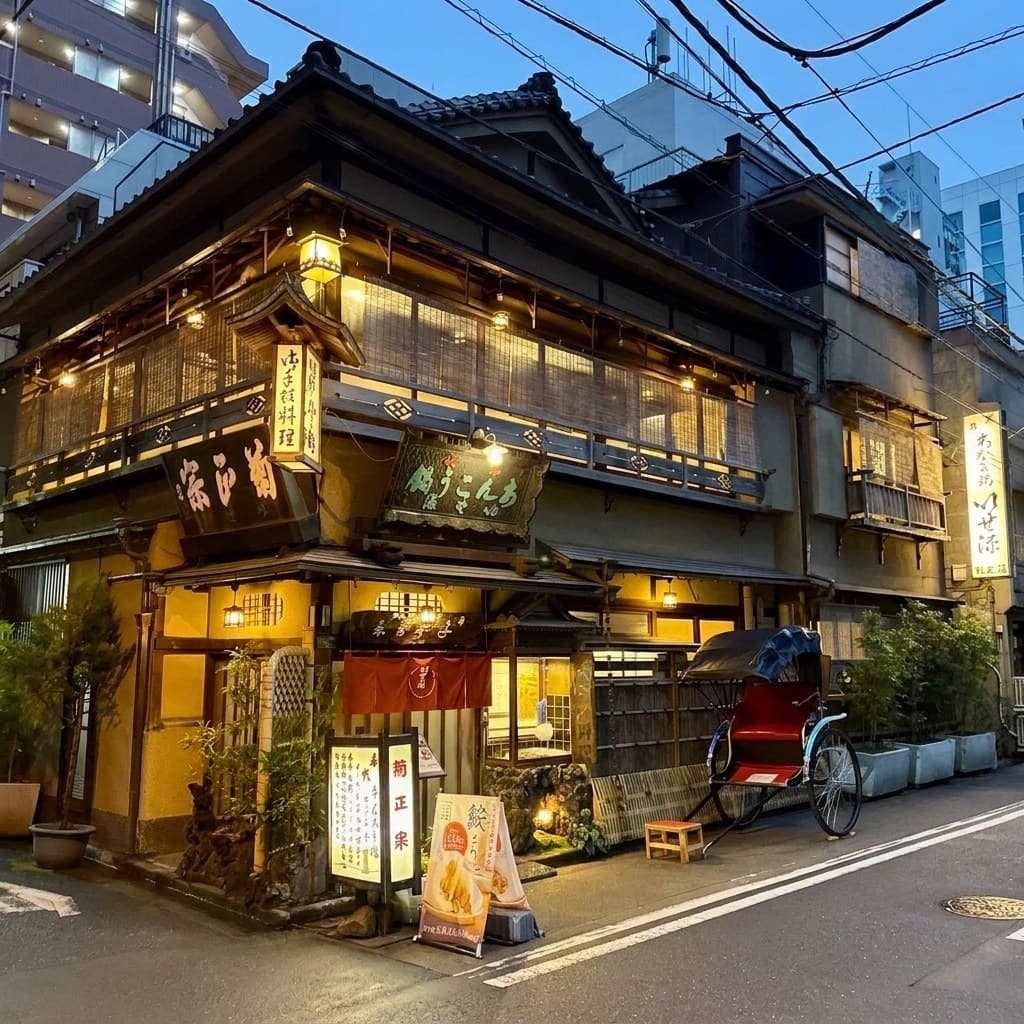
Isegen is the last anglerfish specialist left in Tokyo, and it did not begin that way. Tachikawa Shōzō opened a loach shop called Iseshō near Kyōbashi in 1830; the house later moved to Kanda, took the name Isegen from its second master, and served an assortment of pots until demand settled the question. By the Taishō era the fourth master had made it anglerfish and nothing else. The dark wooden building you eat in was rebuilt after the earthquake fires, escaped the wartime bombing, and now sits on Tokyo’s register of selected historic buildings.
Ankō is broken down by tsurushi‑giri, the hanging cut — the fish is too soft and slack for a board, so it is hung from a hook and butchered in the air, a method the house traces to a text of 1697. Almost nothing is discarded: Isegen names seven edible parts — flesh, skin, liver, jaw, fins, roe and stomach — and all of them go into a sweet‑soy broth, the liver most of all. A Japanese saying pairs anglerfish in the east with fugu in the west, and the two seasons overlap almost exactly. Two doors away, Botan has cooked chicken sukiyaki over live charcoal since 1897 — together, the best‑preserved corner of pre‑war dining in the city.
Botan — wild boar, Ryōgoku
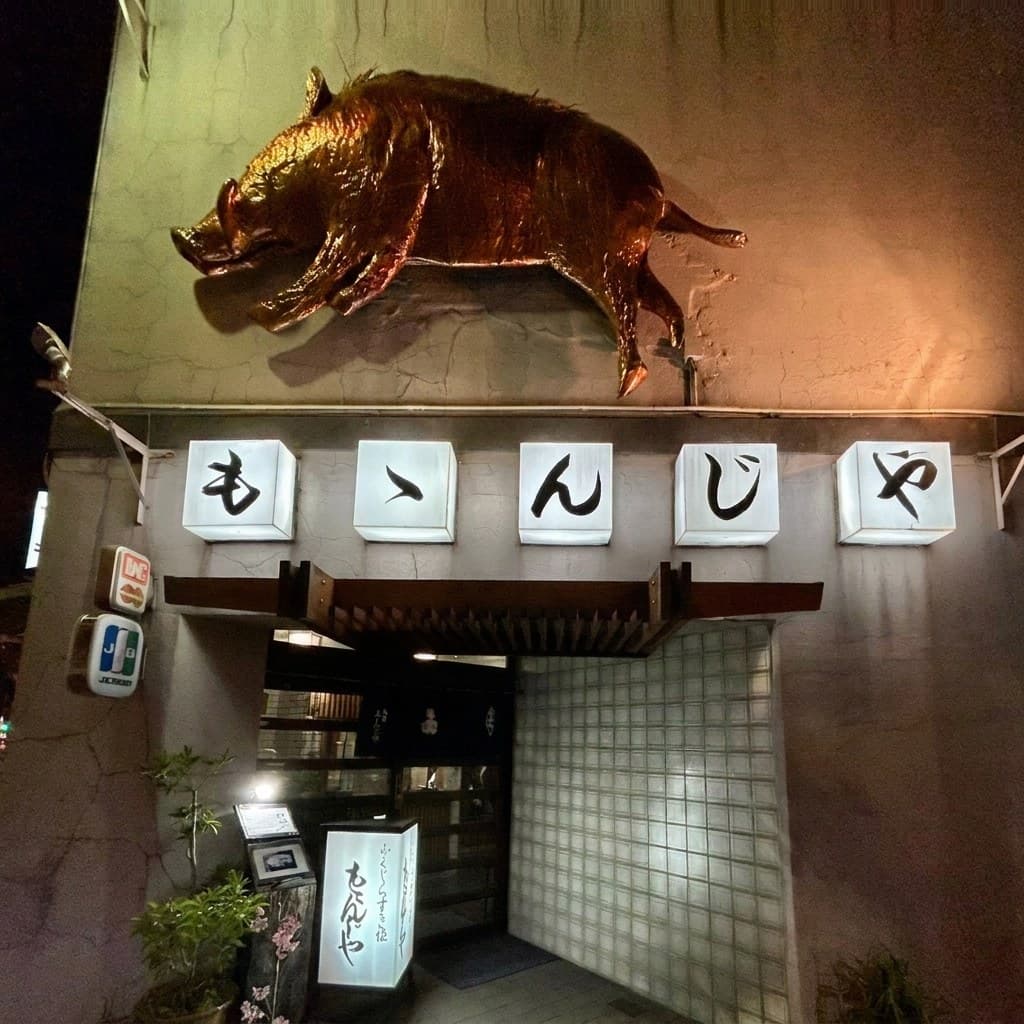
Momonjiya, a minute from Ryōgoku Station and the sumo stadium, was founded in 1718 and is now in its tenth generation. It began, tellingly, as a Chinese‑medicine shop that handled boar as materia medica — which is how it could legally sell what the city was not supposed to eat. A whole boar still hangs outside the door in season, and the house still trades under the old name.
The pot is thin‑sliced boar simmered in miso. Boar is leaner than pork and eats far cleaner than the word game suggests; winter animals carry an obvious sweetness. That is biology rather than romance, and it sets the calendar: the standard hunting season across Honshū runs 15 November to 15 February (some prefectures extend it for boar), and the best animals come early in it, fattened before the rut. Dinner only, 17:00 to 21:00, closed Sundays — and Wednesdays through the summer, when there is no boar worth serving. Most guests land at ¥8,000–12,000.
Dojō — the loach pan, Asakusa
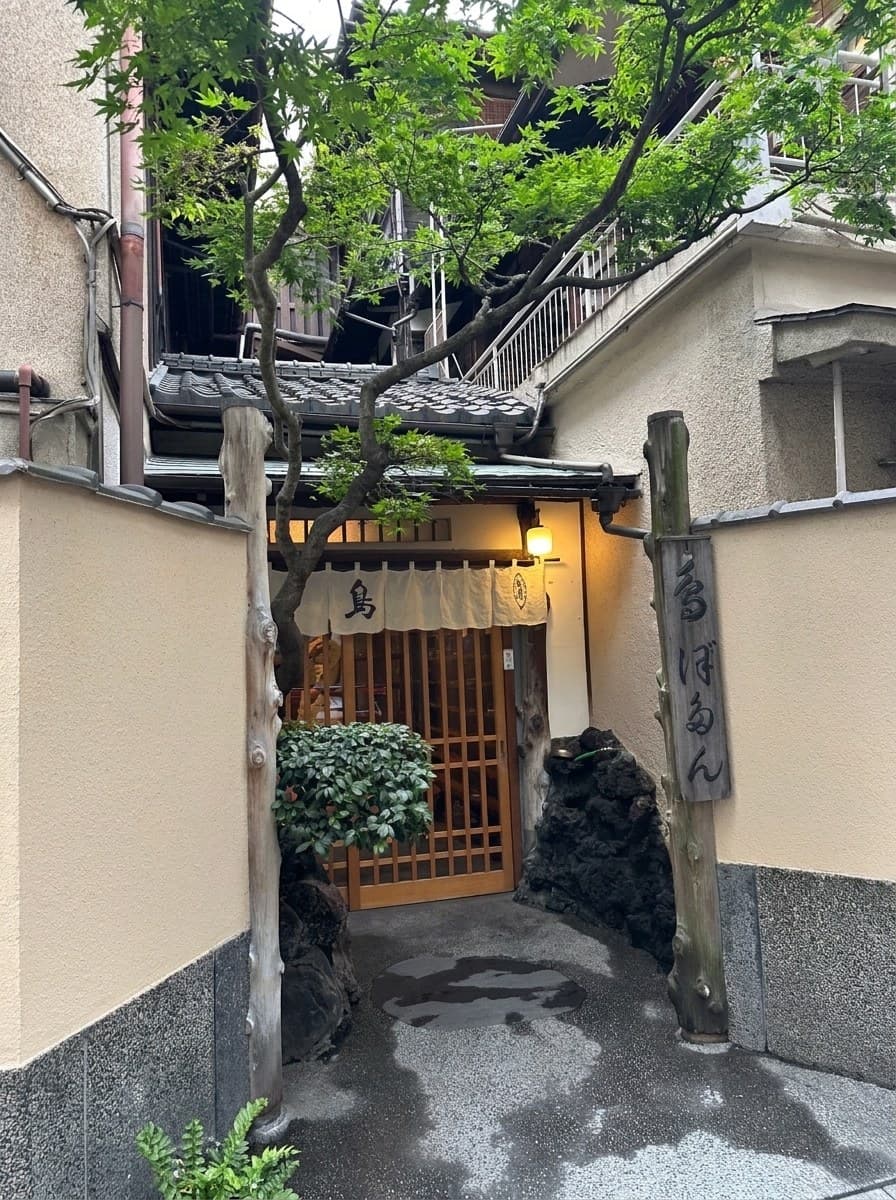
Dozeu Iidaya serves dojō, the finger‑length freshwater loach that fed Edo’s carpenters and porters when four‑legged meat was awkward and bay fish cost money. Asakusa once held dozens of loach houses; a handful remain. Iidaya, founded at the turn of the twentieth century with roots in a rice shop of the 1860s, is the connoisseur’s pick — a wooden room, a doorman who takes your shoes, and none of the theatre the district trades in elsewhere.
Loach, whole or boneless, simmers in a sweet‑soy warishita known by family rule to exactly one person per generation. You bury it under a full box of raw scallion and dust it with sanshō. The gentler entry is yanagawa, loach and burdock bound in softly set egg. Pots run about ¥2,000 and a full evening lands near ¥5,000. Loach is traditionally a summer stamina food, which makes this the one pot on the list that eats well in any month — useful when the winter houses are full. Build the rest of the day with our Asakusa food guide.
Sakura — horse, at the Yoshiwara gate
More than twenty sakuranabe houses once stood outside the great gate of the Yoshiwara, Edo’s walled pleasure quarter, feeding the men who worked and played it. Sakuranabe Nakae, founded in 1905 and run by the fourth generation of one family, is the only survivor. Its building was raised by shrine carpenters in 1924, after the earthquake, and is a nationally registered tangible cultural property — as is the shop next door, which makes the corner unusual.
Horse is cooked shallow and fast in a sweet soy‑and‑miso broth, pulled at rosy medium‑rare and dipped in raw egg, sukiyaki fashion. It is leaner and cleaner‑tasting than beef. Dinner courses are ¥12,000 and ¥17,000, and a single pot ordered à la carte costs a fraction of that. Horse is not strictly seasonal, but this is cold‑weather food in a cold‑weather room. Watch the lunch: weekends and holidays only, thirty servings, reserve ahead.
Gyūnabe — beef, and the Meiji turn, Yokohama
Ohta Nawanoren is where the modern Japanese appetite for beef begins. Takahashi Otokichi came down from Noto to the treaty port in 1865, sold grilled beef offcuts near the foreign settlement, and in 1868 — the first year of Meiji — established himself in Sueyoshichō, where the house still stands. It calls itself the originator of gyūnabe; Japanese reference sources credit an earlier Yokohama shop, Ise‑kuma of 1862, as the first, which makes Nawanoren the oldest surviving gyūnabe house rather than the very first. Either way it is the direct ancestor of sukiyaki.
The beef comes in thick cubes rather than sheets — the thick cut survives a long miso simmer that would toughen a thin slice — tended by a kimono‑clad nakai in each room. ¥15,000–25,000. Closed Mondays and the third Sunday (except in January and December), with weekday service at dinner only. Note the miso: the method is thought to have been adapted from the boar pots of the Tanzawa mountains, which is to say the beef pot is the boar pot, taught new manners.
The season, in months
- Anglerfish — roughly November to March; liver at its best December to February.
- Wild boar — the standard Honshū hunting season runs 15 November to 15 February; earlier is better.
- Horse and beef — served year‑round, but October to March is when these rooms make sense.
- Loach — the exception: a summer dish by tradition, and good all year.
Getting a seat
Nakae runs its own web form, and Isegen takes web bookings for one to eight guests through Tabelog (phone for nine or more); the other three work by Japanese telephone or domestic reservation sites. Isegen compresses four months of demand onto one tatami floor, so winter evenings go early, though it keeps some unreserved seats for walk‑ins. Momonjiya’s private rooms need naming in advance. Iidaya refuses the booking apps outright, and its Wednesday closure shifts around Asakusa’s festival calendar. Ohta Nawanoren states plainly that no web booking exists. None of these houses has an English booking page of its own, and none carries real inventory on the international platforms — the obstacle set out in our guide to phone‑only restaurants. Tell our reservation desk your dates and which pot you want, and we will make the calls in Japanese.