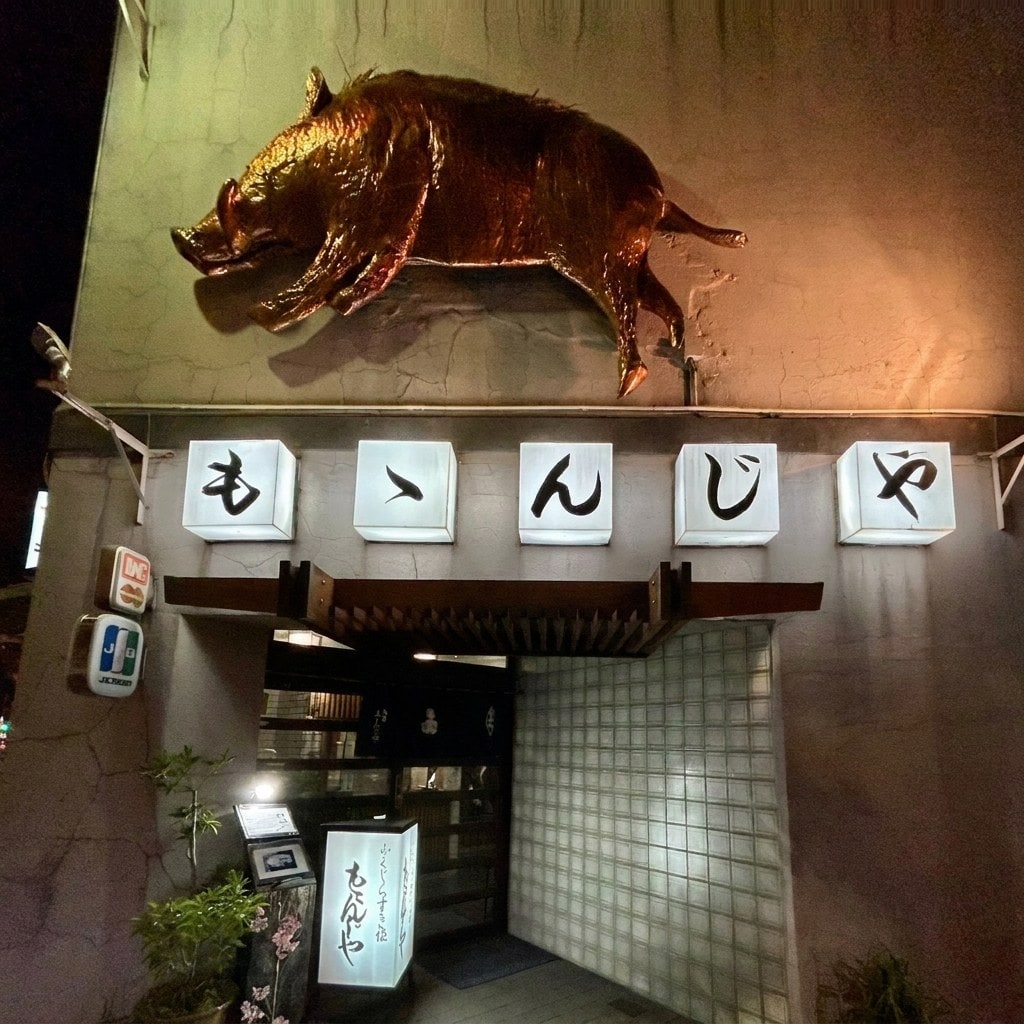
Before Japan ate beef, it ate momonji — “beasts of the mountain” — quietly, in a handful of licensed houses at the edge of Edo. Meat‑eating sat awkwardly with Buddhist custom, so the shogun’s city invented polite fictions: boar was sold as yama‑kujira, “mountain whale,” and eating it was excused as kusuri‑gui — taking meat as medicine against the winter cold. Momonjiya, founded in 1718 in the Kyōhō era, is the great survivor of that world: three centuries and ten generations of wild boar simmered in miso, in the shadow of the sumo stadium at Ryōgoku. A whole boar still hangs outside the door in season, exactly as it did when samurai slipped in through the back.
What you eat
Shishinabe — wild boar hot pot, the meat sliced thin and fanned out like the petals of a peony, simmered tableside in a miso broth the house has kept for ten generations. Boar is leaner and cleaner than pork, and winter animals carry a sweetness that made this dish Edo’s original stamina food. If “gamey” is the worry keeping you away, retire it: properly handled boar tastes like pork with the volume turned down and the depth turned up, and the miso is tradition, not camouflage. Venison and other mountain fare appear by season, and the set courses — from ¥7,150 plus 10%. Prices are indicative, as listed on Hot Pepper (October 2026). service, most guests landing at about ¥8,000–10,000 all in — walk you from appetizers through the bubbling pot to rice cooked in what remains, the broth by then at its richest.
How a visit works
Momonjiya serves dinner only, 17:00 to 21:00 with last order at 20:30, and rests on Sundays and some public holidays, so call ahead. Book ahead: by phone in Japanese, through the house’s official booking page (which can be shown in English), or through the domestic reservation sites — this is precisely the kind of arrangement we handle for guests. Most of the eighty seats are tatami, and fully private rooms take parties of two to forty — this is a house built for the long, shoes‑off winter banquet. A 10% service charge applies; cards and PayPay are accepted.
Older than the guidebooks
In Edo, “momonjiya” was not a name but a category — the word for any shop licensed to sell beast meat — and this house is the last one still trading under it. Three hundred years of Tokyo custom means Momonjiya has never needed to look outward. It is one of the oldest continuously operating restaurants in the city — older than most of the sushi and soba houses that anchor “old Tokyo” lists — and the world’s guidebooks walk right past it to photograph the sumo stadium a few minutes away. That neglect is your opening: on a given winter evening the tatami rooms hold sumo fans, multi‑generation family parties and almost no one holding a phrasebook.
Save it for
Save it for the trip where your Tokyo list already has sushi on it twice. Pair it with the sumo stadium and the Sumida river walk — the restaurant is one minute from Ryōgoku Station, in the heart of the chanko‑nabe (sumo‑stew) district, so an evening here slots neatly after a tournament day or a stroll through the neighborhood’s sumo stables. There are few older ways to spend an evening in this city, and almost none that so few visitors try.