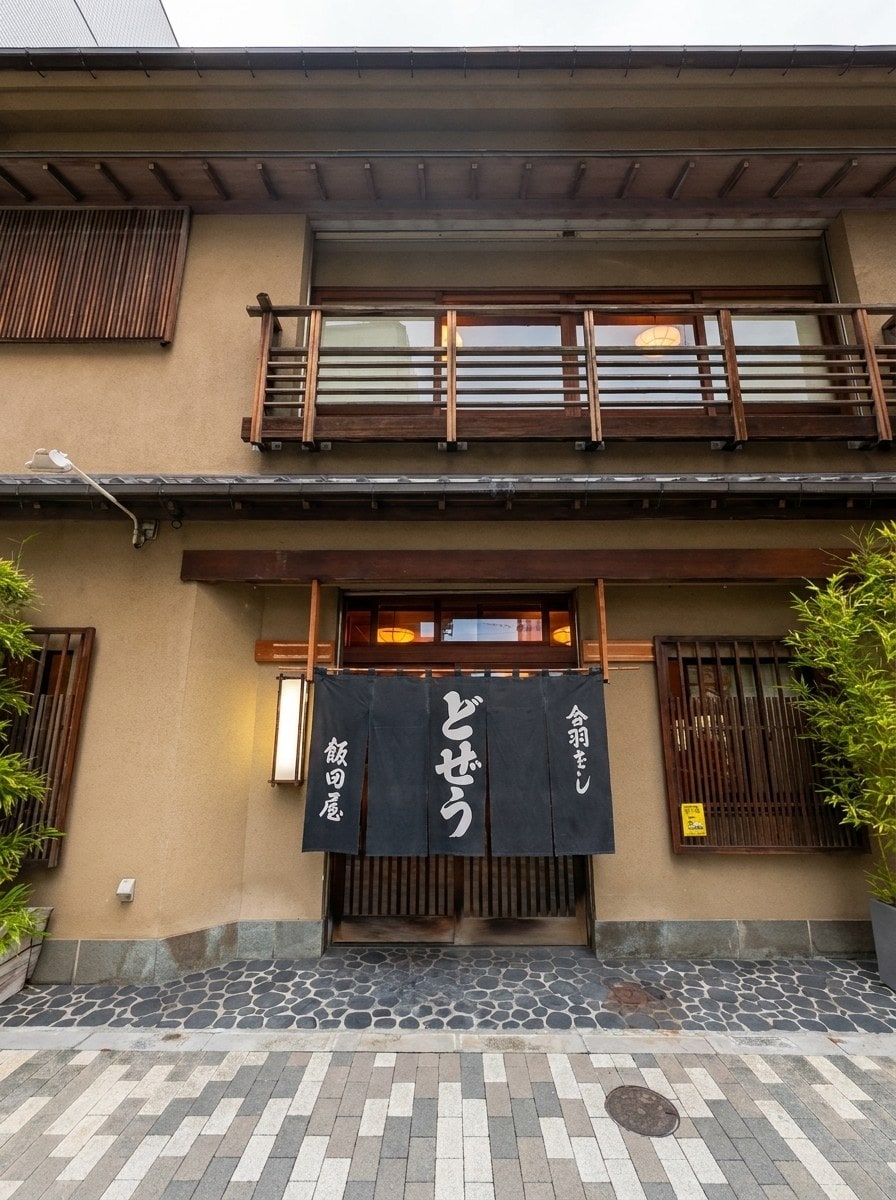
In shortDojō (loach) hot pot — Edo's working-class delicacy. Reservations run in Japanese and are hard to place from abroad, so our Tokyo desk requests the table for you, by phone and in Japanese.
Price
Loach pots ~¥2,000–2,100
Hours
Lunch 11:30–14:30 (last order 14:00) · Dinner 17:00–21:00 (last order 20:30)
Closed
Wednesdays (shifted around holidays and Asakusa festival days)
Seats
120–180 — open shared tatami over two floors, plus an annex (sources vary)
Private rooms
One sunken-hearth room for 5–8; the annex takes groups up to about 20
Payment
Cards accepted (no e-money or QR codes) · private-room fee ¥2,000
Getting there
Asakusa (Tsukuba Express) 2 min / Tawaramachi 5 min — beside Kappabashi kitchen town
Dojō — the loach, a finger‑length freshwater fish — was Edo’s protein
of the people: cheap, faintly sweet, cooked in shallow iron pans with
burdock root and heaps of scallion. Asakusa once had dozens of
specialist houses; a handful remain, and Iidaya, established 1902 with
roots in a rice shop of the 1860s, is the connoisseur’s pick. The
novelist Kafū Nagai kept his seat here. A doorman still receives your
shoes at the entrance — a house rule holds that the master’s job is
the broth and the front door — and the sweet‑soy warishita, the
seasoned simmering broth, is known by family law to exactly one person
per generation.
What you eat
Loach whole or boneless, simmered at your table in that secret broth
and buried — the staff will insist — under a full box of raw scallion,
then dusted with sanshō, Japan’s tingling mountain pepper, from the
Yagenbori shop that has ground spices since the 17th century. The
kinder gateway dish is yanagawa: boneless loach and burdock bound in
softly set egg. Pots run about ¥2,000–2,100; with drinks, sides, and
the okami’s (proprietress’s) own nuta — a miso‑vinegar dressed dish
whose recipe is another one‑person secret — a full evening lands
On tatami, with an English menu on the table.
The booking reality
The house takes bookings by telephone only and pointedly refuses the
reservation apps — walk‑ins seat easily at off‑hours across its two
floors of shared tatami, but the sunken‑hearth private room (5–8
guests, ¥2,000 room fee), the annex for groups up to about twenty, and
any peak evening all run through a Japanese phone call. Note the
closing day: Wednesdays, but shifted around holidays and Asakusa’s
festival calendar, which is precisely the sort of thing a desk
confirms in one local call before you cross town.
Are ready to go one dish deeper than sushi, are already headed to
Kappabashi’s knife shops next door, or believe — correctly — that the
humblest specialties keep the oldest secrets: this is what the
carpenters of this city ate for three centuries, at the price of a
chain izakaya.
Free release-date alerts: the day before, on the morning of release day (08:00 JST) and about 30 minutes before when the time is known — or a weekly summary if the house opens a little every day.
Dozeu Iidaya: common questions
Can you book Dozeu Iidaya from abroad?
Yes, through our Tokyo desk. Phone only — the house explicitly refuses app bookings. English menu at the table; a doorman still takes your shoes. We call the restaurant for you, in Japanese, and the ¥6,000-per-seat fee is charged only if we confirm your table — no seat, no fee.
Some of these links are referral links: if you book through them we may earn a small commission, at no extra cost to you. Restaurants never pay us to be listed or ranked. Editorial policy
Cite this page
Facts on this page were checked by our Tokyo desk. You are welcome to quote them with a link:
Dozeu Iidaya — Nishi-Asakusa, Tokyo — SHOKU NOREN (checked September 2026). https://shokunoren.com/restaurants/iidaya-asakusa