In shortHorse-meat hot pot — the last sakuranabe house of the old Yoshiwara. You can book it online yourself, or our Tokyo desk can request the table for you.
Price
Dinner courses from ¥12,180 & ¥17,180, à la carte pots from ¥2,980 (tax included) · weekend lunch 30 servings only
Hours
Tue–Fri dinner only 17:00–22:00 · Sat, Sun & holidays 11:30–14:00 and 16:00–21:00
Closed
Mondays (open on holiday Mondays; closed the following day)
Seats
80 — no counter; sunken-hearth seats 30 plus banquet rooms
Private rooms
Banquet rooms for 10–30+; the house lists no true private rooms
Payment
Cards, PayPay and Alipay accepted (no e-money)
Getting there
Minowa Stn (Hibiya line), 9 min walk — by the "Looking-Back Willow" at the old Yoshiwara gate
Outside the great gate of the Yoshiwara — Edo’s walled, licensed
pleasure quarter — more than twenty houses once served sakuranabe,
“cherry‑blossom pot”: horse meat simmered sukiyaki‑style in a shallow
iron pan, the stamina dish of the men who worked and played the
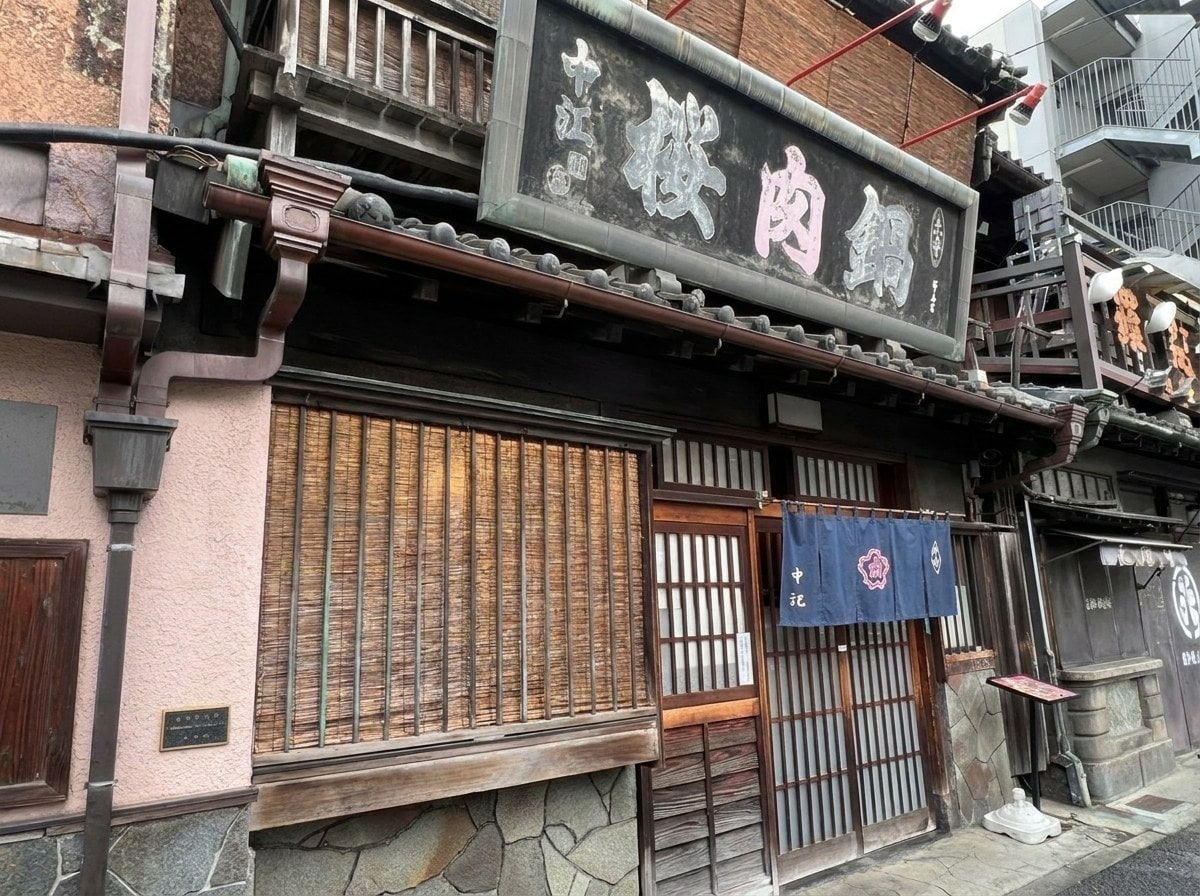
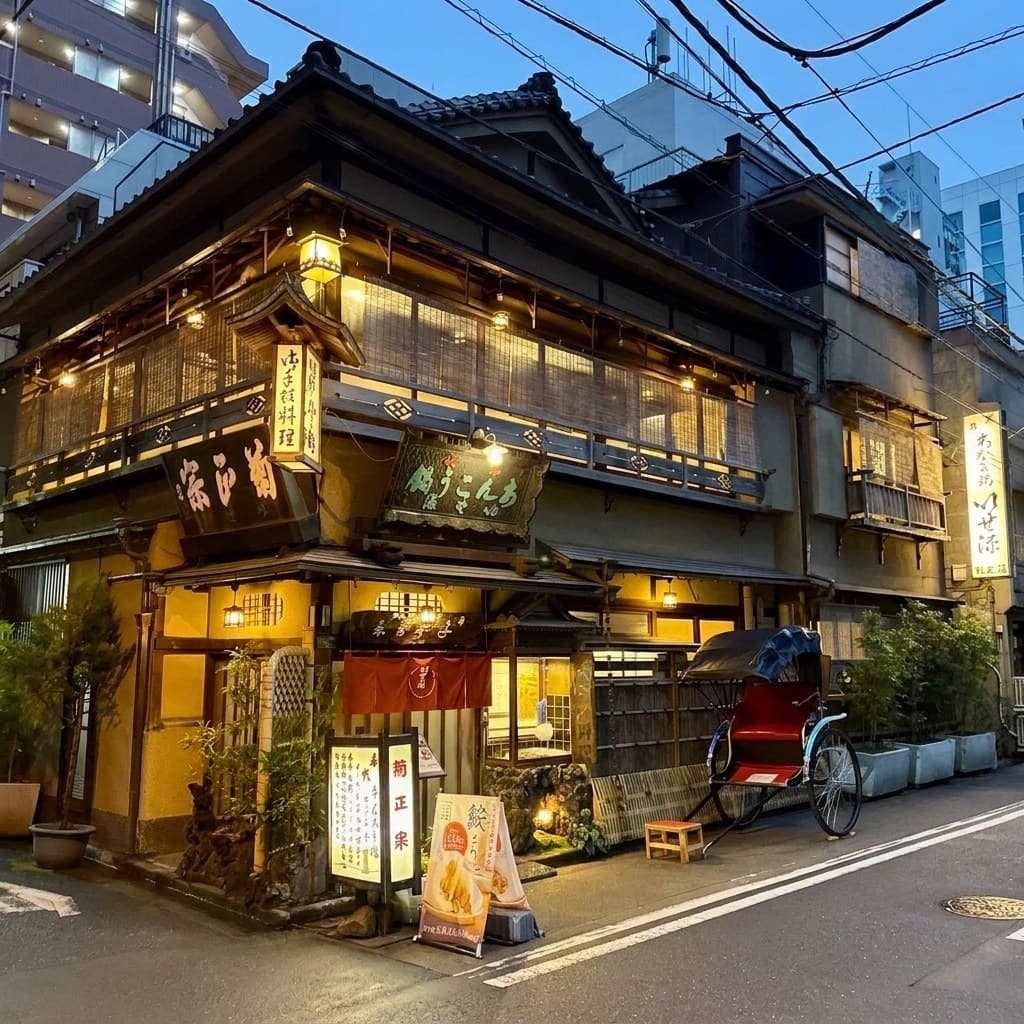
quarter. One house remains. Nakae, founded 1905 and run by the fourth
generation of the same family, occupies a wooden building raised by
shrine carpenters in 1924, after the Great Kantō Earthquake, and now
listed as a nationally registered tangible cultural property. The
“Looking‑Back Willow,” where departing customers took a last glance at
the quarter, still stands by the corner.
What you eat
Horse — leaner and cleaner‑tasting than beef, from mature animals
raised for the house — cooked shallow and fast in a sweet
soy‑and‑miso broth, pulled at rosy medium‑rare and dipped in raw egg,
sukiyaki fashion. The tartare carries a name: Taro‑Taro yukke, after
the artist Okamoto Tarō, a regular who asked the third master to
recreate a horse tartare he had eaten in France. The closing move is
the one the house itself calls its best dish — egg folded into the
broth left in the pan, spooned over rice. Dinner courses start at ¥12,180
and ¥17,180, tax included; a single pot, ordered à la carte with rice and sides,
costs a fraction of that.
The booking reality
The rare house here with a working online door: Nakae takes bookings
by phone or fax (03‑3872‑5398), through its own reservation form
(up to two business days ahead) and on Tabelog, and Tuesday‑to‑Friday
dinner seats come without drama. The catch is lunch — served only on
weekends and holidays, thirty servings a day, and the house asks you
to reserve ahead because they run out. What a call in Japanese
actually buys you is placement and context: the sunken‑hearth seats,
the right course, and the timing to walk the old quarter — gate,
willow, temple of the courtesans’ graves — before you sit down.
You can book it online yourself, or our Tokyo desk can request it for you. Request this table →
Go if you
Pair Asakusa with the old north — the Ichiyō museum, the streetcar
line, the lanes the guidebooks skip — and want to taste what "stamina
food of the floating world" actually meant, in the one room where the
phrase still refers to something real.
Free release-date alerts: the day before, on the morning of release day (08:00 JST) and about 30 minutes before when the time is known — or a weekly summary if the house opens a little every day.
Sakuranabe Nakae: common questions
Can you book Sakuranabe Nakae from abroad?
Yes. Phone or fax (03-3872-5398, answering machine outside hours), the house's own web form (up to two business days ahead) or Tabelog — one of the few tables in this list you can genuinely reserve online. We include it for what surrounds the table: the last house of a vanished pleasure-quarter cuisine. You can book online yourself, or our Tokyo desk can request the table for you; our ¥6,000-per-seat fee is charged only if we confirm your table.
Some of these links are referral links: if you book through them we may earn a small commission, at no extra cost to you. Restaurants never pay us to be listed or ranked. Editorial policy
Cite this page
Facts on this page were checked by our Tokyo desk. You are welcome to quote them with a link:
Sakuranabe Nakae — Minowa (old Yoshiwara), Tokyo — SHOKU NOREN (checked September 2026). https://shokunoren.com/restaurants/sakuranabe-nakae