In shortChicken sukiyaki (torisuki) over charcoal. Reservations run in Japanese and are hard to place from abroad, so our Tokyo desk requests the table for you, by phone and in Japanese.
Price
Torisuki course ¥9,000 per person — the only menu, rice and fruit included
Hours
Weekday lunch 11:30–14:30 (last entry 13:00) · weekday dinner 17:00–21:00, last entry 20:00 · Saturdays straight through 11:30–21:00, last entry 20:00 · Oct–Mar, evenings and Saturdays run to 22:00, last entry 21:00
Closed
Sundays & holidays · about two weeks in August
Seats
100 — all tatami, no counter: a 50-guest main room and six private rooms
Private rooms
Yes — six tatami rooms, 5 to 40 guests (five-guest minimum)
Payment
Cards, e-money and QR codes all accepted · no service charge
Getting there
Awajicho / Ogawamachi Stn, 3 min walk
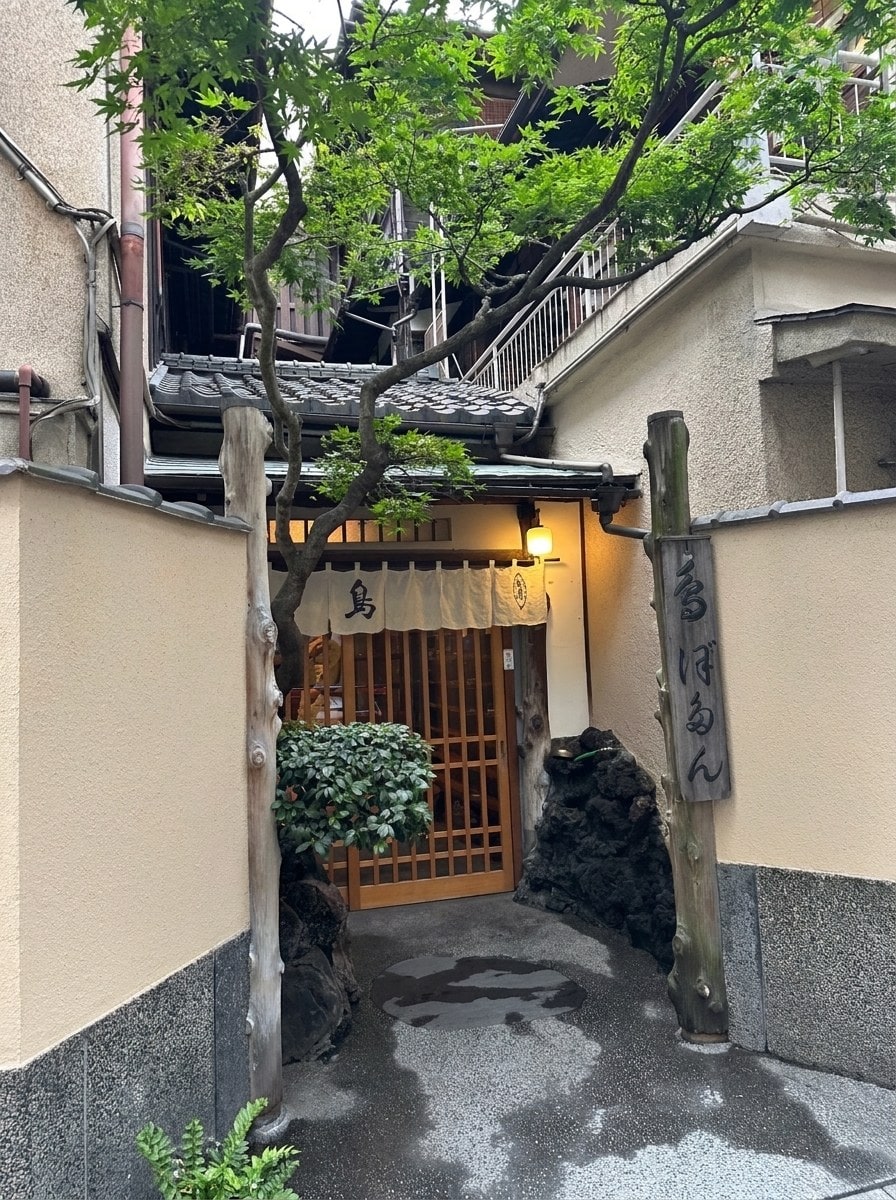
Botan has served one dish since 1897: torisuki — chicken sukiyaki, chicken
simmered at your table in a shallow iron pan over live binchotan charcoal,
the dense white oak charcoal that burns steady and nearly smokeless. Gas has
never entered the kitchen. The first house burned in the 1923 earthquake;
the wooden building that replaced it in 1929 came through the wartime fires
intact and is now a Tokyo Selected Historical Building. Even the name is a
relic of the neighborhood: not the peony flower, but the button — botan —
of the cloth merchants who once filled these streets.
What you eat
There is no menu to study. Every guest takes the same course: chicken and
its meatballs, giblets, scallions and tofu, cooked in the house warishita
— the sweetened soy base every sukiyaki house guards as its signature —
by staff who tend the pan so you don’t have to. Charcoal is the mechanism,
not the theater: a brazier set into the tatami radiates heat up through the
iron while the room’s warmth works from above, and the pan never spikes or
dies the way a gas flame does. You finish, as the house insists, with egg
over the rice. Fruit closes it. ¥9,000, one price, one way.
The booking reality
Online in Japanese — the shop’s own form (run on Toreta), Tabelog or Ikyu, open until 22:00 the day before — or the telephone, in Japanese; there is no English booking page. Seat requests and parties of sixteen or more go by phone. But the arithmetic is on your side: a hundred
seats, all tatami — the woven straw‑mat floors you sit on — across a
fifty‑guest main room and six private rooms. A room that size doesn’t sell
out months ahead. A booking made within a normal planning window lands a weeknight table without drama, and seats are kept back for walk‑ins; only the five‑guest minimum for private
rooms and the August closure need watching. This is exactly the gap a desk
in Tokyo exists for: one phone call in Japanese, and the hardest part of
Botan is finding the door.
Go if you want a dinner that has not been redesigned since the Meiji era —
and pair it: Botan’s neighbor is Isegen, the anglerfish house of 1830. Two
doors, one vanished city, ten minutes of walking between centuries.
Free release-date alerts: the day before, on the morning of release day (08:00 JST) and about 30 minutes before when the time is known — or a weekly summary if the house opens a little every day.
Botan: common questions
Can you book Botan from abroad?
Yes, through our Tokyo desk. Online in Japanese — the house's own Toreta form, Tabelog or Ikyu — until 22:00 the day before, or by phone. No English booking page. We call the restaurant for you, in Japanese, and the ¥6,000-per-seat fee is charged only if we confirm your table — no seat, no fee.
Some of these links are referral links: if you book through them we may earn a small commission, at no extra cost to you. Restaurants never pay us to be listed or ranked. Editorial policy
Cite this page
Facts on this page were checked by our Tokyo desk. You are welcome to quote them with a link:
Botan — Kanda-Sudacho, Tokyo — SHOKU NOREN (checked October 2026). https://shokunoren.com/restaurants/botan-kanda