Japan is one of the world’s last great savory‑breakfast civilizations — a country where the first meal of the day can be its most quietly perfect. Travelers who default to hotel croissants are leaving an entire cuisine on the table.
The classic set
The traditional breakfast is formal Japanese cuisine in miniature, built on ichiju‑sansai (一汁三菜) — one soup, three dishes, plus rice:
- Rice, steamed, the anchor.
- Miso soup — the fermented pantry’s morning voice, and a daily dose of dashi.
- Grilled fish — salted salmon or mackerel, skin crisped.
- Tamagoyaki or an onsen egg.
- Tsukemono pickles, nori, and — for the committed — natto, the sticky fermented soybeans that remain Japan’s great table‑splitting food. (Stir hard, pour over rice, commit. Once, minimum.)
Nothing here is “breakfast food”; that is the point. Japan simply eats well from the first meal.
What’s on the tray
The vocabulary, so the tray reads as a menu rather than a puzzle:
- Gohan (ご飯) — rice. At ryokan often a local variety, sometimes cooked in a clay pot at the table; ask for okawari (おかわり) for a second bowl.
- Misoshiru (味噌汁) — miso soup; the miso is regional, white and sweet in Kyoto, red and darker in the east, and the garnish changes daily.
- Yakizakana (焼き魚) — grilled fish. Shiozake (塩鮭) is salted salmon; saba (鯖) mackerel; in the north, hokke; at the coast, whatever was landed.
- Tamagoyaki (卵焼き) — the rolled omelette, sweeter in Tokyo, dashi‑rich (dashimaki) in Kansai.
- Onsen tamago (温泉卵) — an egg cooked slowly at hot‑spring temperature so the yolk sets before the white, served in a little dashi broth. The name comes from the hot‑spring towns where eggs were once lowered into the source.
- Nama tamago (生卵) — a raw egg, for tamago kake gohan: crack it over hot rice, add soy, stir.
- Tsukemono (漬物) — pickles. Takuan (yellow daikon), umeboshi (salted plum), nukazuke (rice‑bran pickles), Kyoto’s own shibazuke.
- Nori (海苔) — dried seaweed sheets, for wrapping rice.
- Natto (納豆), hijiki (seaweed simmered with soy), kinpira (burdock and carrot), tsukudani (things simmered dark in soy and sugar) — the small side dishes that vary by region and house.
- Okayu (お粥) — rice gruel, the gentle alternative; the standard at temple lodgings and the star of one famous Kyoto morning below.
- Yudofu (湯豆腐) or hiyayakko (冷奴) — tofu warm or cold, common at inns and temple stays.
Where to eat it
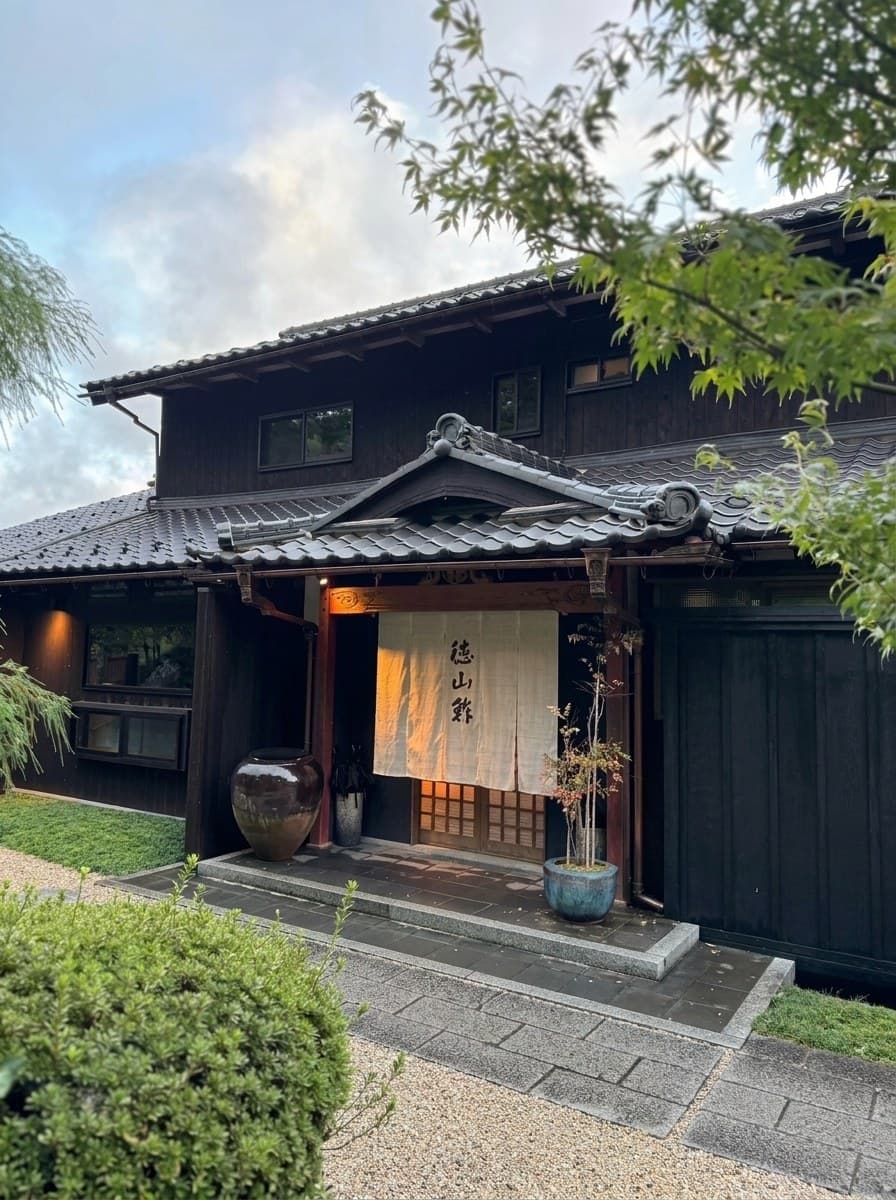
- Ryokan — the elaborate morning spread is half the reason to stay; at the great ryokan‑restaurants breakfast rivals dinner. A few auberges in our collection are the same idea in miniature: Tonoya Yo in Tono, Korian on Lake Biwa and Tokuyamazushi on Lake Yogo all quote a stay with dinner and breakfast included.
- Hotels — the Japanese‑breakfast option at good hotels is routinely the best thing on the buffet floor. Choose it over the eggs station at least once.
- Markets — the morning kaisendon at Tsukiji, Kanazawa’s Omicho or Hakodate is breakfast as event. At Kanazawa the honest sequence is a market morning at Omicho and, twelve hours later, the same larder cooked properly at Setsuri five minutes away.
- Teishoku chains and shokudo — the everyday miracle: a complete grilled‑fish set for a few hundred yen, ordered from a ticket machine, any morning, anywhere.
Two breakfasts worth planning around
Sushi at Toyosu. The market’s two famous counters run on different rules. Sushi Dai takes no advance reservations: you register in person at the shopfront from 05:00, service runs 06:00 to 14:00, and with eighteen seats and hour‑long seatings, arriving after 05:30 usually means a wait of two to four hours. Daiwa Sushi next door puts a few seats on TableCheck — parties of one or two only, weekday slots between 07:00 and 10:00, Saturdays 08:00 to 09:30, with a booking fee — while everyone else queues from 06:00. Both close on Sundays, holidays and market holidays, which mostly fall on Wednesdays.
Rice gruel at Hyotei. Hyotei, the four‑century teahouse at the gate of Nanzenji, serves the most celebrated breakfast in Kyoto. The main house’s asagayu — morning rice gruel around the house’s famous soft‑yolked egg — runs July 1 to August 31; the annex next door serves gruel courses year‑round from 8:00 at a fraction of the main‑house price. Booking is online through TableCheck, where the main house and the annex have separate pages, or by phone in Japanese, with a two‑guest minimum; the main house’s summer gruel opens in monthly batches about four months ahead. The full booking guide explains the two calendars.
The kissaten counter‑tradition
Japan’s other breakfast is the kissaten morning: at old‑school coffee houses, a morning coffee arrives with thick‑cut toast and a boiled egg for barely more than the coffee alone. The custom reaches its baroque summit in Nagoya and its neighbor Ichinomiya, where competition between coffee houses made the freebies legendary and produced ogura toast — butter and sweet red bean on thick toast; our Nagoya guide covers the scene. The vocabulary is small: moningu (モーニング) is the set itself, yude tamago (ゆで卵) the boiled egg, tamago sando the egg sandwich, and atsugiri (厚切り) the thick‑cut toast. Retro furniture, pour‑over ritual, the morning paper on a stick: it is time travel with breakfast attached.
Ryokan breakfast etiquette
A ryokan breakfast is served at a fixed time agreed the night before, usually in your room or a dining hall, and the kitchen cooks to that clock — arrive on time, in the yukata if the house allows it. Sit, say itadakimasu, and work across the tray rather than finishing one dish at a time; rice and soup are refilled on request. The grill or clay pot lit at your table is meant to be eaten as it finishes, so start there. Nothing needs to be cleared; leave the tray as it is and thank the attendant. The ryokan dining guide covers the dinner side of the same house.
Timing
Most Japanese‑breakfast service — hotel, ryokan, teishoku — runs roughly 7:00 to 10:00, and ryokan often ask you to choose a slot between 7:30 and 8:30. Market counters start earlier and end early; Toyosu’s sushi counters are winding down by early afternoon. Kissaten morning service typically lasts until 10:30 or 11:00, though the hour varies house by house, and a few Nagoya shops extend it into the afternoon.
Building mornings into a trip
The rhythm that works: market or teishoku breakfasts on sightseeing days (fuel, fast, cheap), the ryokan spread where you stay one, and one kissaten morning for the atmosphere. Breakfast is also the meal that needs almost no booking anywhere in Japan — the free pleasure between your reserved evenings; the exceptions are the few destination breakfasts above. For how the day’s other meals structure themselves, start with Japanese restaurant types explained.