Nagoya is Japan’s great flyover city: 100 minutes from Tokyo, 35 from Kyoto, and skipped by almost everyone riding between them. That is the traveler’s loss — because Nagoya eats like nowhere else in Japan. Its cuisine even has its own name, Nagoya‑meshi, and one uncompromising signature: hatcho miso, the near‑black soybean miso aged in cedar barrels in nearby Okazaki, which colors half the city’s table.
Hitsumabushi: the essential dish
If you eat one thing in Nagoya, it is hitsumabushi — charcoal‑grilled eel over rice in a lacquered tub, eaten in three acts:
- As is, for the pure char and glaze.
- With condiments — wasabi, scallion, shredded nori.
- As ochazuke, drowned in dashi — the act that converts skeptics.
The dish has a home address: Atsuta Horaiken, founded 1873 by Atsuta Shrine and credited with inventing hitsumabushi. Ordinary seats cannot be booked: you write your name on the list at the door on the day and return at the time you are given (the morning list opens around 10:00), and weekend waits at the main house run two to three hours. Only the private‑room kaiseki course, for four or more, is booked ahead by phone — and that is the part worth having arranged. For how eel eating differs across Japan, see our guide to unagi and the Day of the Ox.
The miso belt
Around the eel orbits the miso canon:
- Miso katsu — crisp pork cutlet under sweet‑dark miso sauce; Nagoya’s answer to tonkatsu orthodoxy.
- Miso nikomi udon — deliberately firm udon simmered in a miso broth strong enough to stand a spoon in, served bubbling in the pot.
- Doteni — beef tendon and offal simmered black in the same miso, the city’s great drinking dish.
None of these travel; miso this assertive exists only here.
Beyond miso
- Tebasaki — lacquered, white‑peppered fried chicken wings, the city’s izakaya religion.
- Kishimen — silk‑flat noodles, best slurped standing on a station platform.
- Morning culture — order a coffee before 11:00 and breakfast arrives free; the kissaten “morning” is a Nagoya institution, at its most baroque with ogura toast: butter, thick toast, sweet red bean.
Kaiseki: a ryotei and two counters
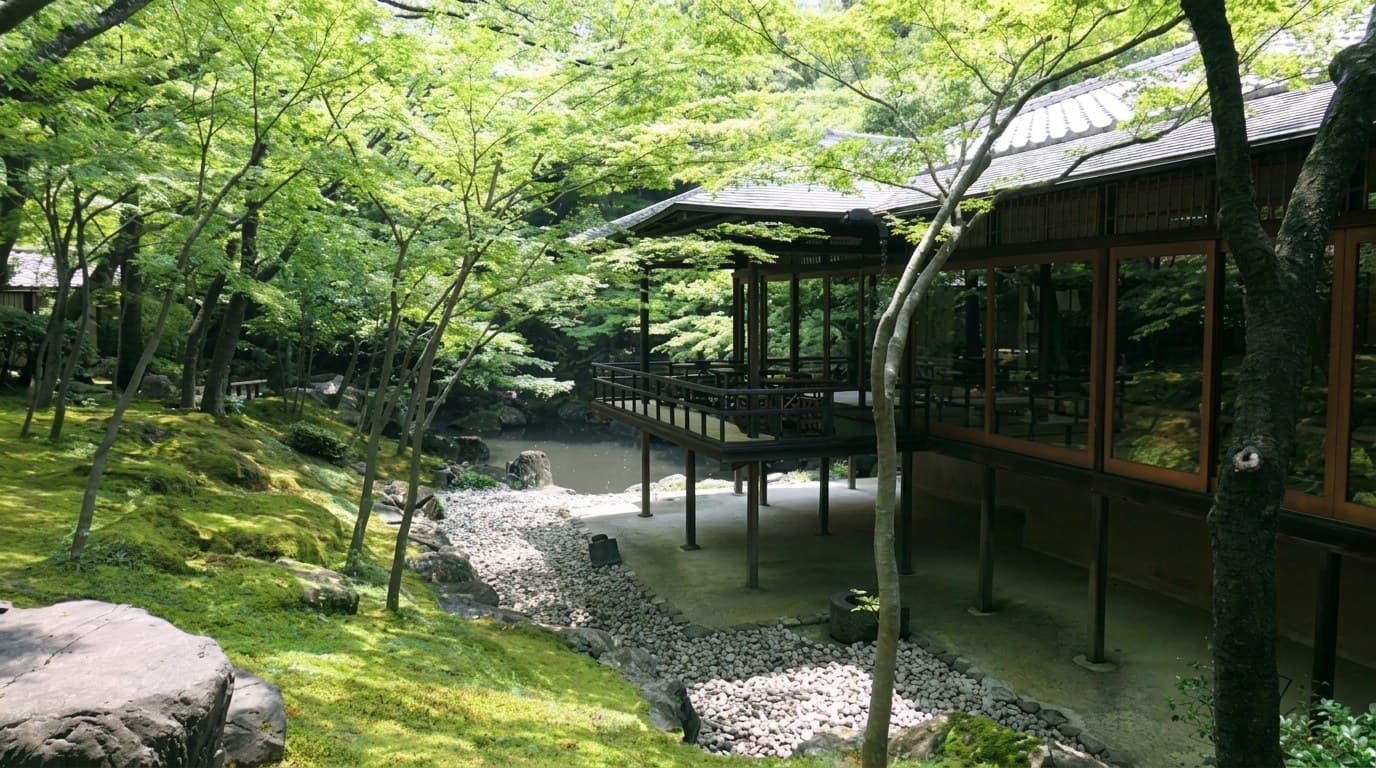
Nagoya‑meshi is the city’s everyday voice; its formal one is kaiseki, and it is easier to reach here than in Kyoto. Hasshokan, in the old villa district of Yagoto, is a ryotei founded in 1925 on a 4,000-tsubo garden. In 2020 nine of its buildings were designated an Important Cultural Property; one room, the Miyuki‑no‑ma, was designed by Sutemi Horiguchi as lodging for Emperor Showa and the Empress during the 1950 national sports festival, and Michelin’s single Aichi–Gifu–Mie edition in 2019 gave the house two stars. All twelve rooms are private and face the garden. Courses start at ¥30,000 (weekday lunch from ¥25,000), tax and service included, and the kitchen composes the menu only after you book — so give it three days.
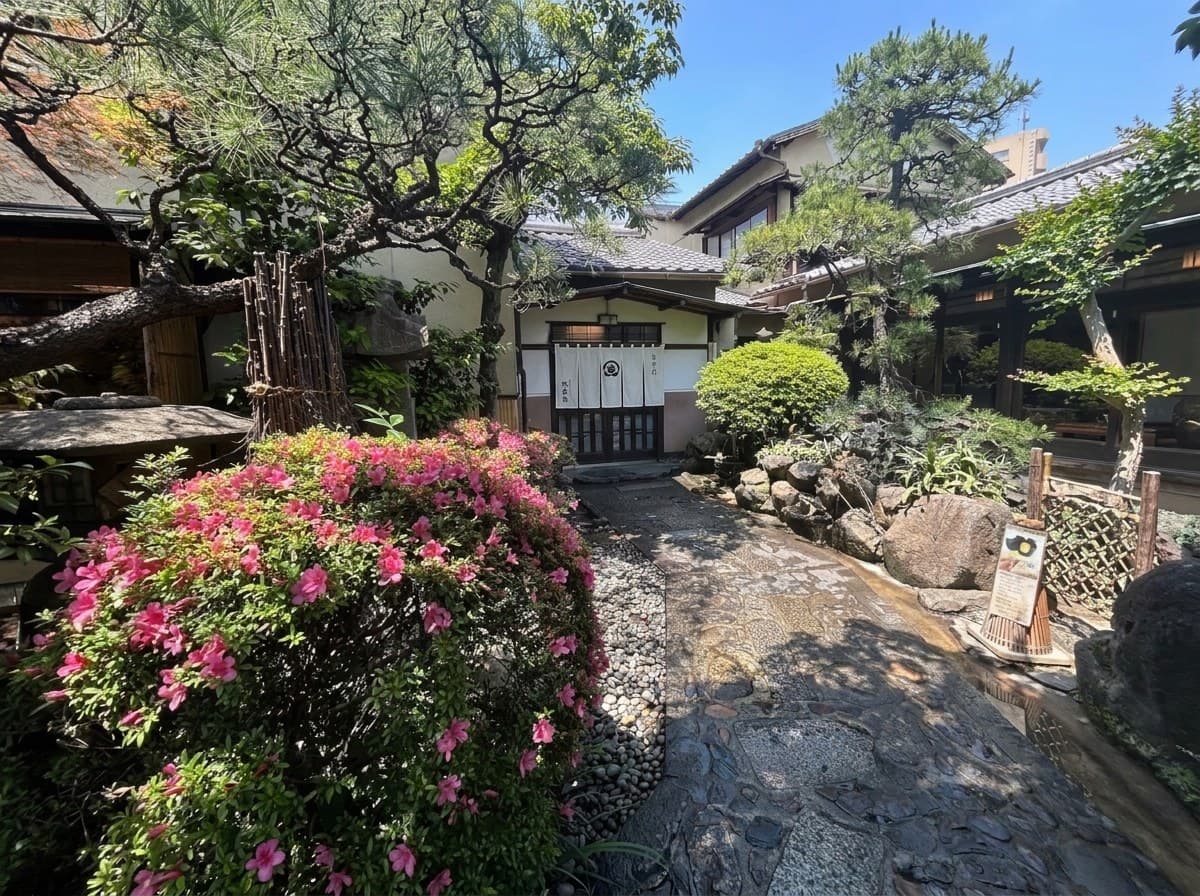
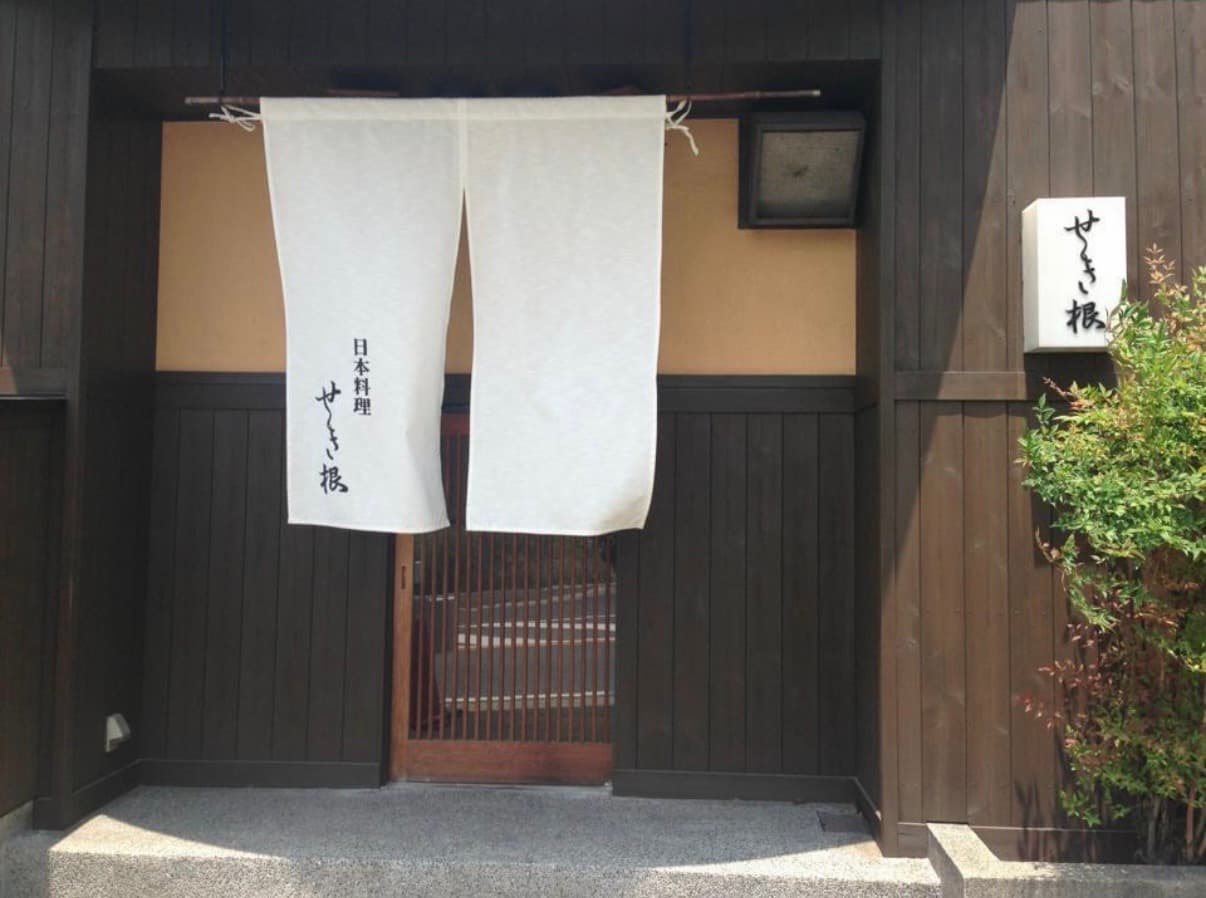
Close by, in the Nanzan hills between Irinaka and Yagoto stations, Sekine took two stars in the same guide and is a different animal: a six‑seat counter and two private rooms on a residential street, dinner only, run by the master and his wife, from ¥24,200. Kyoaji Motoi in Kakuozan, beside Nittaiji temple, is the gentlest of the three — a restored pre‑war house, a thirteen‑seat counter cut from a single plank of 300-year‑old cedar, a master who spent more than ten years in a Kyoto kitchen, and plain prices: ¥10,000 at lunch, ¥20,000 at dinner, tax and service included. Prices are indicative, as listed on Tabelog and Hitosara (September 2026). Before a ryotei meal, our kaiseki and ryotei etiquette guide is worth ten minutes.
Sushi and tempura
For years the honest advice about sushi in Nagoya was to eat it somewhere else. Sushi Hanakuruma changed that in November 2022: a basement counter two minutes from Nagoya Station, supervised by Yuichi Arai of Sushi Arai in Ginza, applying Edomae technique to fish from Mikawa Bay and Ise Bay for eight guests at a time. Lunch is a fifteen‑piece nigiri course at ¥22,000; dinner is an omakase at ¥34,100, both tax included. Prices are indicative, as listed on Tabelog and Ikyu (September 2026). Three fixed seatings — 12:00, 18:00 and 20:30 — make it the easiest serious sushi dinner to fit around a shinkansen.
Tempura Yokoi is the opposite kind of find: a suburban counter in Moriyama Ward, about fifteen minutes out of Nagoya Station on the JR Chuo Line, that turns down every media request and answers its phone in two short windows a day. Lunch is one course, ¥2,500 with tax — eight or so pieces fried to order, with rice, miso soup and pickles; dinner is an omakase of around ¥13,500. Prices are indicative, as listed on Tabelog and AutoReserve (October 2026). Cash only. Tabelog put it on its Tempura 100 list in 2023 and 2025; for how it compares with the rest of the country, see our bookable tempura guide.
Building the stop
The efficient version is a half day: arrive mid‑morning, hitsumabushi lunch near Atsuta Shrine, the shrine itself after, then a miso dish or tebasaki run near the station before the evening Shinkansen. Nagoya also opens the road inland — Gifu’s mountain beef country is one train away via Kitchen Hida — and slots naturally into a Tokyo–Kyoto run without costing a hotel night.
If you can give it a night, the evening changes shape. Sekine and Yokoi take bookings only by telephone in Japanese, while Hasshokan, Motoi and Hanakuruma also sell seats online through sites such as Ikyu, OMAKASE and Pocket Concierge; the rules for each are in how to book restaurants in Nagoya.
For how Nagoya’s institutions compare with the rest of the country’s regional tables, start with our guide to Japan’s restaurant types — and if you want the stop built for you, seat by seat, that is what we do.