The short answer
To book Hyotei, go straight to the source: both the main house and the annex take reservations online through TableCheck, on separate pages linked from Hyotei’s official site, for parties of two to four. You can also phone in Japanese (075‑771‑4116, one number for both houses), and parties of six or more must call. There is no release day for kaiseki — plan one to three months ahead, more in spring and autumn. The famous Hyotei breakfast — the summer asagayu at the main house — follows different rules: it is served only in July and August and opens on TableCheck in monthly batches, roughly four months ahead. If you would rather not navigate this yourself, our reservation desk can request either the main meal or a breakfast on your behalf.
A teahouse that became a restaurant
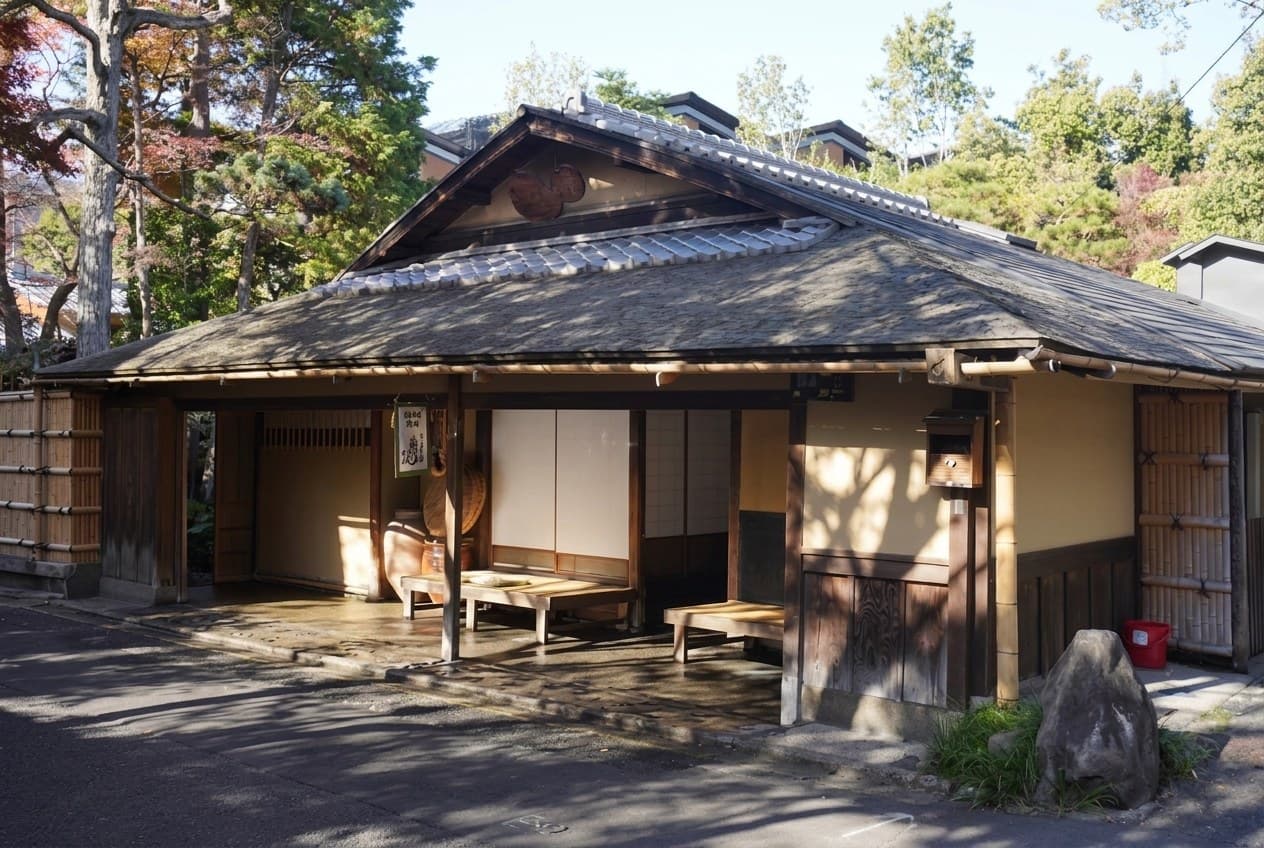
Hyotei sits at the approach to Nanzenji, in a quiet eastern pocket of Kyoto. Its story begins roughly four centuries ago, when it operated as a roadside teahouse serving pilgrims and travelers on their way to the temple. It became a restaurant in its own right in 1837, and it has been run by the Takahashi family across generations ever since — today the kitchen is led by the fifteenth‑generation head, Yoshihiro Takahashi.
That lineage matters when you sit down. Hyotei is a ryotei built on tea‑ceremony sensibility: a mossy garden with stone lanterns and washbasins, water channels fed by streams from the direction of Lake Biwa, and rooms that are dressed and re‑dressed with the seasons. The cooking is tea kaiseki — restrained, seasonal, and quietly precise rather than showy. It is one of Kyoto’s defining dining experiences, and it books accordingly.
Where Hyotei stands in the guide
A note on the stars, because it is worth getting right. Hyotei was awarded three stars when the MICHELIN Guide first covered Kyoto — the Kyoto‑Osaka 2010 edition, published in 2009 — and it holds Three MICHELIN Stars (MICHELIN Guide Japan 2026). Guide editions change each year, so check the current one.
What that pedigree means in practice is demand. A restaurant with this history and this recognition, in a city where the best tables are scarce, does not have empty seats waiting. Approach it with lead time and a plan.
The honest routes to a reservation
There is no single magic channel, so it helps to know the real options.
TableCheck — main house or annex. This is where most overseas guests should begin. Hyotei’s official site links to two TableCheck pages: one for the main house (kaiseki at lunch and dinner, plus the summer asagayu) and one for the annex (the morning gruel breakfast), each taking parties of two to four. Choose the right one, because the two houses run different menus, hours and closing days — the main house rests on Wednesdays, the annex on Thursdays, with irregular days on top — and the house asks each party to choose a single course.
The telephone. One Japanese‑language number, 075‑771‑4116, covers both houses, and parties of six or more must call. It is also the way to settle what a booking form cannot hold, such as a room request or a dietary question.
Hotel concierges and specialists. If you are staying at a high‑end Kyoto hotel, the concierge can make the call for you. Independent Japan dining specialists — ourselves included — can watch the TableCheck calendars around your travel dates and handle the Japanese‑language back‑and‑forth. This is the route to consider when your dates are fixed and the online calendars show nothing.
We would rather be plain than promise the impossible: no one can conjure a table that does not exist, and we do not guarantee outcomes. What a good specialist does is widen the number of doors you are knocking on, and knock in Japanese.
The summer breakfast — asagayu
The most sought‑after way to experience Hyotei is not dinner at all. It is the asagayu, the morning rice porridge, a summer‑only tradition at the main house served from July 1 through August 31 in the morning hours. It is a slower, gentler, and comparatively more attainable introduction to the house — and, for many, the most memorable meal of a Kyoto trip.
The catch is timing. The main house opens its summer breakfast on TableCheck in monthly batches, well in advance: by the house’s own notice in 2025, August seats opened on 1 April, about four months out. If the asagayu is your goal, find the opening date for your month and book the day it opens rather than waiting until you arrive. If the main house is full, the annex next door serves its own gruel breakfast year‑round, 8:00–11:00, at a fraction of the price (closed Thursdays).
What to eat — the Hyotei tamago
One dish carries the house name: the Hyotei tamago, a soft‑boiled egg finished to a distinctive tone and texture that has become the restaurant’s signature. It appears in the kaiseki courses and anchors the asagayu tray, where it sits alongside the dashi‑rich porridge and the small seasonal dishes that change with the calendar. It is a modest‑looking thing that quietly explains the whole philosophy of the place — simple materials, handled with several centuries of care.
Lead time and etiquette
Treat one to three months as your working window for the main dining room, and book the summer breakfast on the day its month opens. Kyoto’s spring cherry‑blossom and autumn‑foliage seasons are the tightest of the year; if your visit falls in those windows, move earlier still.
A few practical notes. Check which house your booking is for — the main house and the annex sit side by side but keep separate books, menus and hours. Reconfirm your booking before you travel, arrive on time, and be clear about any dietary needs when you reserve rather than at the table. As with most establishments of this caliber, a reservation is a commitment — cancel with as much notice as you can if plans change.
Let us book it for you
Hyotei rewards guests who plan. If you would like us to handle it — the main kaiseki, the summer asagayu, or a request across several dates — our reservation desk can approach Hyotei on your behalf and manage the Japanese‑language details from start to finish. Tell us your dates and which experience you are after, and we will tell you honestly what is realistic.