On the old port of Kaizu, a funazushi house founded in 1784 serves the kaiseki Endo Shusaku asked for — named by the novelist himself, rebuilt after the typhoon, fermented two winters at a time.
By SHOKU NOREN TeamFacts last verified September 2026How we check
In shortFunazushi kaiseki — the lake's oldest sushi, fermented two winters by the house that serves it. Reservations run in Japanese and are hard to place from abroad, so our Tokyo desk requests the table for you, by phone and in Japanese.
Price
Kaiseki ¥18,000 (tax and service separate)
Hours
One seating at lunch (12:00) and one at dinner (17:00), about two hours each
Closed
Tuesdays · 1st and 3rd Wednesdays
Seats
Eight (a six-seat counter and one private room) · minimum 2 guests · junior-high age and up
Private rooms
The house is also a one-party-per-night inn — 2–6 guests, ¥55,000 per person with dinner and breakfast
Payment
Tax and service billed separately · cancellation by 20:00 four days prior — 100% of the food charge thereafter
Getting there
Pickup from JR Makino Station, on the Kosei Line north of Kyoto
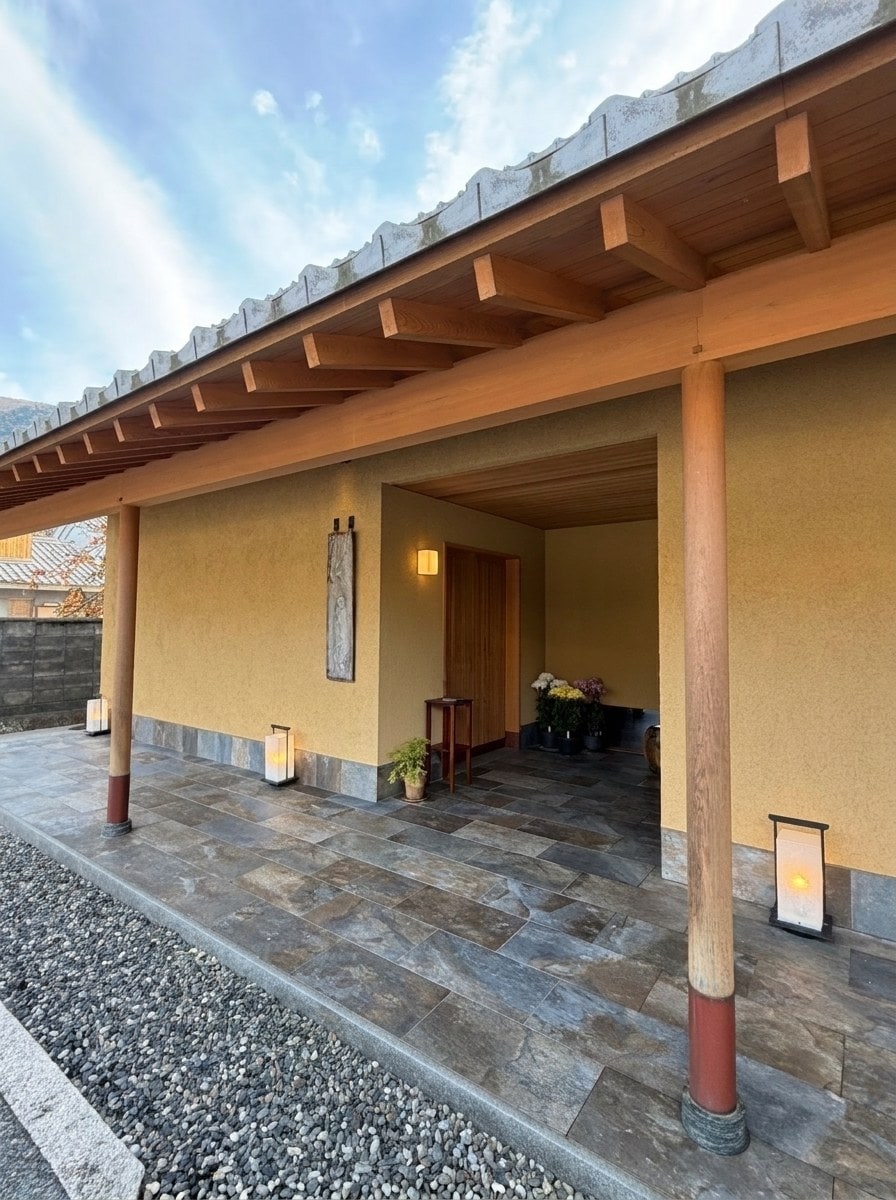
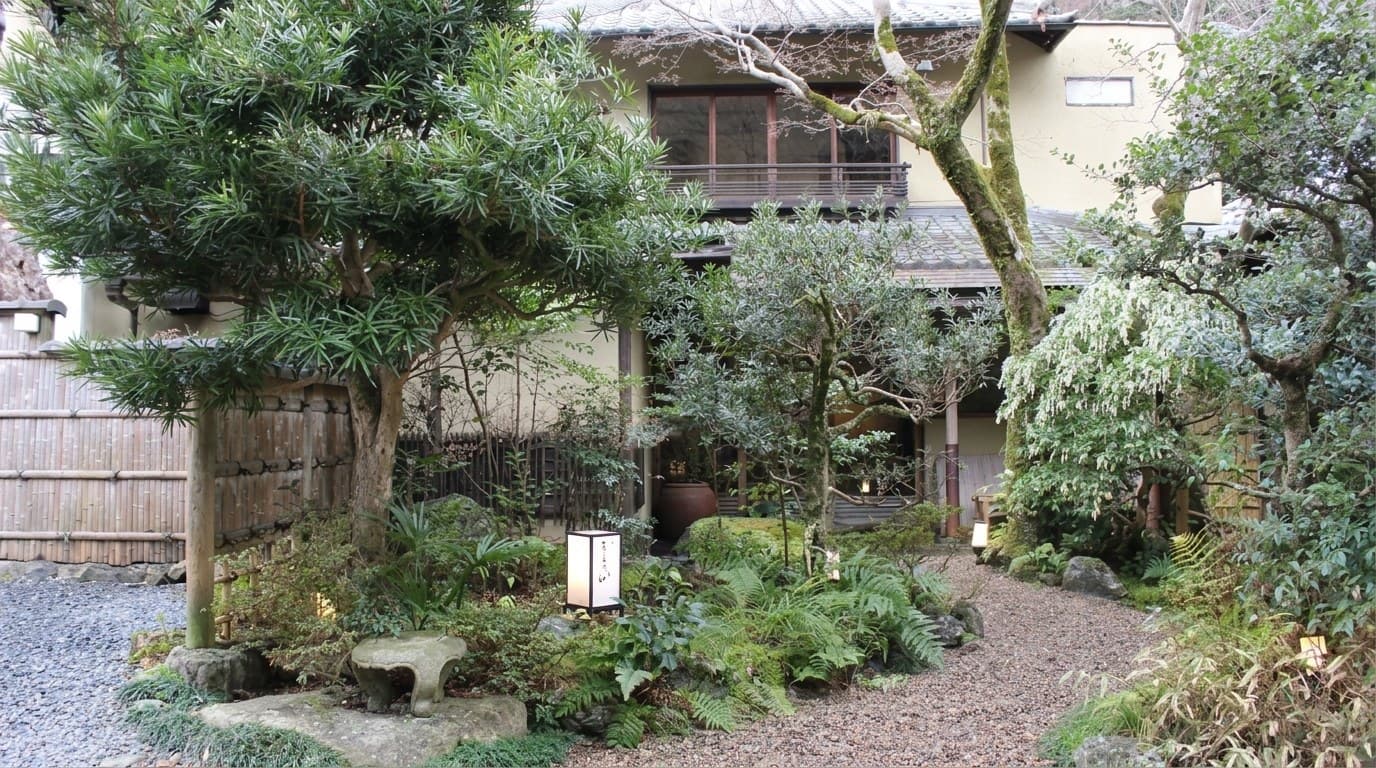
Korian stands on the old port of Kaizu, at the northern tip of Lake Biwa, an hour north of Kyoto. Here the house of Uoji has made funazushi — crucian carp packed in rice and salt and left to ferment, the ancestor of all sushi — since 1784. Each batch takes two winters, worked by the same family for seven generations with the kuramochi no kin, the resident microbes of a cellar that has never gone cold. The current head, Sazaki Kensuke, seventh to carry the name Jiemon, spent three years at Kyoto Kitcho Arashiyama before coming home to the lake.
The novelist’s charge
The restaurant is younger than the fish. It grew from the sixth generation’s idea, and its name came from the novelist Endo Shusaku, a regular, whose pen name Korian — written with the characters for fox and tanuki — puns into 湖里庵, a hermitage of lake and village. His charge: make your specialty something that can be eaten here and nowhere else. The funazushi kaiseki — a formal multi‑course meal built around one fermented fish — was the answer; Endo recorded the naming in his essay collection Mangekyo. In September 2018, Typhoon Jebi flattened the house. Rebuilt over two years and eight months, it reopened in April 2021. The fermentation cellars, and the culture living in them, survived.
What you eat
Funazushi run through some ten forms: sliced plain; tomoae, dressed in its own fermenting rice; funazushi mochi; a pasta where the aged fish stands in for cheese; a small soup; and the closing funazushi chazuke — hot tea poured over rice and fish, the dish the manga Oishinbo made a pilgrimage object. The lake’s seasons run alongside: biwa trout sashimi, young ayu tempura, lake shrimp. Step outside and the meal continues — Kaizu’s Edo‑period stone embankments are part of a nationally designated cultural landscape.
The booking reality
One seating at lunch (12:00), one at dinner (17:00), about two hours each, for eight seats — a six‑seat counter and one private room; two guests minimum, junior‑high age and up. Booking is by phone only, in Japanese, on 0740‑28‑1010. The house publishes no release day; recent diners report calling about two months ahead, and eight seats at two seatings a day is brutal arithmetic. Cancellation closes four days out at 20:00; after that, the full food charge. Our desk calls in Japanese as early as the book allows — we promise the attempt, not the seat.
Want to taste where sushi began, two winters deep, in the town that never stopped making it — and would rather hand the Japanese phone call to our desk than gamble a Kyoto itinerary on it.
Free release-date alerts: the day before, on the morning of release day (08:00 JST) and about 30 minutes before when the time is known — or a weekly summary if the house opens a little every day.
Korian: common questions
Can you book Korian from abroad?
Yes, through our Tokyo desk. Phone only, in Japanese (0740-28-1010). No published release day — recent guests booked about two months ahead. Eight seats, two seatings a day, and they go quickly. No promises. We call the restaurant for you, in Japanese, and the ¥6,000-per-seat fee is charged only if we confirm your table — no seat, no fee.
Some of these links are referral links: if you book through them we may earn a small commission, at no extra cost to you. Restaurants never pay us to be listed or ranked. Editorial policy
Cite this page
Facts on this page were checked by our Tokyo desk. You are welcome to quote them with a link: