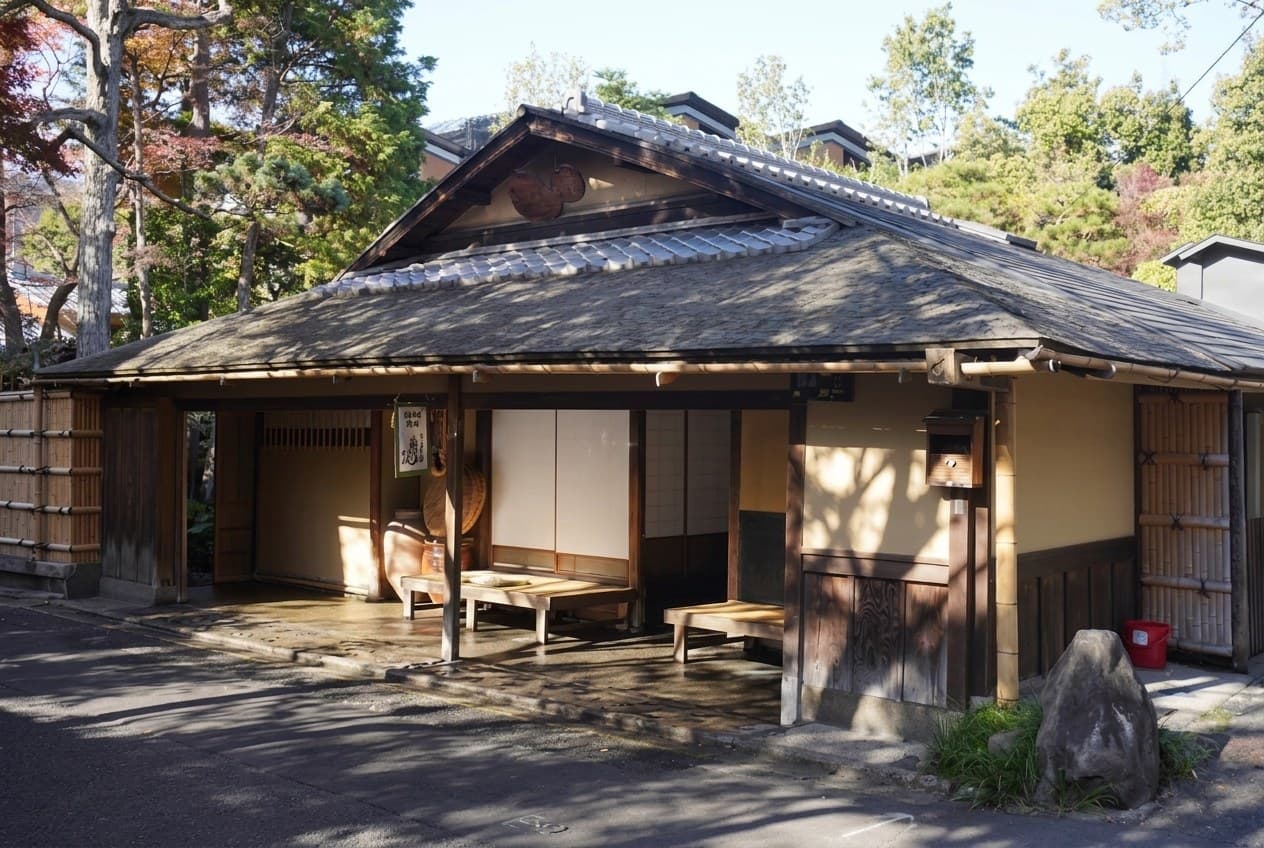
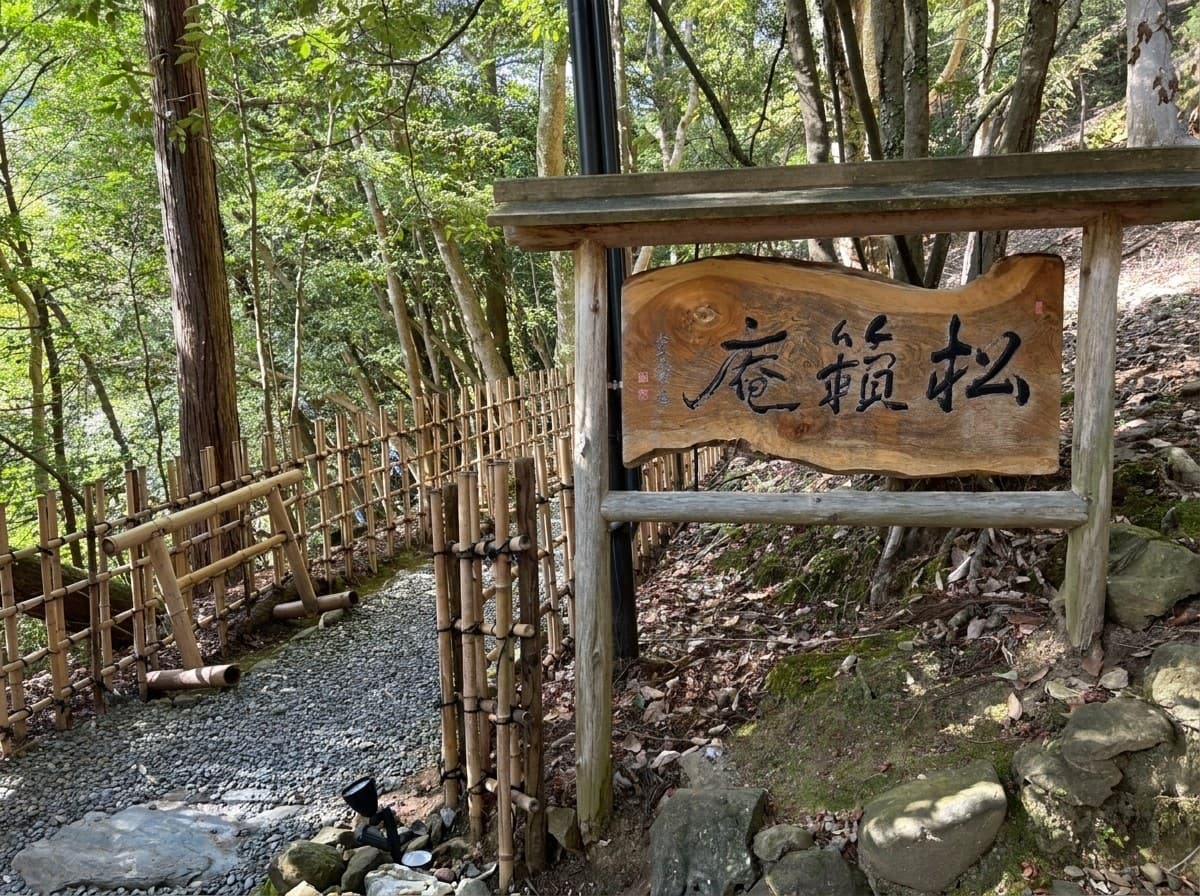
The best kaiseki in Kyoto you can actually book is, in almost every case, a lunch. The city’s celebrated houses sort into three tiers — rooms that take reservations in English a month or two out, rooms that need months of lead time, and rooms that will not seat a stranger at all. Kikunoi Roan on Kiyamachi, the annex at Hyotei beside Nanzenji, the midday course at Kyoto Kitcho in Arashiyama, and the tofu kaiseki at Shoraian above the Hozu rapids are the honest starting points. Mizai and Gion Sasaki are not.
What kaiseki means in Kyoto specifically
Kaiseki anywhere is the seasonal multi‑course form we set out in what kaiseki is. In Kyoto it carries a local accent and a local name — Kyo‑ryori. The old capital sits inland, away from the sea, and the cooking shows it: dashi rather than fat, the heirloom kyo‑yasai vegetables, tofu and yuba and wheat gluten, freshwater fish, and pickles good enough to carry a course on their own. Summer belongs to hamo, the pike conger whose bone‑cutting is a Kyoto discipline in itself, which we cover in our hamo guide.
The room is part of the cuisine. The classical setting is the ryotei — a walled house with a garden, tatami rooms, and a service rhythm inherited from the tea ceremony rather than from restaurants. Do not confuse any of it with obanzai, Kyoto’s home‑style cooking of seasonal vegetable side dishes. Obanzai is excellent and largely walk‑in. It is not kaiseki, and an obanzai counter is a different evening entirely.
Lunch is the whole trick
Kyoto’s great houses are far more attainable at midday. The course is shorter, the room is the same, the garden reads better in daylight, and the price gap is not subtle. Kyoto Kitcho Arashiyama publishes its own figures: a special lunch listed at ¥40,000 in normal season against evening courses from ¥50,000 and a chef’s omakase from ¥95,000, all quoted before the tax and service the house shows separately, and all rising in its October‑to‑May high season. Tabelog places Kikunoi Honten in a lower budget band at lunch than at dinner, and its Kiyamachi sibling Roan has long been known for a midday kaiseki at a fraction of what the same kitchen charges after dark.
The most efficient version of that arbitrage is Hyotei’s annex, which serves morning gruel and a shokado bento at a small share of the main house’s kaiseki price — the house listed the annex gruel at ¥5,445 and the bento at ¥7,260 when we checked in August 2026, against a main‑house lunch kaiseki from ¥31,625. The celebrated asagayu at the main building runs from 1 July to 31 August only; the annex pours gruel across most of the year, turning to quail‑egg uzuragayu over the winter months. Both routes are mapped in how to book Hyotei. For the wider arithmetic, read how much fine dining in Japan costs.
The three tiers of bookability
Reachable — one to two months ahead. Kikunoi Honten, which holds Three MICHELIN Stars (MICHELIN Guide Japan 2026), names official partners that take reservations in English online, as does its sibling Roan. Kyoto Kitcho Arashiyama — opened in 1948, and a three‑star house in the MICHELIN Guide Kyoto Osaka from the first edition through the 2021 volume, since when it has not appeared in the guide at all — books directly and publishes prices and cancellation terms in English. That absence says nothing about the cooking, and the house remains one of the defining kaiseki rooms of the city. Sanso Kyoyamato, a Higashiyama house established in 1877, holds Two MICHELIN Stars (MICHELIN Guide Japan 2026); the MICHELIN Guide Kyoto Osaka 2025 ceremony gave its proprietress Junko Sakaguchi the Service Award. Shoraian, in a former prime minister’s villa inside Kameyama park, takes reservations for its tofu kaiseki and is the gentlest room on this page to secure.
Harder — months of lead time. Hyotei books by phone in Japanese or online through TableCheck, for the main house and the annex alike, with a two‑guest minimum. It was awarded three stars in the first Kyoto‑Osaka edition in 2009 and holds Three MICHELIN Stars (MICHELIN Guide Japan 2026). One to three months is the working window, longer in peak season; the main house’s July–August porridge breakfast opens in monthly batches about four months ahead.
Effectively closed. Mizai, in Maruyama park, serves dinner only, carried a Tabelog score of 4.26 when we checked in August 2026, and is described by diners as booked close to a year out because regulars rebook as they leave; the house itself takes bookings from one year ahead, by phone in Japanese or through its own web form. Gion Sasaki, which holds Three MICHELIN Stars (MICHELIN Guide Japan 2026), is phone‑only, in Japanese, and has a reputation as the hardest seat in the city. Its own site sets the rule — on the first business day of each month the line opens for every date through the end of the month two months ahead — but diners describe hours of redialing that morning, and it is not a seat to plan a trip around. Miyamasou, the mountain inn at Hanase cooking the foraged tsumikusa style and holding Three MICHELIN Stars (MICHELIN Guide Japan 2026), sits in the same tier. Treat all three as ambitions rather than plans.
Ichigen‑san okotowari, honestly
The custom of declining first‑time guests who arrive without an introduction — ichigen‑san okotowari — began in Kyoto’s ochaya and still shapes the top of the city’s dining. It is less a posted policy than an atmosphere: houses that do not advertise, do not publish a booking form, and fill from the same list each month. For a visitor the practical effect is identical whether or not the phrase is ever spoken. When a room’s inventory is consumed by regulars before it reaches the public, you need an introduction, or someone holding one.
We would rather be plain about our own position. Our Kyoto collection holds a small number of kaiseki rooms — Hyotei and Shoraian among them — not a top ten. This is a map of the landscape with the rooms in our own collection marked on it, not a ranking assembled out of links.
Lead times, seasons, and one last note
Book one to two months out for the reachable tier and up to three for Hyotei, longer for the hardest rooms. Kyoto’s two peak windows — cherry blossom in early April, foliage from November — are the tightest of the year, and Kitcho’s own high‑season calendar reflects that in price as well as availability. A kaiseki lunch pairs naturally with a temple morning; our 48-hour Kyoto itinerary builds a trip around exactly that, with a sushi counter in the evening.
On stars, treat any count as an edition rather than a fact — the guides are reissued each spring, and we compare the two systems Kyoto is judged by in Michelin versus Tabelog. Declare dietary needs when you reserve rather than at the table, and read the etiquette before a first tatami room.
Tell us your dates and which tier you are aiming at, and our reservation desk will say honestly what is realistic before anyone books a flight.