Hamo is pike conger eel, and it is the fish that tells you it is summer in Kyoto. From late June through August it appears on nearly every serious kaiseki menu in the city, at its finest in July around the Gion Festival. What makes it remarkable is not only its clean, faintly sweet flavor but the knife work required to serve it at all — a technique called honekiri, in which a chef cuts through thousands of fine bones without cutting the skin. If you are traveling to Kyoto this summer, hamo is the single ingredient most worth seeking out.
Why hamo became Kyoto’s summer fish
Kyoto is landlocked. For most of its history the city sat a full day’s journey from the sea, and in the heat of summer fresh ocean fish rarely survived the trip inland. Hamo was the exception. The pike conger is exceptionally hardy — robust enough to endure transport from the coast, historically carried inland in seawater by peddlers, and still alive when it reached the old capital. In a cuisine built around scarcity and season, a sea fish that arrived fresh in midsummer was close to a miracle, and Kyoto built a culture around it.
The timing is more than convenience. Kyoto says hamo is at its best in July, after the rainy season — the fish “drinks the rain of tsuyu” and fattens just enough. That peak lands squarely on Kyoto’s Gion Matsuri, the month‑long July festival whose Yamaboko float parade is among Japan’s most famous. Locals sometimes call it the Hamo Festival — the season and the celebration are inseparable, and eating hamo during Gion is part of the ritual of the month.
The problem, and the knife that solves it
Hamo is delicious and nearly impossible to eat. Its flesh is packed with small, pin‑like intramuscular bones — reportedly several thousand in a single fish — set in every direction. No amount of careful filleting removes them, because they are woven through the meat rather than lined up along a spine.
The solution is honekiri, literally “bone‑cutting.” The chef opens the fish, removes the backbone, and then works the length of the fillet with a heavy, wide‑bladed knife made specifically for this task, the honekiri‑bocho. The cuts are astonishingly close together — roughly two dozen per three centimeters of flesh, with published accounts ranging from about 24 to 26 — and each one slices cleanly through the bones while stopping precisely at the skin, which is left intact to hold the piece together. Listen for it in a good kitchen and you hear a rapid, even tapping, the blade finding the same depth again and again.
Done properly, the bones are cut so finely that none is ever felt in the mouth; the fish eats as tender as it looks. Done poorly, you either taste bone or the slice falls apart. This is why honekiri is treated as a genuine benchmark of skill. It is often said that a Kyoto chef is not fully trained until the knife work is mastered, and by some accounts it can take close to a decade to reach that level. When you order hamo, you are also paying for the years behind the blade.
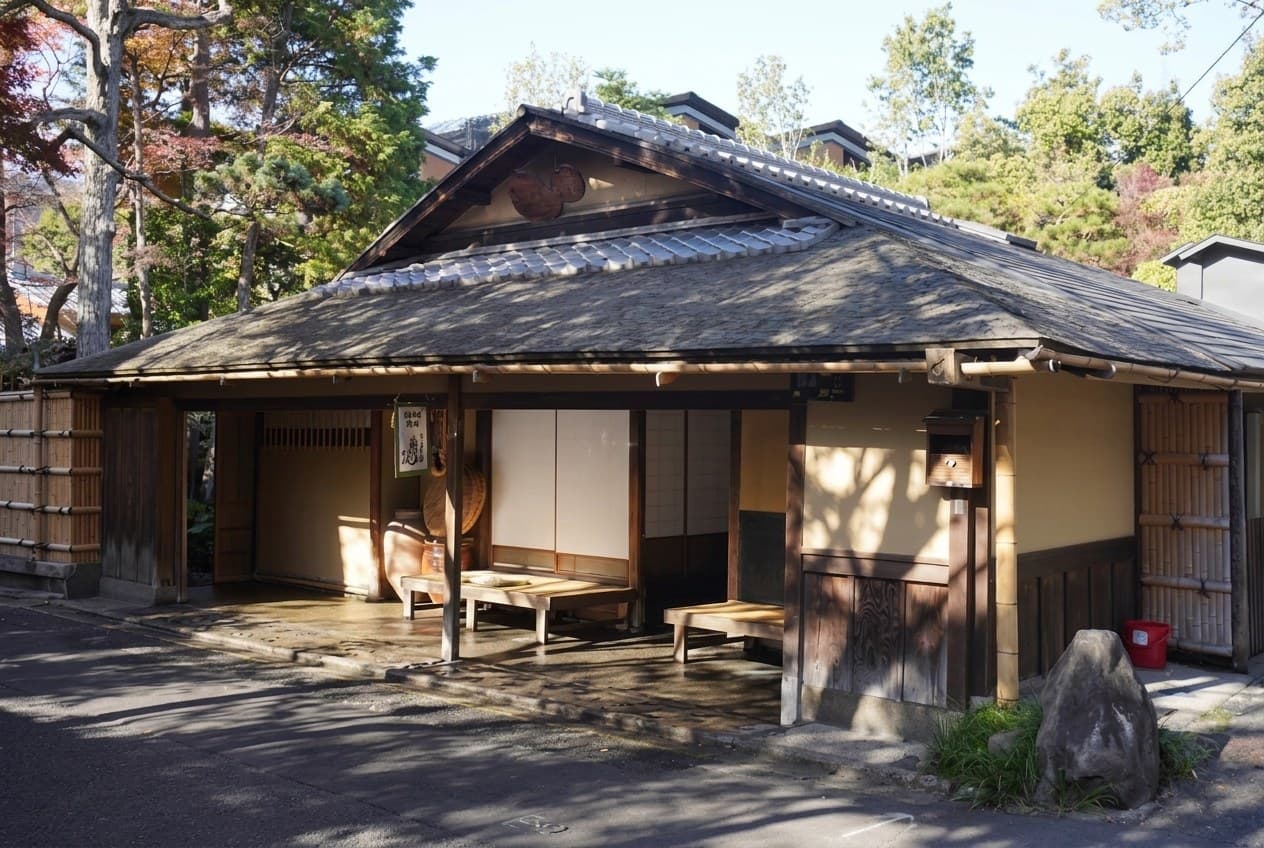
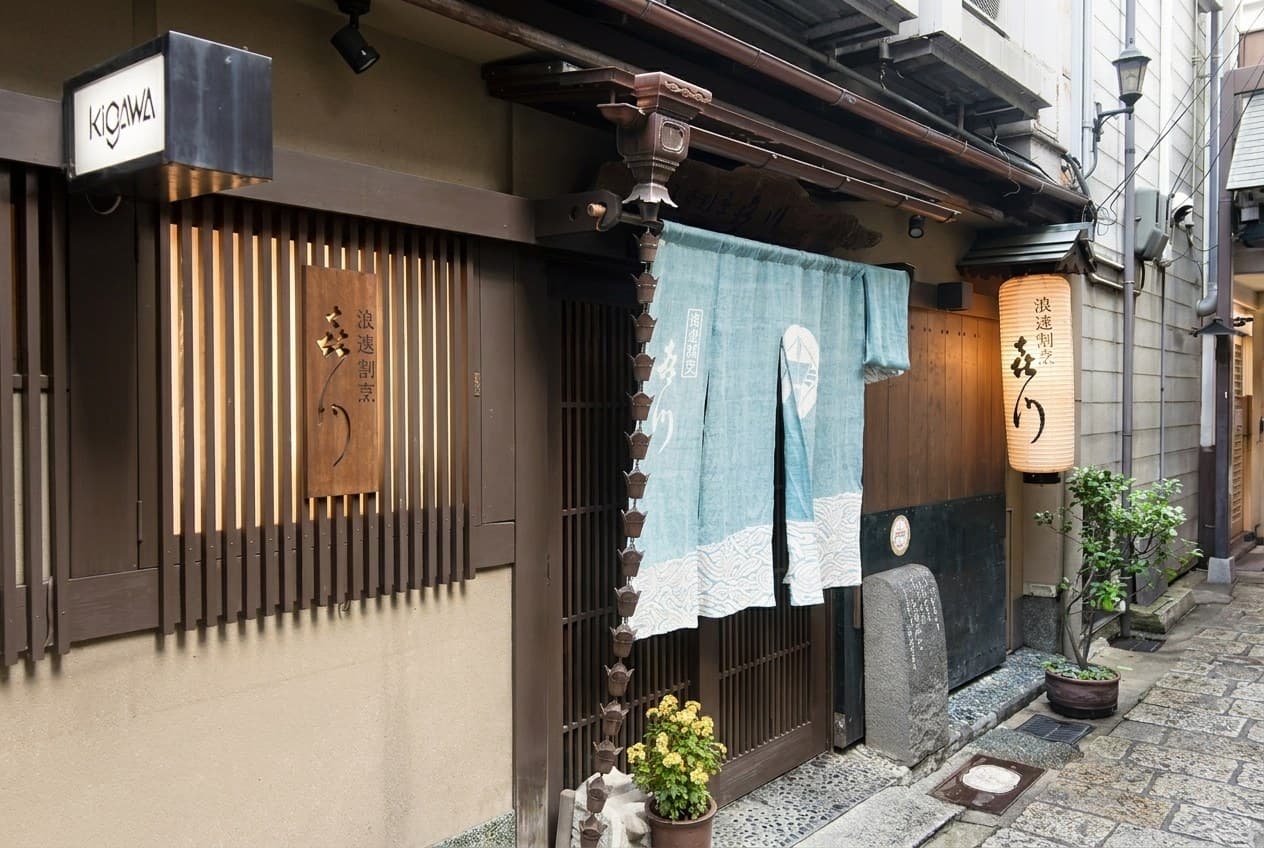
For a sense of that lineage, few rooms carry it as visibly as Hyotei, the roughly 400-year‑old Kyoto kaiseki house near Nanzen‑ji, where hamo is a fixture of the summer courses. Across in Osaka, the more direct, ingredient‑forward style of kappo — counter cooking where the chef works in front of you — gives you a closer view of the same technique; Kigawa is a benchmark of that Osaka tradition.
How hamo is served
The dish that defines the season is hamo otoshi, also called hamo yubiki. The honekiri‑cut fish is blanched briefly in hot water, at which point each piece blooms open — the scored flesh curls back and the white meat opens like a flower, an effect chefs prize and sometimes call botan‑hamo, “peony hamo.” The pieces are plunged into ice water to firm them, then served chilled with a tart plum sauce made from umeboshi, sometimes alongside a mustard‑vinegar miso. The pairing is deliberate: the cool, clean, mild fish against the sharp acidity of the plum is one of the great summer combinations in Japanese cooking, and a direct answer to the July heat.
The other essential preparation is hamo shabu, a light hot pot in which slices of hamo are swished for a few seconds through a delicate dashi, often with seasonal vegetables such as onion or matsutake later in the season. The brief cooking keeps the flesh silky, and the fish’s bones and head, simmered separately, give the broth real depth — hamo is a fish cooked nearly nose to tail. Beyond these, you will find hamo grilled and glazed, in clear soups, and as tempura. Nearly all of it depends first on the honekiri cut.
Eating hamo as a traveler
Hamo is a summer‑only pleasure, essentially July and August, and it is best encountered inside a kaiseki or kappo meal rather than ordered à la carte. The best rooms in Kyoto and Osaka book weeks ahead in high season. Some now take bookings online — Hyotei on TableCheck, Kigawa on Ikyu — while many others still take only a phone call in Japanese.
That is the gap we close. If the house you want for hamo otoshi, or for watching honekiri at an Osaka counter, is phone‑only and in our collection, our Tokyo desk can make the call and time the booking. Come in July, and let the fish tell you it is summer.