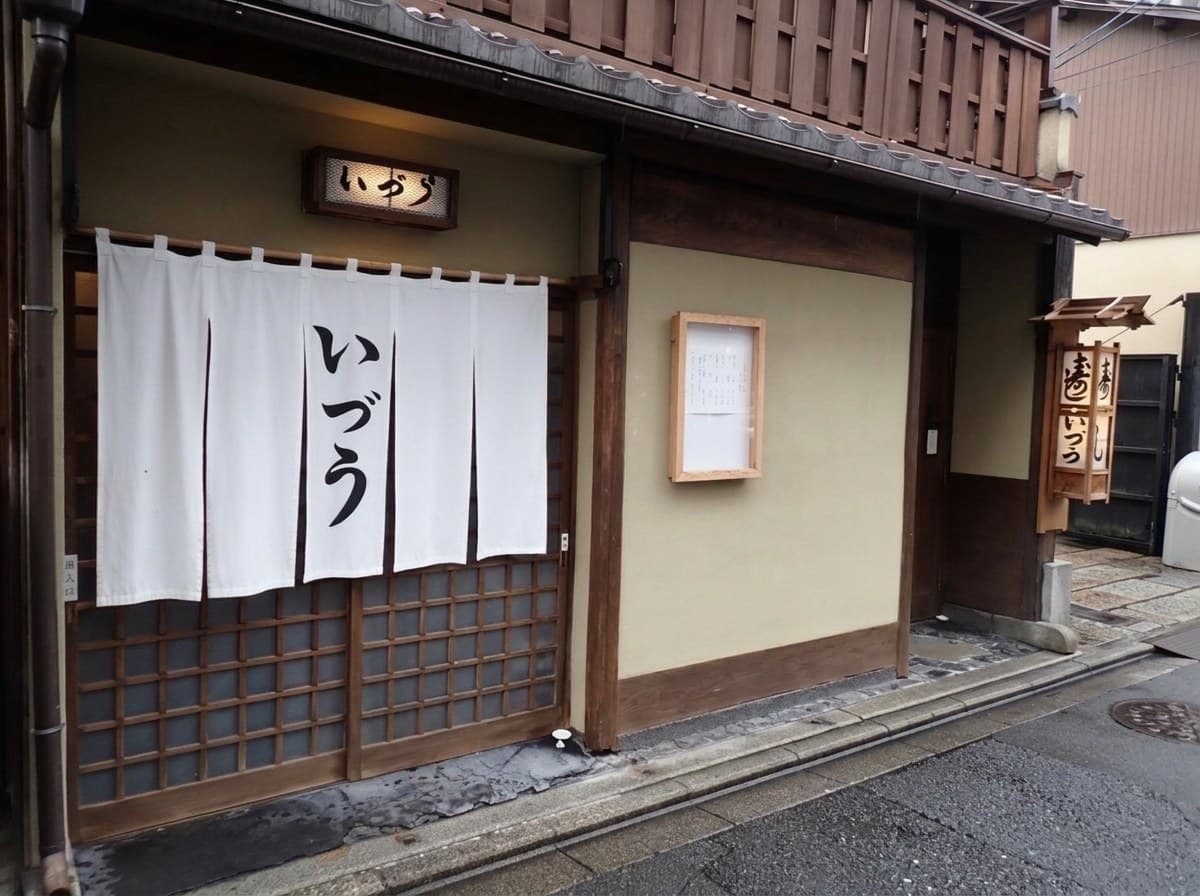
Some of Japan’s most admired restaurants cannot be booked at all by a stranger — not because the phone is busy, but by design. The phrase for it is ichigen‑san okotowari, and it frustrates more visitors than almost any other feature of Japanese dining. It is also widely misread. This is not snobbery; it is a system.
What the phrase means
Ichigen‑san (一見さん) is a first‑time guest — someone with no prior connection to the house. Okotowari means a refusal. Together, ichigen‑san okotowari is the custom of politely declining anyone who is not introduced by an existing, trusted customer. You cannot simply walk in or cold‑call for a table; you must arrive through someone the restaurant already knows.
Where it comes from
The practice began in Kyoto’s ochaya — the teahouses of the five geisha districts, Gion Kobu and Pontocho the most famous among them. There, an evening’s entertainment was billed later, on account, to established patrons. Extending credit and access to an unknown guest was a real risk, so the ochaya admitted only those vouched for by someone reliable. From that world the custom spread to a select tier of high‑end restaurants, especially traditional Kyoto houses and small counters elsewhere.
Why it endures
At a counter seating eight or ten, the economics are unforgiving. The chef buys and prepares exact quantities of expensive, perishable ingredients for the guests expected that night. A single no‑show is costly; a table that lingers or misbehaves disrupts the careful rhythm of service. An introduction solves both problems at once — it vouches for the guest’s reliability and manners, letting the house shop and seat with confidence. It is, at heart, risk management dressed in tradition.
Where you meet it today
The custom is no longer a Kyoto curiosity — it now governs the very top of Japanese dining. Sushi Saito in Tokyo stopped taking public reservations years ago; seats belong to regulars and their guests, and we treat any request for it as exactly that — a request, with honestly low odds. Kataori in Kanazawa runs the same way for most of its eight seats, releasing only fragments of inventory, without notice, on OMAKASE and Pocket Concierge. There is even a measurable pattern: because Michelin lists only restaurants the public can book, houses that go introduction‑only vanish from the guide while Japan’s own diners keep voting them to the top of the Tabelog Award — a missing star, at this altitude, can mean the door narrowed rather than the cooking slipped.
How to actually get in
An introduction usually comes from a regular customer; a good hotel concierge can occasionally vouch for its own guests. Some restaurants soften the rule when a known regular brings you along. Two things do not work, and can do lasting damage: paying a stranger online who claims to resell a regular’s seat — houses blacklist both seller and guest when it surfaces — and having someone cold‑call while name‑dropping a customer who never actually vouched for you. An introduction is a personal guarantee; the person giving it answers for your manners and your attendance, which is why nobody hands one to a stranger. The point is that the connection, not the phone call, opens the door. This overlaps closely with two related barriers we cover in depth: phone‑only restaurants in Tokyo and the broader question of why you cannot book Japan’s best restaurants.
Understood properly, ichigen‑san okotowari is not a wall but a handshake you have not yet been offered. We cannot manufacture an introduction, but we can tell you honestly which houses work this way — and find counters of the same calibre that welcome new guests.