Ginza gets the fame, Asakusa gets the crowds — but the district that fed Edo’s merchant heart is Nihonbashi and Kanda, and no part of Tokyo holds more restaurants that were already old when your great‑grandparents were born.
The century houses
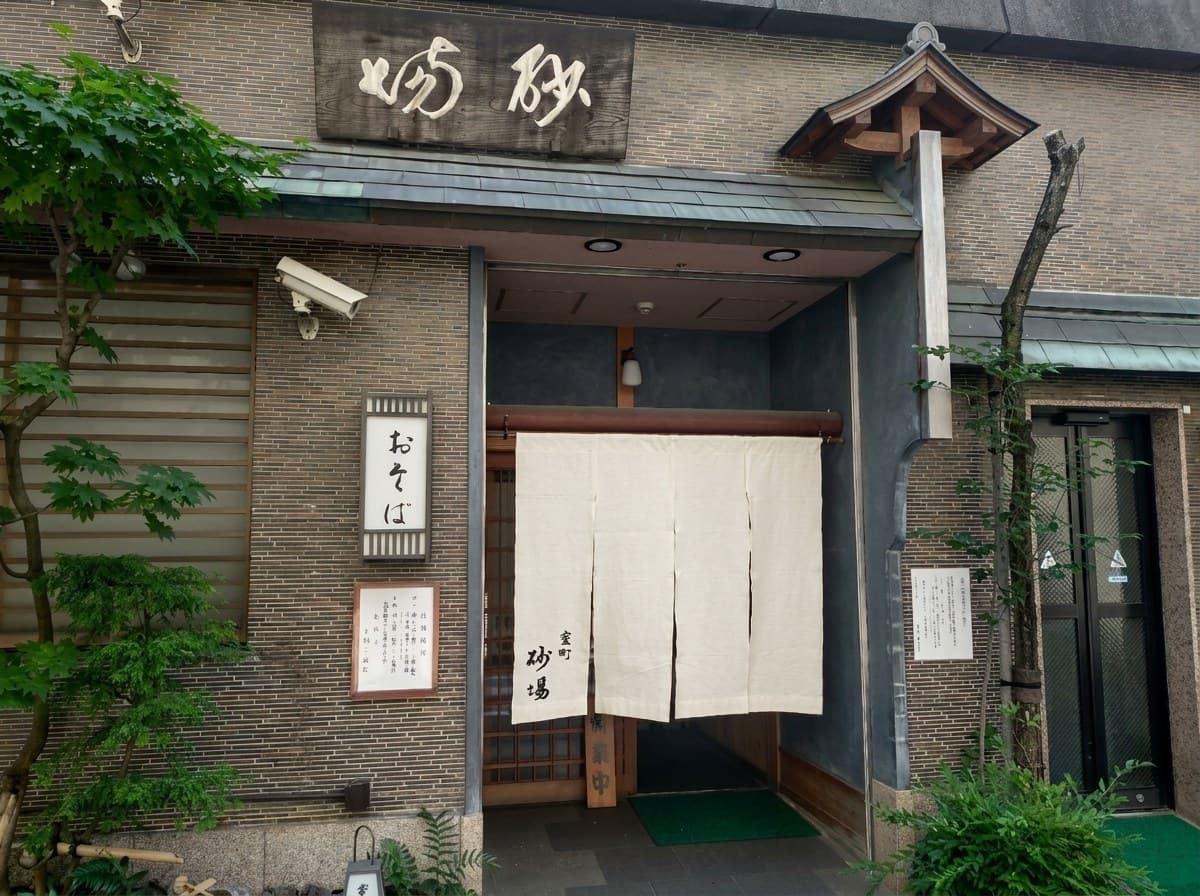
- Muromachi Sunaba — one of the founding houses of soba, the aristocratic school of the noodle: seiro on lacquer trays, tempura in the old style, sake at noon without judgment.
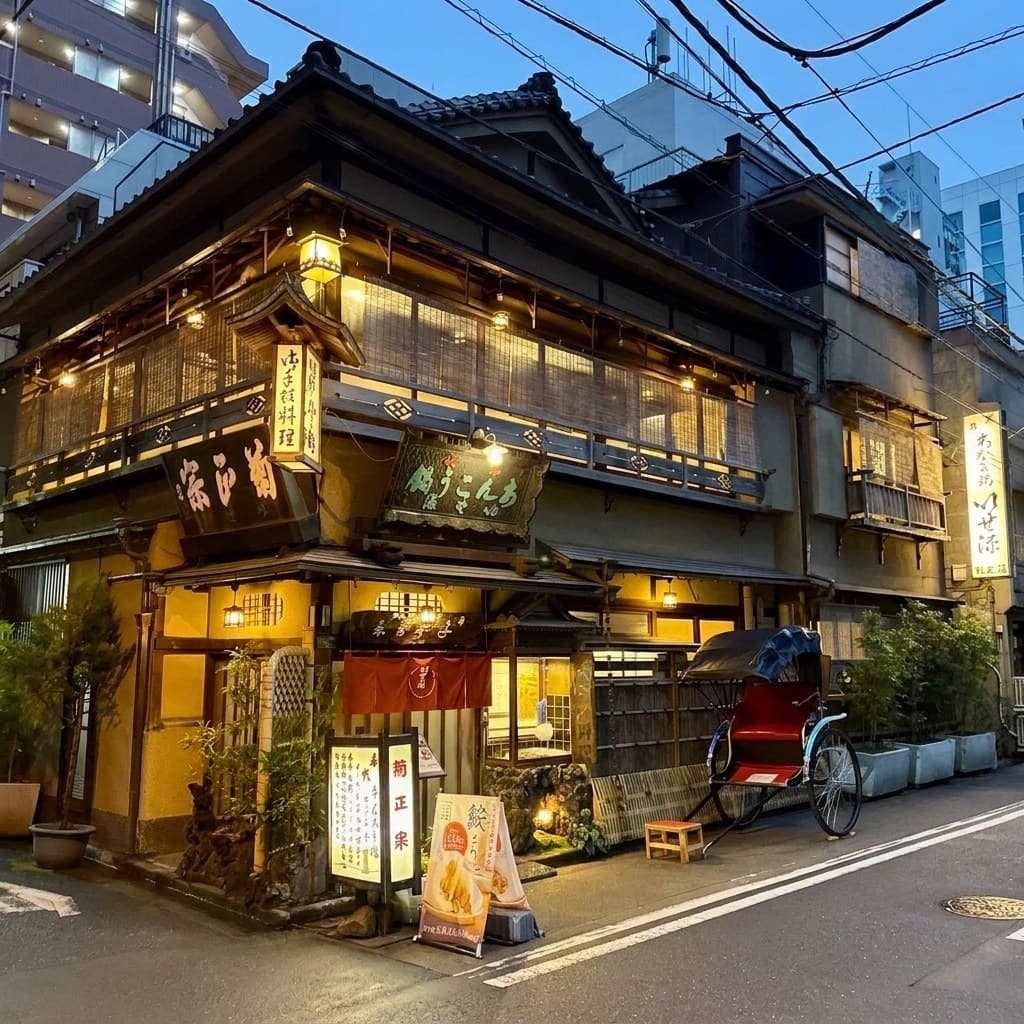
- Isegen — Tokyo’s definitive anko (anglerfish) hotpot parlor, serving since 1830 in a creaking wooden building; the miso broth and the ankimo liver are the great winter ritual of old Tokyo (November–March).
- Botan — chicken sukiyaki over charcoal since the 1890s, cooked at your table in an iron pan by kimono‑clad staff in a house of tatami rooms.
- Toriyasu — duck courses since 1872 by the river in Higashi‑Nihonbashi, one dish perfected for a century and a half.
These are working restaurants, not museums — and most cost far less than their history implies, with same‑week bookings the norm.
The modern summit, hiding in plain sight
The district’s paradox: among the wooden houses, Kakigaracho holds modern sushi’s hardest seat — Sugita — a reminder that Nihonbashi has never stopped being where Tokyo’s most serious eating happens, only stopped advertising it.
The houses and their doors
What unites this district is not a cuisine but a booking rhythm: no release day and no monthly scramble. A few houses now take online bookings; the rest still run on the telephone, answered in Japanese. Either way it is easier than Ginza’s monthly scrambles, provided someone makes the call where one is needed. Here is how each house actually takes its guests.
- Muromachi Sunaba — the ground floor is walk‑in only. The upstairs tatami rooms book by phone, in Japanese, for course meals; service Mon–Fri 11:30–21:00 straight through with no afternoon break, Saturday until 16:00, closed Sundays and holidays.
- Isegen — online through Tabelog for one to eight guests; nine or more by phone in Japanese (line staffed 11:00–21:00). Unreserved seats are kept for walk‑ins. 120 seats, but winter demand compresses onto them. Closed Mondays, plus Sundays and holidays from April to October. Changes and cancellations must be made by the day before or half the course price is due.
- Botan — online through the house’s own web form (Toreta) or Tabelog until 22:00 the day before, or by phone in Japanese; parties of 16 or more and seat requests go by phone. About a hundred tatami seats, with some kept for walk‑ins, so a normal planning window lands a weeknight table. Closed Sundays and holidays, and roughly two weeks in August.
- Toriyasu — online through Tabelog or Ikyu for a capped share of rooms, or by phone in Japanese; when the web shows full, the phone often still finds a room. Weekday dinners only (17:00–21:00, last entry 19:30); Saturdays are private‑group bookings, and the house closes Sundays, holidays, Aug 9–17 and Dec 30–Jan 6.
- Kanda Yabusoba — founded 1880. Most guests simply queue; only eight ground‑floor seats per hour can be phoned in by the day before, and they are forfeited if you are late. The upstairs rooms are reservation‑only and suit groups. Line 11:30–20:00, closed Wednesdays.
- Kanda Matsuya — founded 1884, 60 seats, shared tables, no reservations at all (the phone is for tamagoyaki orders). Opens 11:00, closed Sundays and Mondays; the pre‑opening queue usually clears in 20–30 minutes. Cash only.
- Myojinshita Kandagawa — eel since 1805, a Tokyo Norenkai member. Reservations are expected; private rooms seat two to six. Phone during business hours (Tue–Sat 11:30–14:30 and 17:00–21:00); a few weeks ahead for a room.
- Nihonbashi Yukari — a 70-seat kappo house. Lunch courses are easy; the third‑generation omakase is taken by phone from about a week ahead, private rooms earlier. Closed Sundays and holidays.
- Ningyocho Imahan — sukiyaki since 1895, booked online through TableCheck, which takes one to eight guests up to two months ahead; further out or larger groups by phone. Free cancellation until the day before, 100 percent of the food price on the day. Weekend evenings in the tatami rooms fill first.
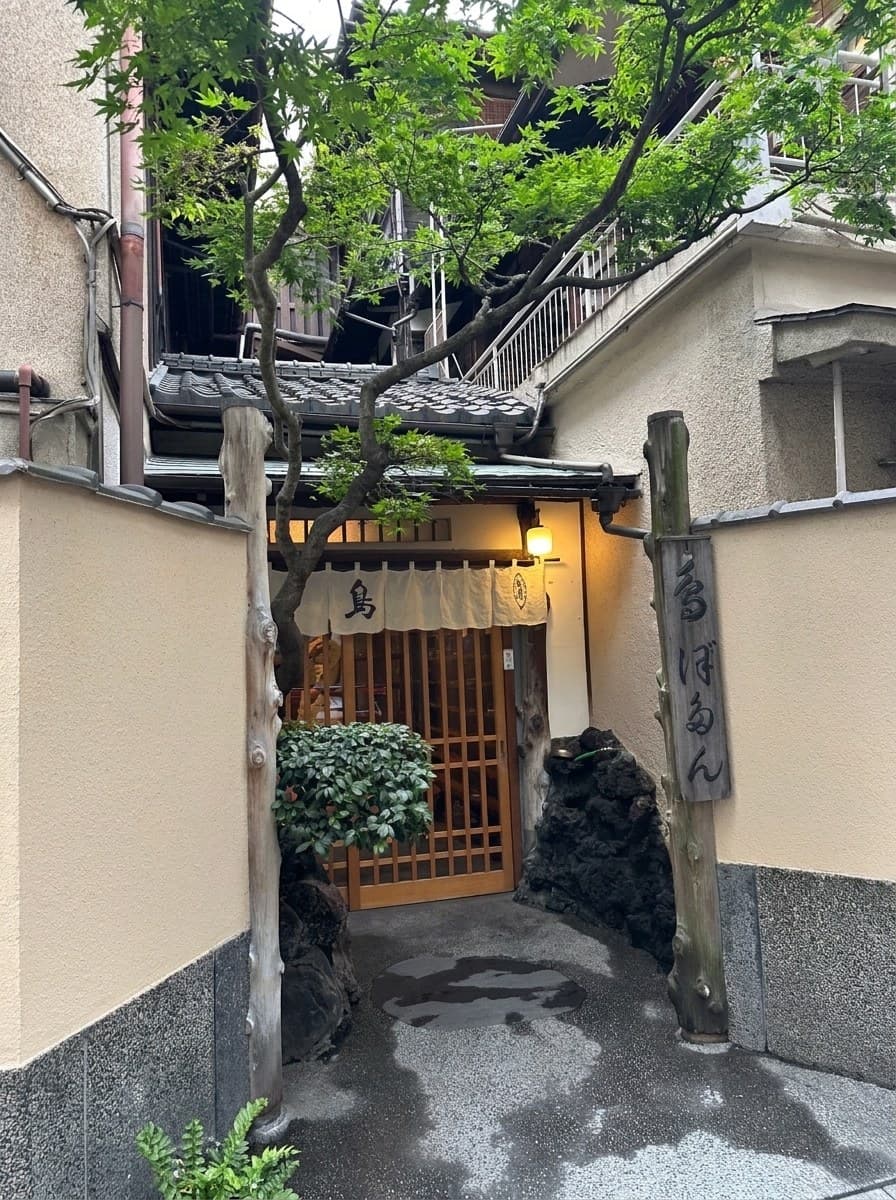
- Seiyo Ryori Shima — the basement yoshoku room whose beef sandwich and chateaubriand have a global following. 28 seats (eight at the counter), dinner only 18:00–21:00 Mon–Sat, phone only in Japanese. Regulars hold most seats, so first‑timers should call weeks ahead.
- Tsujihan — the 12-seat kaisendon counter takes no reservations at any branch. Lunch waits run one to two hours; aim for opening or 17:00. Cash only.
- Kikanbo — Kanda’s spice‑and‑numbing miso ramen, walk‑in only: ticket machine, queue, state your levels when called. 15 seats, Mon–Sat 11:00–21:30, Sunday until 16:00.
And the summit. Sugita runs through OMAKASE, but returning guests are offered seats first; leftovers and cancellations go public at short notice, often one to two days ahead, with no fixed date. The 2018 stories of a phone waitlist on the 1st are no longer current. It is, in practice, a regulars’ house.
What to fix first, and what to leave flexible
Fix, in this order: any winter evening at Isegen (the November–March season is the whole point, and weekends go early); a December date at Toriyasu, since year‑end banquet season fills first and the house takes only weekday dinners; a private room anywhere — Kandagawa, Yukari, Imahan’s tatami — which need more notice than counter seats; and a Shima dinner, where the regulars’ hold on 28 seats means weeks of lead for a newcomer.
Leave flexible: soba lunch. Sunaba’s ground floor, Matsuya and most of Yabusoba are queues, not bookings, and the queues move. Botan on a weeknight and a Yukari lunch course can be settled the same week. Ramen and kaisendon are the walk‑in layer; plan them around an early or late hour rather than around a reservation.
Seasonally, this is a winter district. Isegen’s anko runs November to March; Toriyasu’s duck peaks in the cold months and its book compresses in December; eel at Kandagawa is a summer tradition that runs year‑round. August is the quiet month — Botan and Toriyasu both close for part of it.
What we can and cannot do
The houses above in our collection — Sunaba, Isegen, Botan, Toriyasu — are ones we book: we make the Japanese call, order the course where the house requires it at booking, and confirm the cancellation terms back to you. The fee is ¥6,000 per seat, charged only if we secure the table and after you approve it. No seat, no fee. Houses outside the collection, such as Kandagawa, Yukari or Shima, take bookings directly by phone; we can also request them at ¥12,000 per seat, charged only if we secure the table and after you approve it.
What we cannot do is open Sugita. Its book is effectively regulars‑only; we do not claim a seat we cannot secure. Book it yourself on OMAKASE; with a free account you can save it for release alerts. The walk‑in houses — Matsuya, Tsujihan, Kikanbo — take no reservations from anyone, so there is nothing to book and nothing to charge. For how these mechanisms compare across the city, start with how to book restaurants in Tokyo and our note on phone‑only houses.
Why this district tastes like Edo
Nihonbashi was the zero‑marker of the shogun’s road network and the merchant capital of Edo’s food revolution — soba, sushi, tempura and unagi all industrialized here to feed the world’s largest city. The surviving houses are that economy’s living remainder: single‑dish specialists, each polishing one idea for a century and a half, the pattern our restaurant‑types guide traces nationwide.
Building the day
The classic shape: soba lunch at Sunaba, Yabusoba or Matsuya, an afternoon in the district’s craft shops and the Mitsukoshi food hall (depachika at its most venerable), then an old‑house dinner — anko nabe in winter, duck or chicken sukiyaki year‑round, sukiyaki proper at Imahan for a group. In cold months this is Tokyo’s best eating district, full stop; our winter guides pair naturally with it.
Most houses here book easily — but the rooms are small and winter weekends vanish. Tell us the night and we will set the century table.