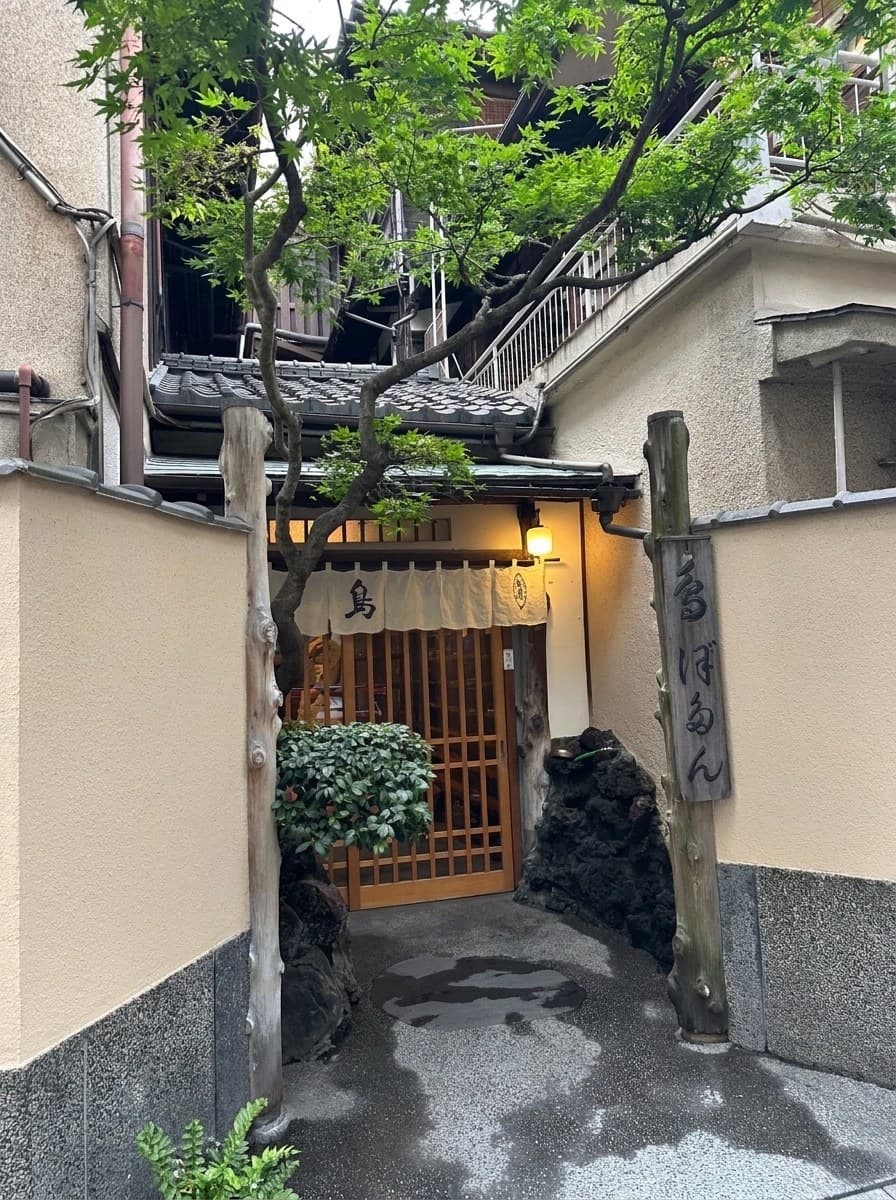
In shortDuck sukiyaki — one dish since 1872. Reservations run in Japanese and are hard to place from abroad, so our Tokyo desk requests the table for you, by phone and in Japanese.
Price
Single course ¥18,000 (tax & service incl., dinner only)
Sundays & holidays · Saturdays by group booking only · summer break (Aug 9–17) and New Year (Dec 30–Jan 6)
Seats
About 50 — tables and sunken-hearth seats, no counter
Private rooms
Yes — around ten rooms for 2–6, combinable up to 40
Payment
Cards accepted (no e-money or QR codes) · +10% service
Getting there
Higashi-Nihonbashi Stn, 5 min walk — between Ryōgoku's sumo world and Asakusabashi
Dress code
No dress code
When the samurai class was abolished, a retainer named Watanabe Daisuke
needed a trade; a kabuki actor suggested duck. The house he founded in
1872 beside the Ryōgoku bridge has served exactly one course ever
since: aigamo — a cross of wild mallard and domestic duck, bred for
deeper flavor than farmed duck alone — seared on an iron pan heated by
charcoal, and eaten not with sukiyaki’s usual sweet sauce but with
grated daikon radish and soy, an Edo‑era reading almost nowhere else
remembers.
What you eat
The course runs six acts: appetizers, a clear duck soup, a small duck
dish, then the sukiyaki itself — thick‑cut breast with its skin, liver,
gizzard and heart in succession, a tasting of the whole bird, cooked and
portioned entirely by kimono‑clad attendants at your table while the
vegetables fry in duck fat. The finale is the house’s quiet masterpiece:
rice fried in that same iron pan, in the drippings of everything that
came before. Then dessert. ¥18,000 covers it, tax and service included.
Tanizaki and Ozu ate here; the potter Nakazato Tarōemon XIII loved the
place enough that the family kept a tatami room for him.
The booking reality
The window is narrower than the fame suggests: dinner only, Monday to
Friday, last entry 19:30. Saturdays go to private groups, Sundays and
holidays it rests, and the house closes for mid‑August and the New Year
week. A limited share of the rooms opens online through Tabelog and Ikyu — but when the web shows full, a phone call in Japanese often still finds one of the roughly ten private rooms for two to six, which are the way to eat here, and the call is where the house confirms your party size, any duck‑liver aversions, and which room you get. That call, placed from Tokyo in Japanese, is the whole
job; December — Japan’s year‑end banquet season — fills first, so give
it lead time.
Go if you are building an evening around Ryōgoku — sumo stables, the Edo
museum district, the Sumida river at dusk — or if you understand that a
menu of one item, held for a century and a half, is the deepest form of
confidence.
The house's cancellation charge
From 1 day before50%
Same day, with notice100%
Same day, no notice (no-show)100%
Charged by the house, not by us. A plan's own policy takes precedence.
Free release-date alerts: the day before, on the morning of release day (08:00 JST) and about 30 minutes before when the time is known — or a weekly summary if the house opens a little every day.
Aigamo Ippin Toriyasu: common questions
Can you book Aigamo Ippin Toriyasu from abroad?
Yes, through our Tokyo desk. By phone in Japanese, or online via Tabelog or Ikyu for a limited share of rooms — when the web shows full, a call often still finds one. Weekday dinners only — Saturdays are for private groups, Sundays it rests. We call the restaurant for you, in Japanese, and the ¥6,000-per-seat fee is charged only if we confirm your table — no seat, no fee.
Some of these links are referral links: if you book through them we may earn a small commission, at no extra cost to you. Restaurants never pay us to be listed or ranked. Editorial policy
Cite this page
Facts on this page were checked by our Tokyo desk. You are welcome to quote them with a link:
Aigamo Ippin Toriyasu — Higashi-Nihonbashi, Tokyo — SHOKU NOREN (checked September 2026). https://shokunoren.com/restaurants/toriyasu-higashinihonbashi