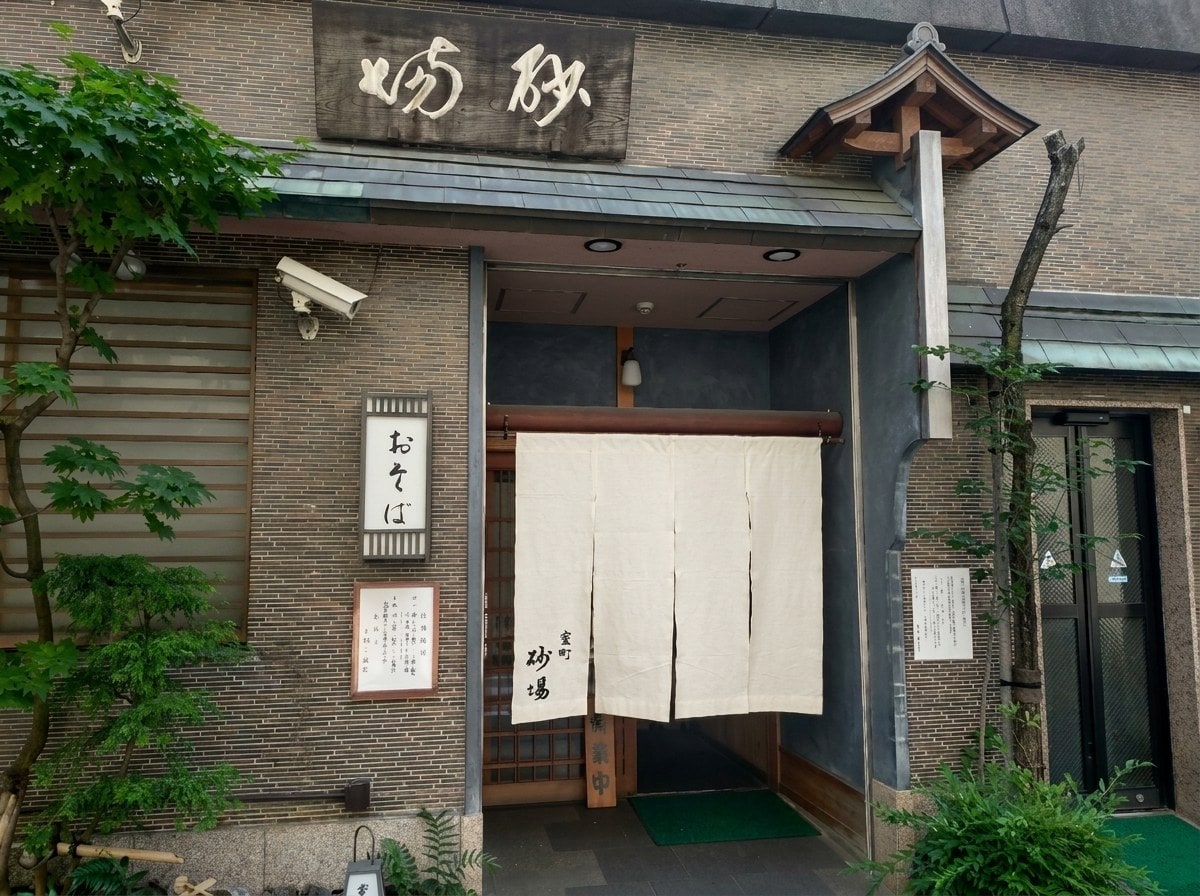
In shortSoba — the house that invented tenzaru. Reservations run in Japanese and are hard to place from abroad, so our Tokyo desk requests the table for you, by phone and in Japanese.
Price
Tenzaru ¥2,200 · mori from ¥990 · private banquet rooms upstairs
Hours
Mon–Fri 11:30–21:00 (drinks last order 20:00) · Sat 11:30–16:00 (last order 15:30)
Closed
Sundays, holidays & Jan 1–4
Seats
100 — ground-floor tables and raised tatami (56), private rooms and chairs upstairs
Private rooms
Yes — upstairs, sunken-hearth tatami and western rooms, 4 to 32
Payment
Cards accepted (no e-money or QR codes)
Getting there
Kanda / Mitsukoshimae Stn, 3 min walk — the old merchant heart of Nihonbashi
“Sunaba” — the sand pit — is the oldest trade name in soba (buckwheat
noodles, eaten since the Edo period as fast food for townspeople). It
goes back to noodle shops that fed the laborers at Osaka Castle’s sand
yards in the 1580s. The Muromachi branch of that lineage has stood in
Nihonbashi since 1869, run by five generations of the Muramatsu family —
and in the postwar years, under the third‑generation brothers, it solved
a small practical problem and accidentally gave Japan a universal dish.
Tempura soba, served hot, was miserable in summer; their answer was
tenzaru — cold noodles beside a hot dipping broth crowned with a
shrimp‑and‑scallop kakiage (a fritter of small pieces bound in batter).
Few people who order it anywhere in Japan know someone invented it here.
What you eat
The original, obviously, in two noodle styles: the ivory zaru, milled
from the buckwheat’s polished heart, and the darker, nuttier mori.
The kakiage sits in the warm broth and slowly gives up its sweetness, so
the last dip tastes different from the first — that is the design.
Around it, the full grammar of Edo soba culture: sake first with
sobamiso (soba‑studded miso) and simmered herring, noodles last, in a
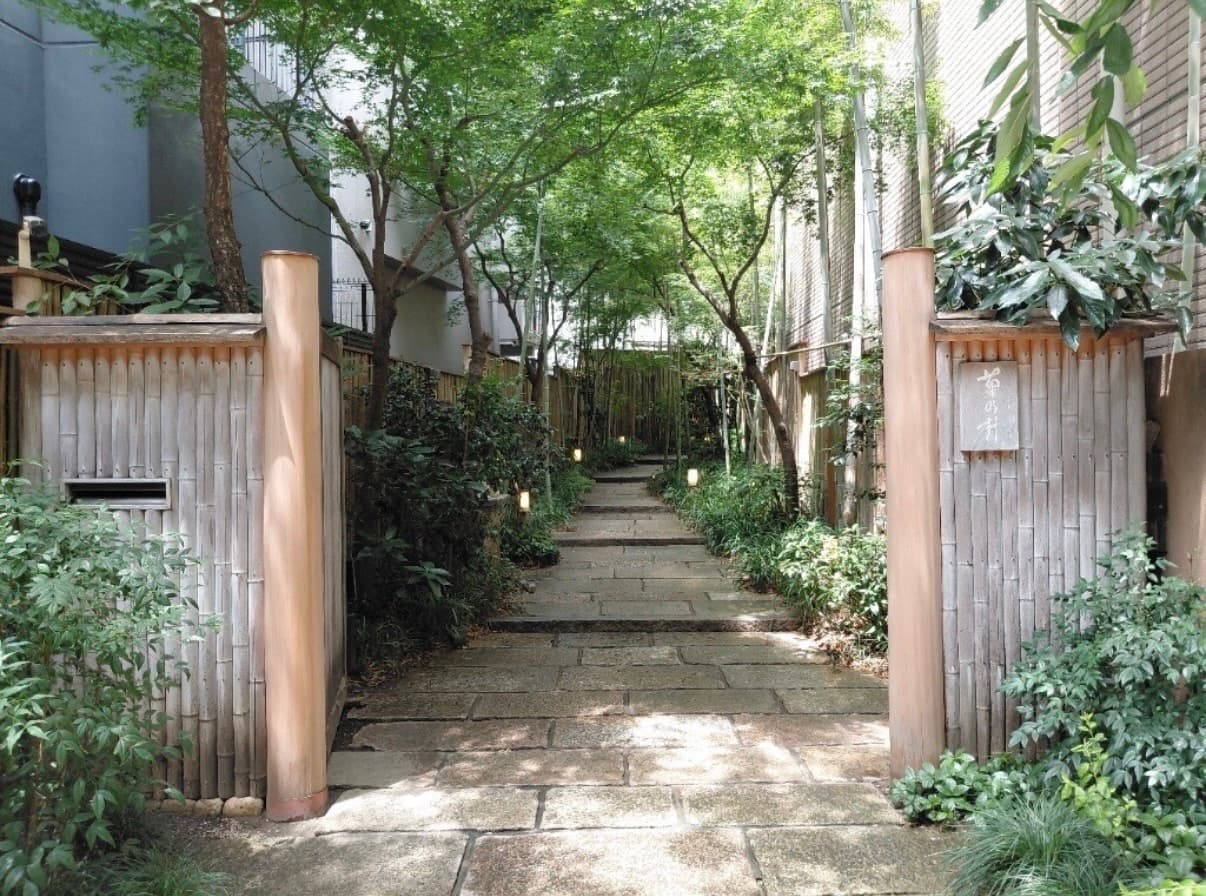
building with a small courtyard garden at its center.
The booking reality
Two houses share one kitchen. The ground floor — tables and raised
tatami — takes no reservations at all; you walk in, and outside the
lunch peak you sit within minutes. The upstairs rooms, tatami with
sunken hearths and western rooms for four to thirty‑two, book by
telephone only, in Japanese, for banquet courses up to a full soba
kaiseki (a multi‑course meal built around soba). No reservation platform
carries them. Closed Sundays and holidays, and Saturday is lunch only —
the trap that catches weekend planners. A call from our desk is how the
upstairs opens: we book the room and the course, and you arrive to a
private tatami lunch in a house travelers usually experience only as a
queue for the ground floor.
Go if you think you know soba, if you are building a day around
Nihonbashi — the Mitsukoshi flagship and the Mitsui Museum are minutes
away — or if you simply like eating a dish where it was invented.
Free release-date alerts: the day before, on the morning of release day (08:00 JST) and about 30 minutes before when the time is known — or a weekly summary if the house opens a little every day.
Muromachi Sunaba: common questions
Can you book Muromachi Sunaba from abroad?
Yes, through our Tokyo desk. Ground floor is first-come; the upstairs tatami rooms book by phone, in Japanese, and are the civilized way in. No platform lists it. We call the restaurant for you, in Japanese, and the ¥6,000-per-seat fee is charged only if we confirm your table — no seat, no fee.
Some of these links are referral links: if you book through them we may earn a small commission, at no extra cost to you. Restaurants never pay us to be listed or ranked. Editorial policy
Cite this page
Facts on this page were checked by our Tokyo desk. You are welcome to quote them with a link:
Muromachi Sunaba — Nihonbashi, Tokyo — SHOKU NOREN (checked September 2026). https://shokunoren.com/restaurants/muromachi-sunaba-nihonbashi