Gifu is two places. In the north is Hida, a basin in the mountains where Takayama keeps its lattice‑fronted merchant streets, its morning markets along the Miyagawa and its spring and autumn festivals. In the south is Mino, the river plain around Gifu city, where the Nagara runs clear enough for cormorant fishing and ayu is the fish of summer. Travelers tend to know the prefecture for one thing — Hida beef — and eat it once on the way through.
That misses most of the table. The best cooking in Gifu is mountain and river food: wild plants in spring, sweetfish in summer, mushrooms in autumn, game in winter. Several of the houses that cook it are small, run by one or two people, and supplied by the cook’s own foraging. None of them has a release day to chase. What they have instead are rules — a three‑day deadline, a Japanese‑only telephone, a weekday that is easier than a weekend.
The beef everyone comes for
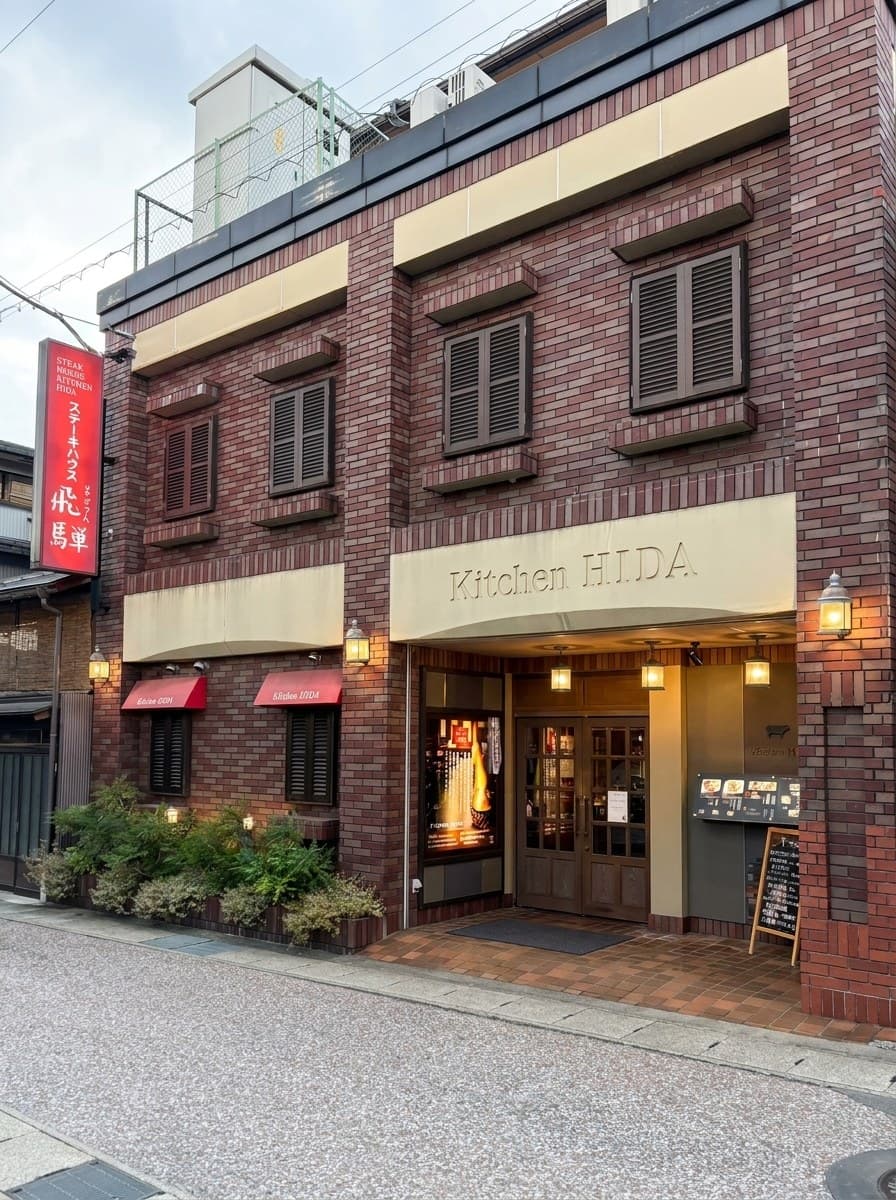
Start with it, because it is good. Kitchen Hida opened in Takayama’s old town in 1964, before Hida beef was a brand travelers crossed the Alps for, and it still cooks the beef one way: aged two to four weeks, gently steam‑braised, then seared. Lunch starts around ¥6,000 and dinner around ¥7,000. It is one of the easier serious tables in town, bookable by phone or the house’s web form in Japanese, or online through Tabelog (which has English pages) and Hotpepper, but its room fills day by day through cherry blossom, the summer holidays and the October–November foliage. It closes on Wednesdays. For how Hida sits among Japan’s wagyu brands, see our wagyu brands guide.
A ryotei from 1794
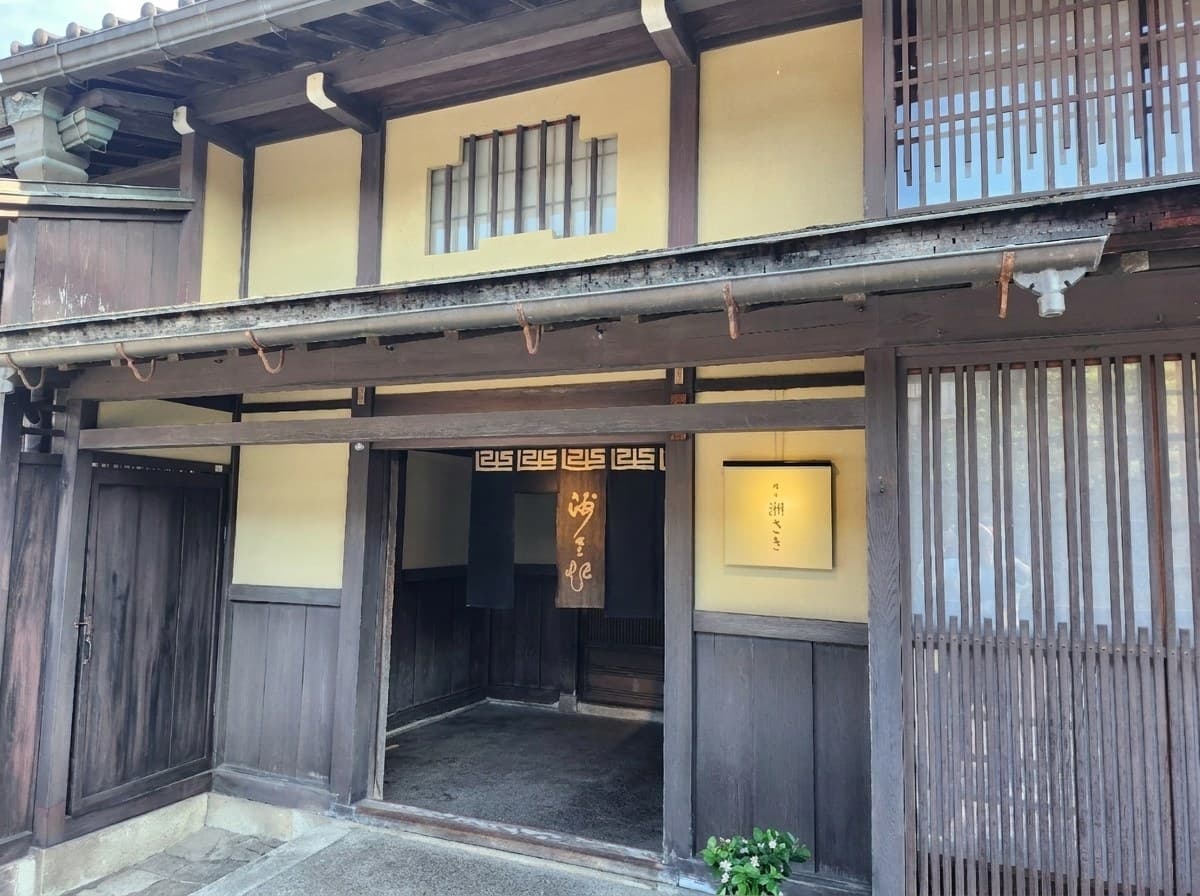
Fifteen minutes on foot from Takayama station, on the Miyagawa side of the old town, Ryotei Susaki has served the same cuisine in the same house since 1794. It is Gifu’s oldest ryotei; its buildings were designated National Important Cultural Properties in 2022, and the Michelin Guide Aichi‑Gifu‑Mie 2019 gave it two stars. What it cooks is Sowa‑ryu honzen, the formal banquet cuisine devised in the early Edo period by Kanamori Sowa, tea master and eldest son of Takayama’s second lord, and passed down by word of mouth for ten generations.
The full honzen runs to thirty dishes. The everyday answer is the honzen‑kuzushi, eleven of them chosen for an evening, at ¥15,730 lunch or dinner, tax and service included; lunch also has a shorter Ajimusubi course at ¥10,285. The house’s own calendar of Hida foods tells you what to look for: spring trout with sansho‑leaf miso, Miyagawa ayu grilled whole in summer, matsutake in autumn, and in December and January the salted yellowtail Hida once carried in over the Nomugi Pass. On the festival days — 14–15 April and 9–10 October — only the honzen‑kuzushi is served. Booking is by telephone in Japanese, with no release day, and because the house has private rooms for two to thirty, a date is usually granted with normal notice. If kaiseki is new to you, start with what kaiseki is.
The forager above town
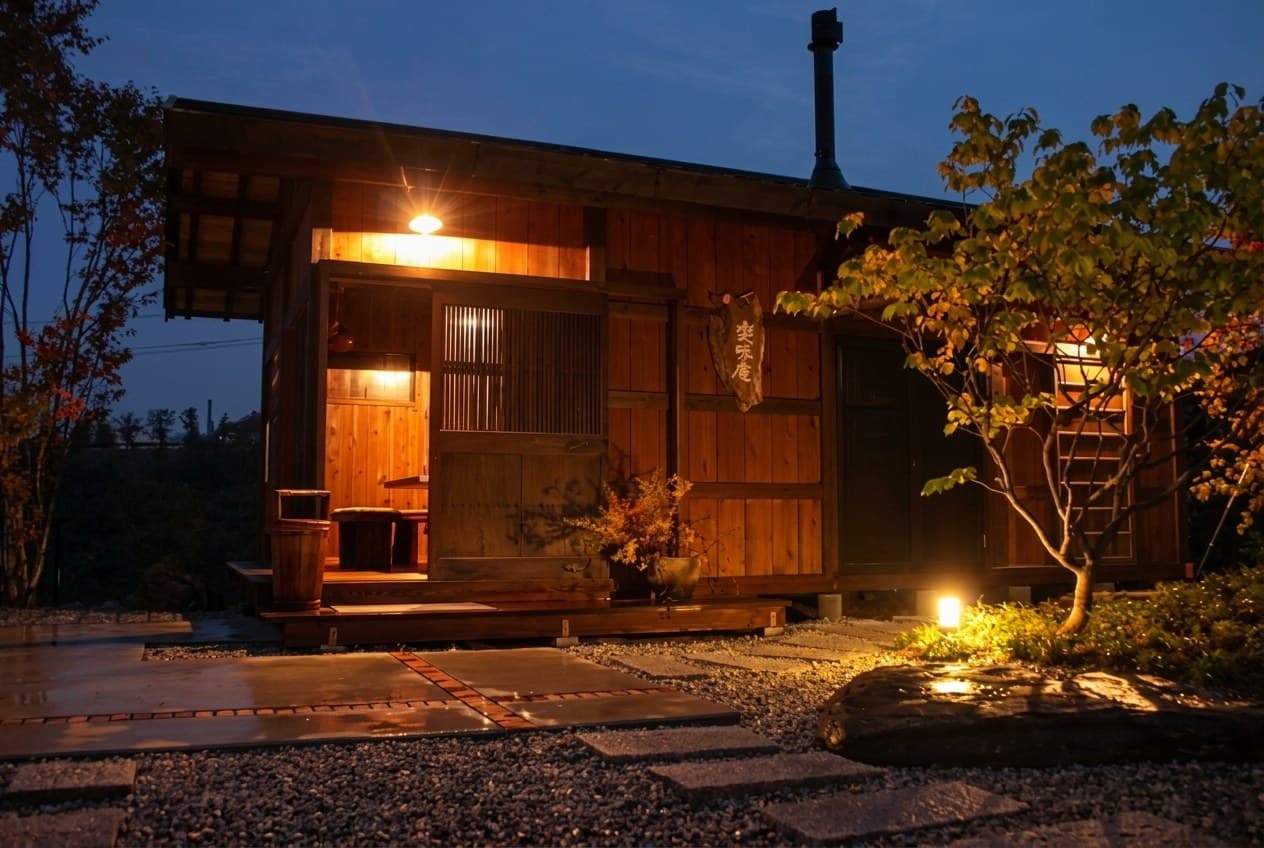
Ten minutes by taxi from the station, on a rise looking out to the Northern Alps, Hida Kisetsu Ryori Sakana is run by two people. The chef, Hayao Imai, spends his mornings in the Hida mountains and rivers gathering what the evening will serve. The Michelin Guide Aichi‑Gifu‑Mie 2019 gave the house one star, and Tabelog has given it Bronze three years running (2024–2026).
The calendar is the menu. Early May to early June, wild mountain vegetables (¥18,000–20,000); July to September, river fish — ayu, iwana and amago — some caught by the chef (¥20,000–24,000); mid‑September to late October, wild mushrooms, charcoal‑grilled or in a Hida‑beef sukiyaki (¥28,000–36,000); December to late April, game — bear, boar, deer and badger from local hunters (¥28,000–32,000). Between seasons, or for beef, there are omakase and Hida‑beef courses at ¥17,800. Service is included.
The house asks for at least three days’ notice because it forages and buys to order. It takes Japanese phone calls and lists on Ikyu and Hitosara, but it says plainly that it does not take phone or email bookings from guests who do not speak Japanese. Weekday lunch needs two guests, and children are generally not seated at dinner.
Down to the rivers: Gifu city
Gifu city is where travelers change trains for Takayama or stop for the cormorant fishing on the Nagara, which runs from May 11 to October 15. Our ayu guide explains the fish and the ritual. The kaiseki house to pair with it is Takada Hassho, opened by Haruyuki Takada in 1989 in a sukiya building near the city hall, about five minutes by car from JR Gifu station. Every seat is in a private room, including a tea room for one party at lunch and one at dinner. The Michelin Guide’s 2019 Aichi‑Gifu‑Mie edition gave it one star. Its Gifu signature is ayu from the Yoshida and Wara rivers in Gujo, in season from early summer. Kaiseki runs ¥13,200 to ¥33,000, tax included, plus a 10% seat charge, with lunch courses from ¥5,500. It books instantly on TableCheck; a guest in May 2026 booked two weeks ahead, and weekends and ayu season deserve a month.
Forty minutes north by car, in the hills of Yamagata, Katatsumuri — “snail” — is a farmhouse where Shigeto Shimizu, a local mushroom‑picking master, buys whole animals from hunters he trusts and breaks them down himself, while his wife cooks. This is tsumikusa ryori, the cooking of foraged plants: garlic chives, thistle and bracken in spring; wild eel and ayu in July; porcini, nameko and oyster mushrooms in autumn; boar, bear, deer and duck in the cold months. A lunch course is about ¥5,000 and a game course ¥18,000, tax included, and guests may bring their own drinks. Eight to ten seats in one tatami room means weekends fill months ahead, but a weekday is a realistic ask.
The booking reality
Nothing here opens on a fixed day, and nothing is a lottery. The work is matching each house’s door. Susaki is Japanese telephone only. Kitchen Hida takes a Japanese phone call, its own web form, or Tabelog and Hotpepper online. Sakana wants three days’ notice and takes no phone or email bookings from guests who do not speak Japanese. Takada Hassho is on TableCheck, but parties of five or more, children, changes and cancellations all go through its Japanese phone line. Katatsumuri is by phone or Ikyu, and its phone often goes unanswered during service, 12:00–13:00 and 18:00–19:00. Cancellation terms are firm in the small houses: Katatsumuri charges in full on the day, and Takada Hassho 50% the day before and 100% on the day.
Building the trip
Gifu city is about twenty minutes from Nagoya by JR, and the limited express Hida continues from Gifu to Takayama in roughly two hours. A natural route is a lunch at Takada Hassho on the way up, two nights in Takayama — one for Susaki or Kitchen Hida, one for Sakana — and a return through Nagoya. Katatsumuri needs a car and a weekday, and pairs with an evening of cormorant fishing on the Nagara. Time the trip to the season you want to eat: May for wild vegetables, July for ayu, October for mushrooms and the autumn festival, winter for game.
If you would like the calls made in Japanese and the days lined up, our reservation desk can arrange it.
Coming from the other side of the Alps? Our guide to Yatsugatake and Matsumoto covers the highland tables on the way.