Okinawa is usually sold as Japan’s beach: flights, resorts, snorkeling. But the more interesting truth is on the table — Okinawa eats like a different country because it was one. Until the nineteenth century these islands were the Ryukyu Kingdom, running their own court cuisine shaped by tribute trade with China, and the food never converged with the mainland. No dashi‑and‑soy restraint here: this is pork, bitter greens, black koji and six hundred years of distilling.
The canon
- Rafute — pork belly simmered to collapse in awamori and brown sugar; the court dish that anchors the cuisine.
- Goya champuru — bitter melon stir‑fried with firm island tofu, egg and pork; the daily‑life signature. Champuru means “mixed up,” which doubles as the island’s culinary autobiography.
- Okinawa soba — not buckwheat but wheat noodles in a pork‑bone broth, crowned with soki (stewed spare ribs); the island’s ramen‑equivalent religion.
- Umibudo — “sea grapes,” strands of popping seaweed caviar, eaten cold with ponzu.
- Agu — the native breed of pork, sweet‑fatted, served as shabu‑shabu at the high end.
- Jimami tofu — peanut tofu, wobbling and rich, the quiet best first bite on many menus.
Awamori: the six‑century spirit
Awamori is Japan’s oldest distilled liquor — made in Okinawa for roughly six hundred years from long‑grain indica rice and black koji, a legacy of Ryukyu trade with Siam. Aged three years or more in clay pots it becomes kusu, round and mellow. It is to an Okinawan dinner what sake is to Niigata — the local liquid that makes the food make sense. Order it mizu‑wari (with water) and let it run the length of the meal.
Where to eat it: the izakaya answer
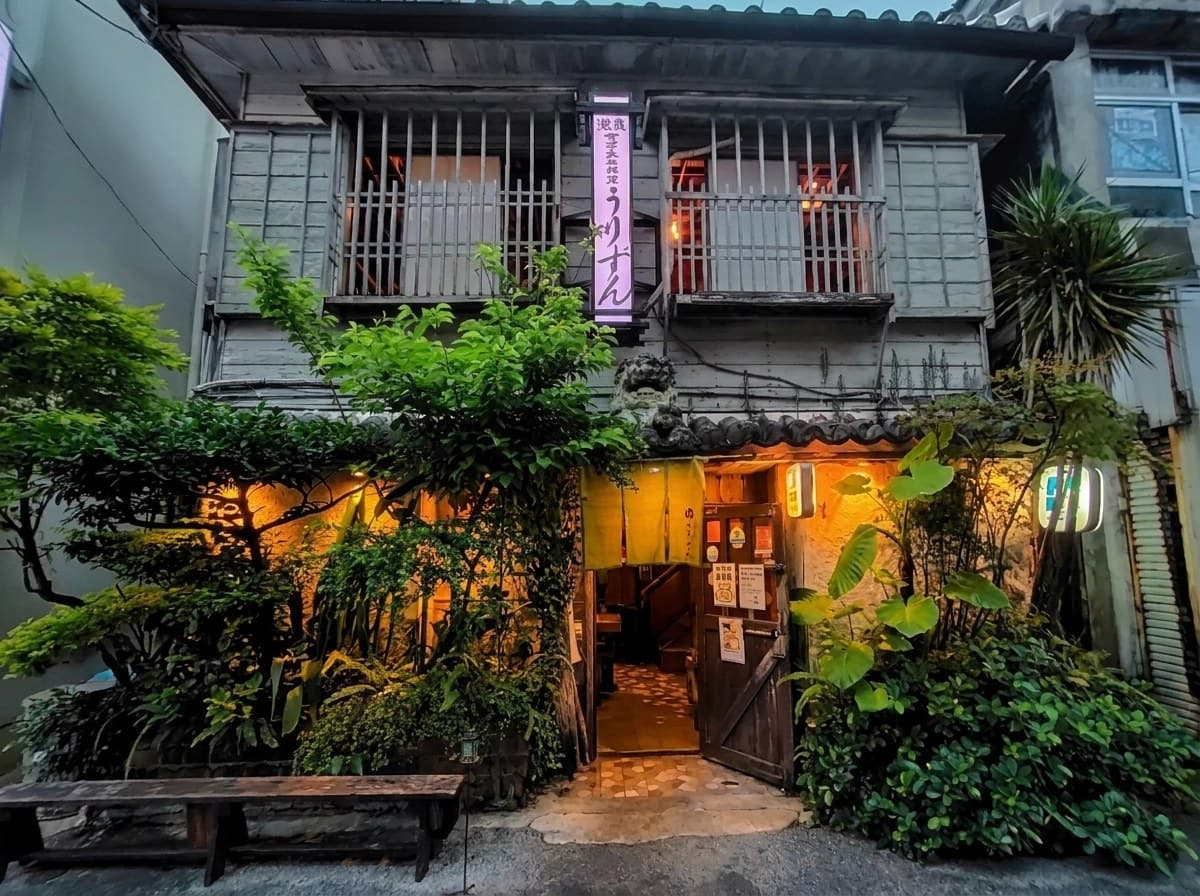
Ryukyu cuisine’s great advantage for a traveler is that its whole canon fits on one izakaya table. In Naha, the definitive first stop is Urizun — pouring awamori and serving the classics since 1972, walls dark with age and bottles. Around it: the Makishi public market for morning fish and island fruit, and the backstreets off Kokusai‑dori where the older counters hide. One long izakaya evening teaches more of this cuisine than three formal dinners.
Beyond the izakaya: the court, the pig and Ishigaki beef
Once the izakaya has taught you the canon, three more tables show where it comes from.
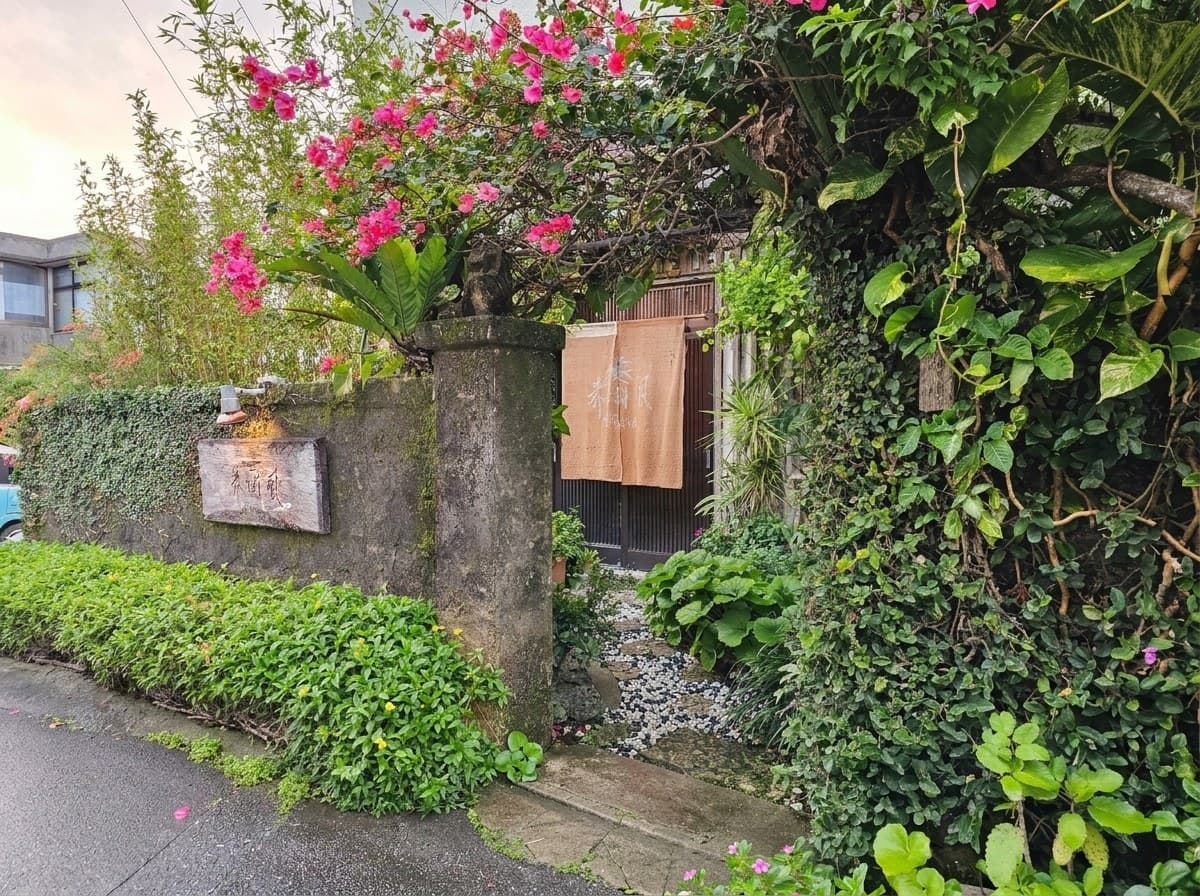
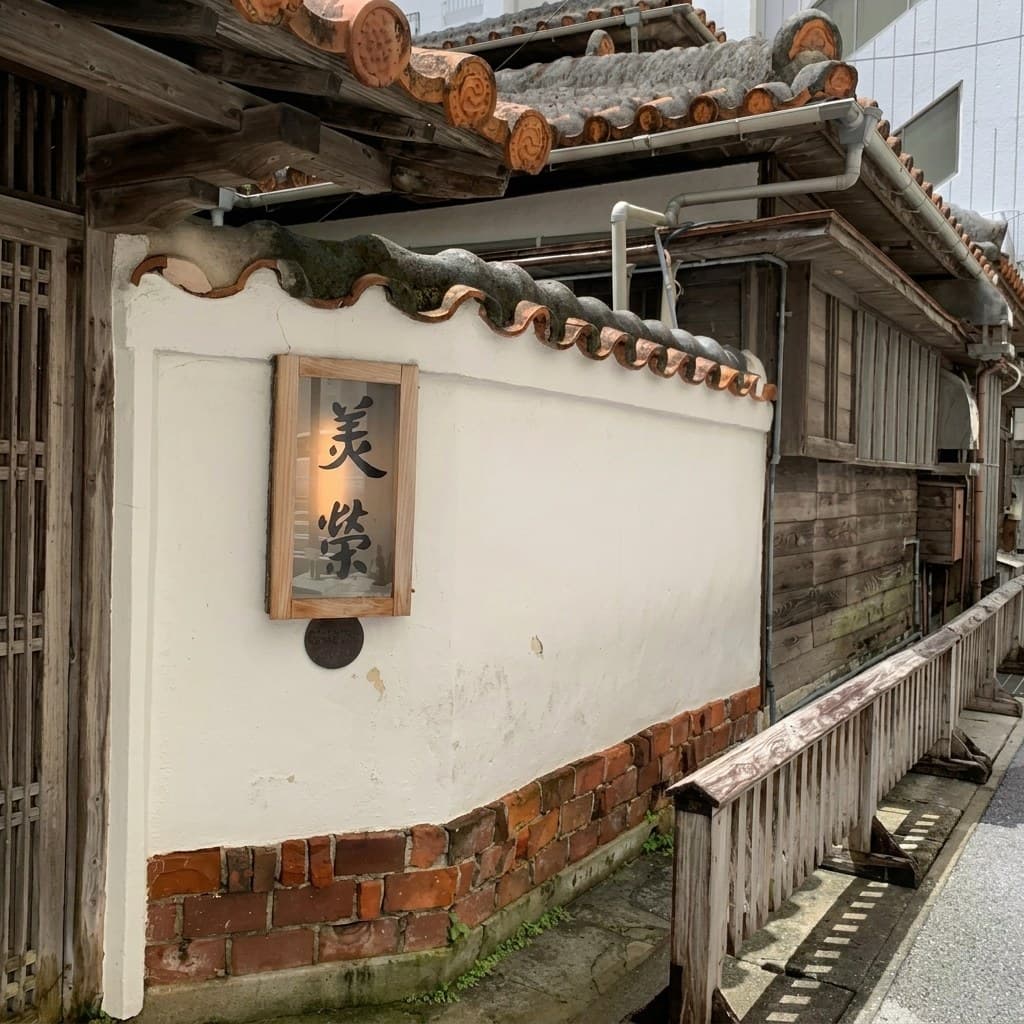
The court. Much of what the izakaya serves began as the cuisine of the Ryukyu court, and Akatafu cooks it in a residential street a few blocks from Shuri Castle, 6–7 minutes on foot from Shuri station on the Yui Rail. Its chef, born in Shuri in 1948, spent seventeen years in the kitchen at Mie, the Naha house that has cooked court cuisine since 1958, before opening his own with his wife. There are three courses and nothing else — seven, ten or twelve dishes at ¥5,500, ¥7,500 and ¥10,000, tax included — running from nakami no suimono, the clear pork‑offal soup that is the test of any Ryukyu kitchen, through minudaru, pork steamed under black sesame, to rafute and jushi, the seasoned rice. Prices are indicative, as listed on Tabelog (September 2026). Book by phone in Japanese and name your course when you call; there are no same‑day bookings, and it is cash only. Dinner, Monday to Saturday.
The pig. High‑end agu shabu‑shabu is at its purest at Shabu‑shabu Kin Honten in Makishi, a few streets off Kokusai‑dōri, which built its name on purebred Kin Agū rather than the crossbreeds often sold under the name. There is one course, ¥7,480 tax included: sea grapes, a plate of agu, about eighteen island vegetables, and three Okinawan condiments — shikuwasa pepper, Yagaji Island salt and pork‑fat miso — in place of ponzu or sesame sauce. It books by phone only; on busy dates even a call two months out may leave only the 17:00 seating, so call a month or two ahead. Preschool children are not accepted.
The island beef. If the trip reaches the Yaeyama islands, the table everyone talks about on the ferry is Sumibi Yakiniku Yamamoto on Ishigaki, grilling Ishigaki beef over charcoal since 1995. Order the yaki‑shabu — paper‑thin beef seared for a breath and wrapped around onion — and the tongue simmered for six hours, and order early, because the best cuts sell out. The phone, in Japanese only, opens two months before each date and is hard to reach; the working advice is to call between 16:00 and 17:00, before service, and to aim for a weekday. Seatings last 90 minutes; closed Wednesdays.
Fitting Okinawa into a Japan trip
Treat it as a third country on a two‑country itinerary: Tokyo for omakase, Kyoto for kaiseki, then three days south where none of the rules apply. Direct flights from Tokyo run under three hours; the season is nearly year‑round. Ishigaki is about an hour’s flight beyond Naha, and worth a fourth day if the beef is the point. Most of the tables above book by phone in Japanese with no release day — Urizun a few days out (or online through Hotpepper), Akatafu simply in advance, Kin a month or two ahead for a good hour — and Yamamoto’s two‑month window is the one to put in the calendar. For the full arc — Naha’s izakaya, a court dinner in Shuri, an agu shabu‑shabu night, the market mornings, Ishigaki beef to close — we build it table by table.