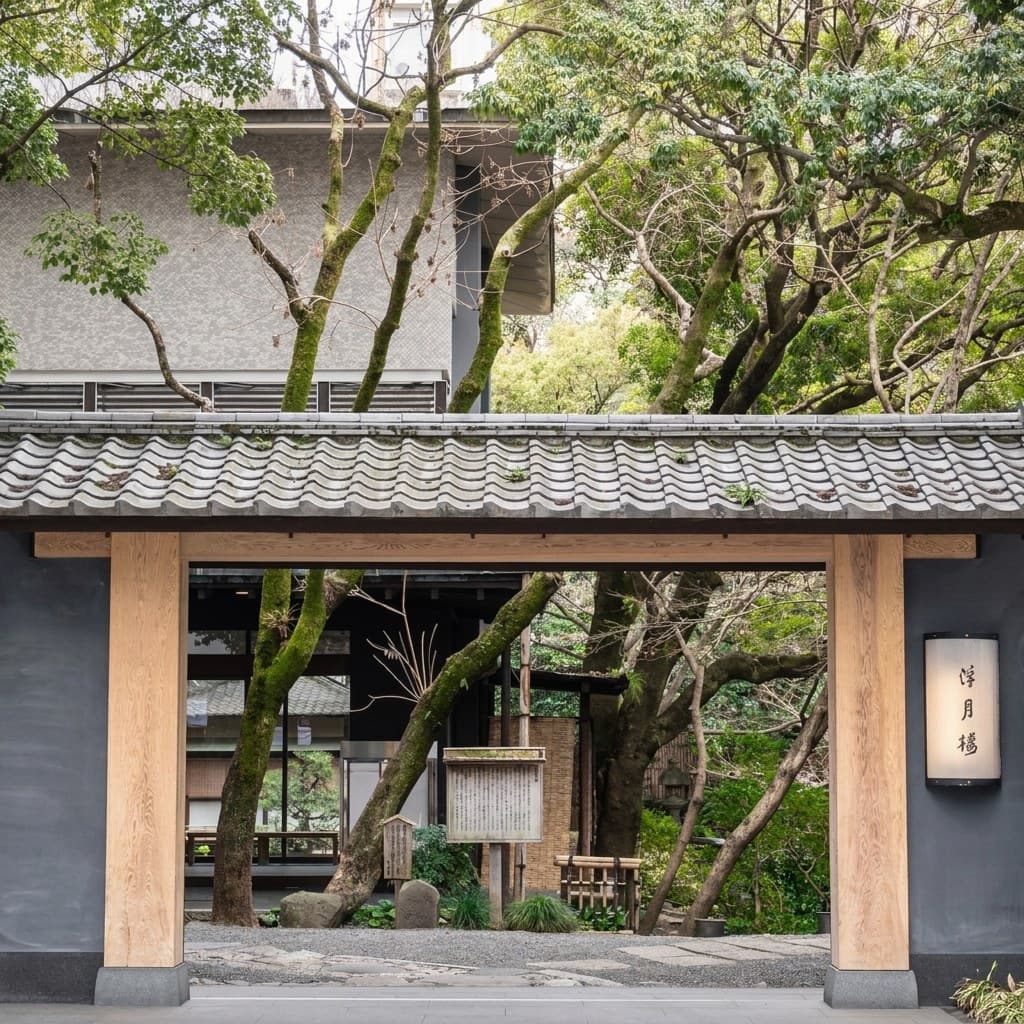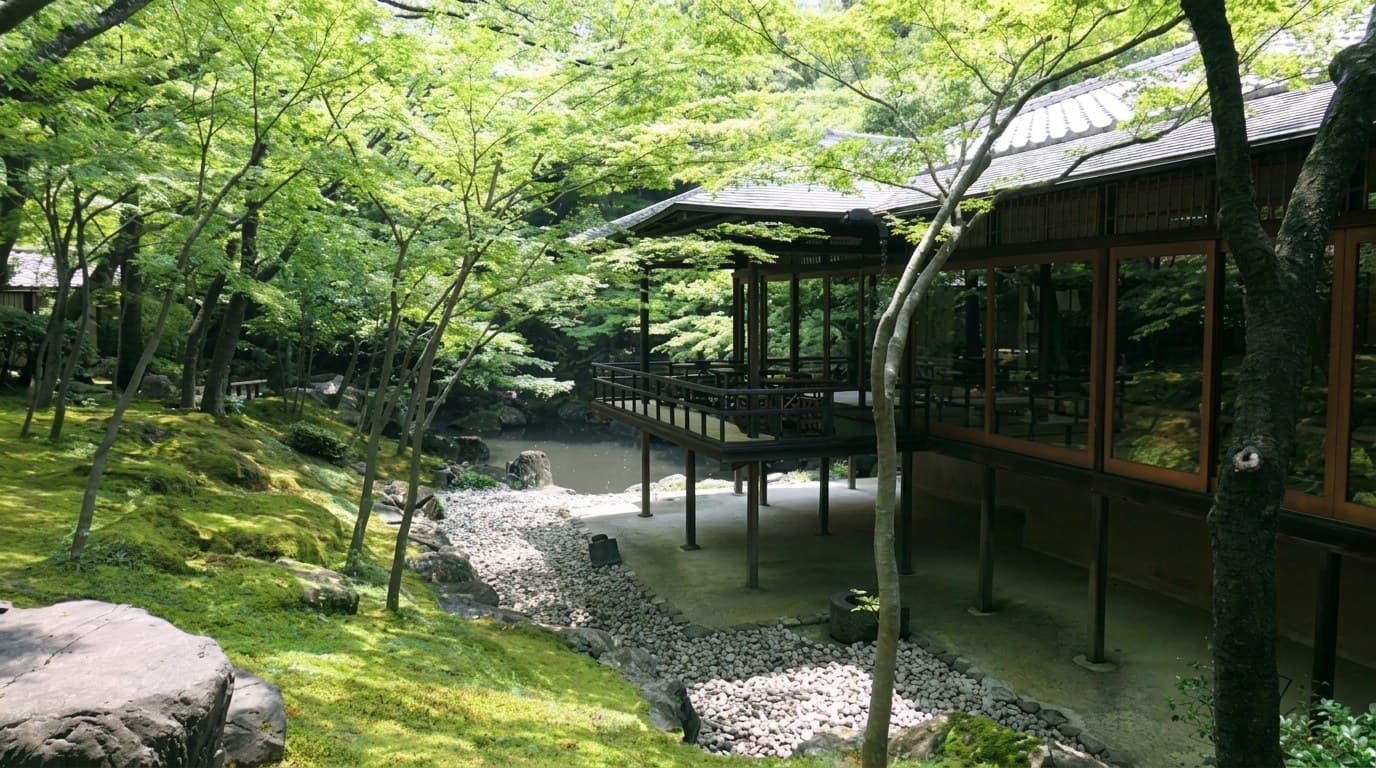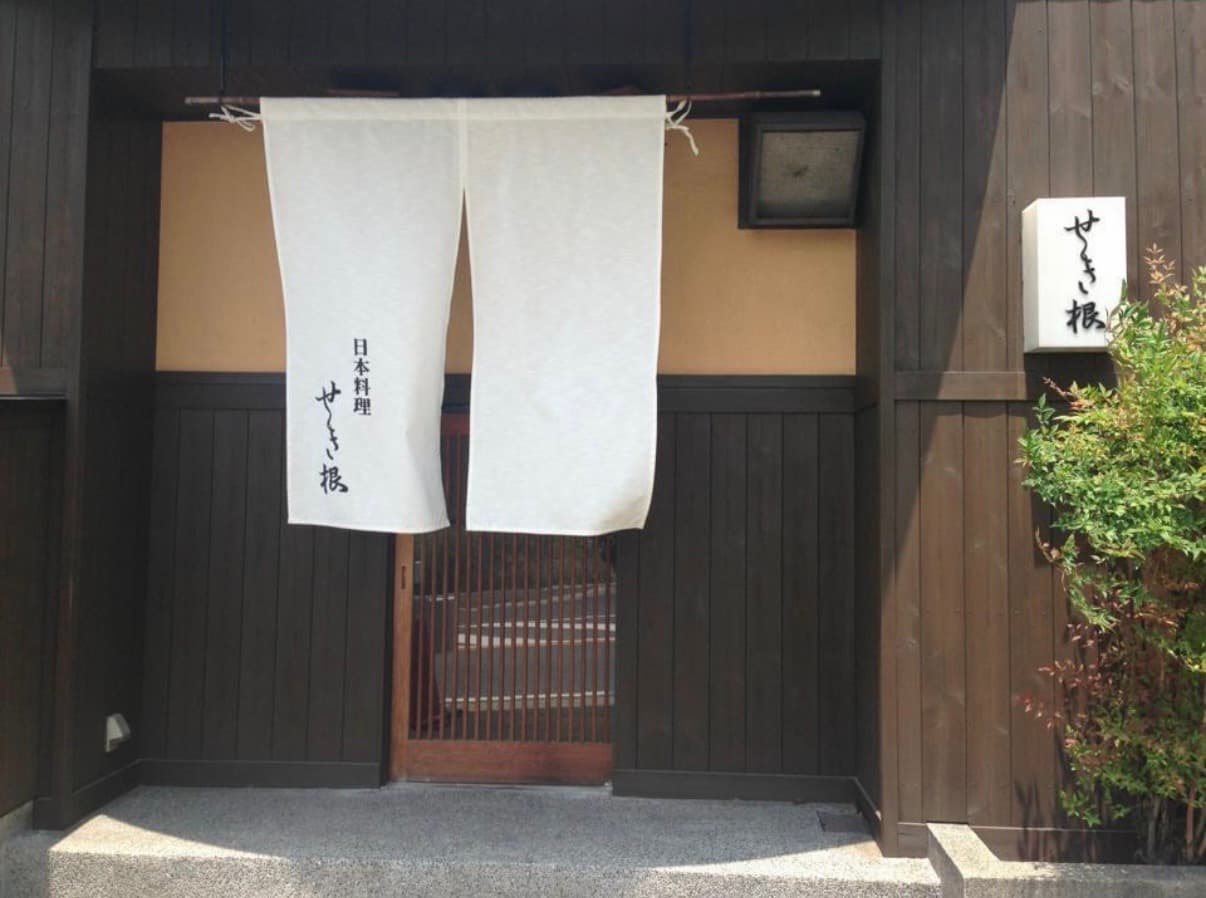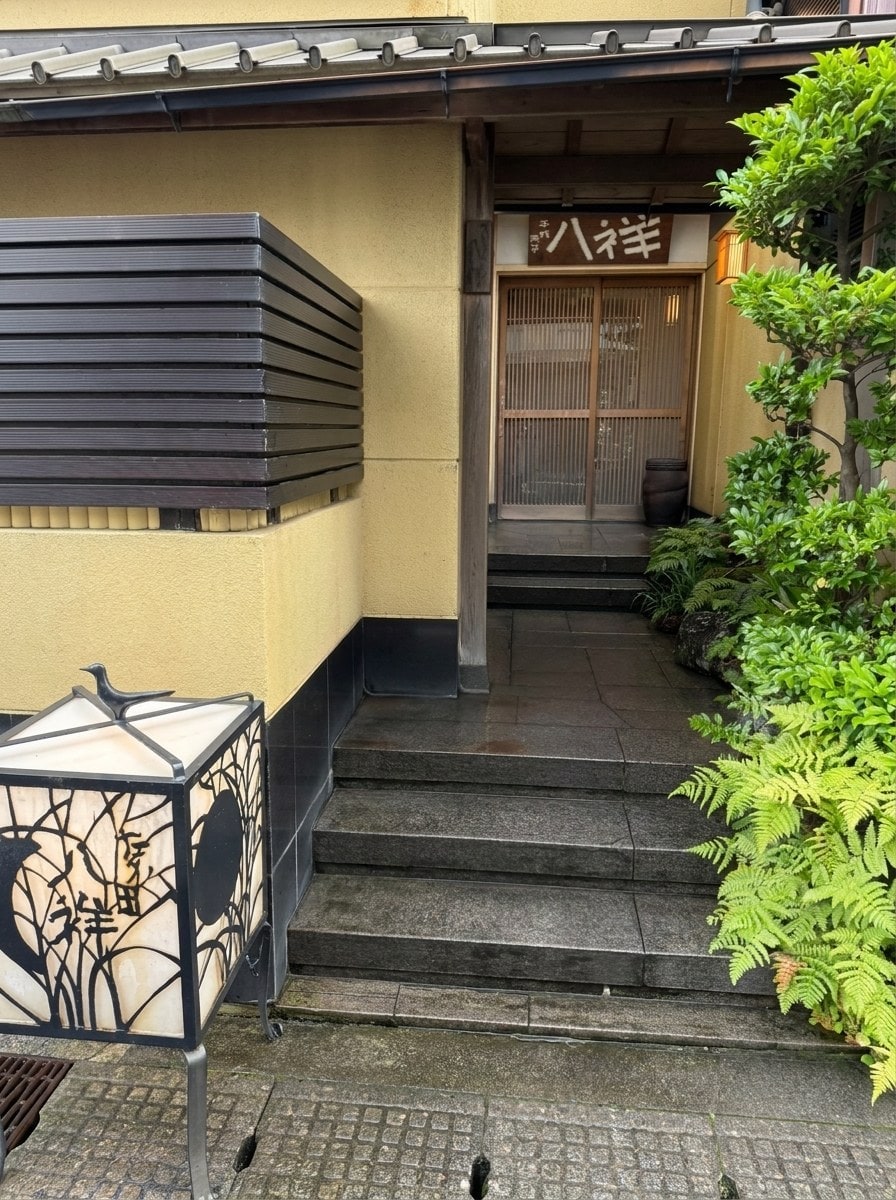
Gifu city is where travelers change trains for Takayama or stop for the cormorant fishing on the Nagara, and it is easy to miss that it has a kaiseki house of national standing. Haruyuki Takada opened Takada Hassho in 1989; the group now runs five restaurants in the city, but the original — a sukiya‑style building in a quiet lane near the city hall — is the one that matters. Every seat is in a private room, on two floors: a tea room that takes one party at lunch and one at dinner, a sunken‑hearth room, tatami rooms of four, six, eight and ten mats. The Michelin Guide’s Aichi‑Gifu‑Mie 2019 edition gave it one star; Tabelog awarded it Bronze in 2021 and has kept it among its hundred best Japanese restaurants in eastern Japan through 2025. Cooks who trained here now run well‑known houses elsewhere, which is the kind of reputation that carries in this trade.
What you eat
The house’s own statement of purpose is dashi — bonito, kelp and water, and the balance between that broth and ingredients ordered from across the country. Its Gifu signature is ayu, the sweetfish of the Yoshida and Wara rivers in Gujo, in season from early summer; guests write of the potato harihari that opens the meal, the foamed soy sauce the chef devised for sashimi decades before foam became a fashion, and a nori tea‑rice to close. Kaiseki runs at ¥13,200, ¥16,500, ¥22,000 and ¥33,000, tax included, at both lunch and dinner, with shorter lunch courses at ¥5,500, ¥7,700 and ¥9,900; the house will also build a menu to a stated budget. In season, hot‑pot courses at ¥20,000–30,000 follow the calendar: hamo, snapping turtle, wild fugu, Echizen crab, Himi yellowtail, Hida beef. A 10% seat charge on the total is added, and the annexe rooms carry a small per‑person room fee (¥300 at lunch, ¥500 at dinner).
The booking reality
No release day, and two doors. TableCheck confirms instantly for one to fourteen guests, with the four kaiseki courses selectable on the page; Pocket Concierge and Hitosara also list the house. The other door is the telephone, in Japanese, on 058‑262‑1750 — and it is compulsory for some things: any party of five or more, any request to bring a child, and every change or cancellation. A guest in May 2026 booked two weeks ahead on TableCheck; weekends and ayu season deserve a month. The terms are firm but fair: 50% the day before, 100% on the day, and the house asks that cancellations reach it seven days out. If you are more than an hour late without calling, the table may be released. Dress is unstated except for what is refused — tank tops, shorts, sandals. For overseas guests the platform works, but the house’s rules on parties, children and changes run through a Japanese phone line, which is where our desk comes in.