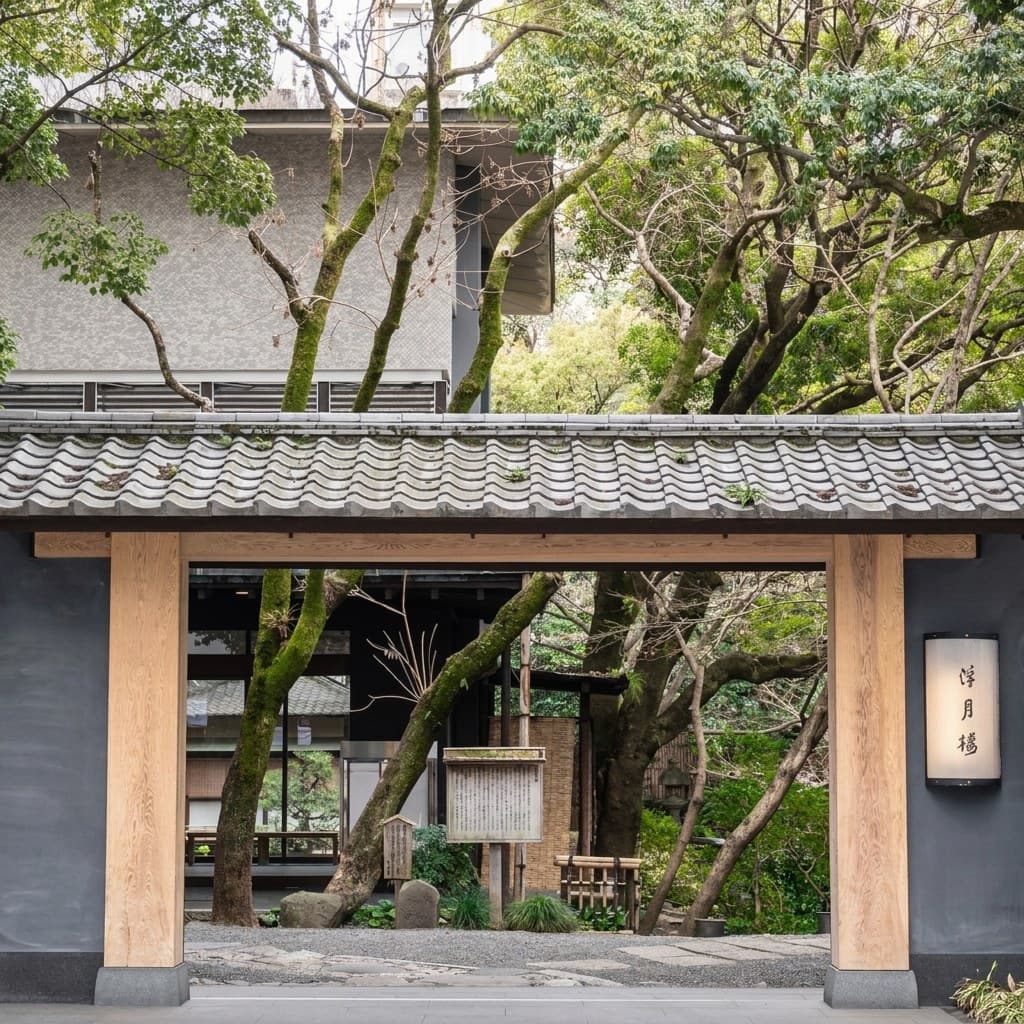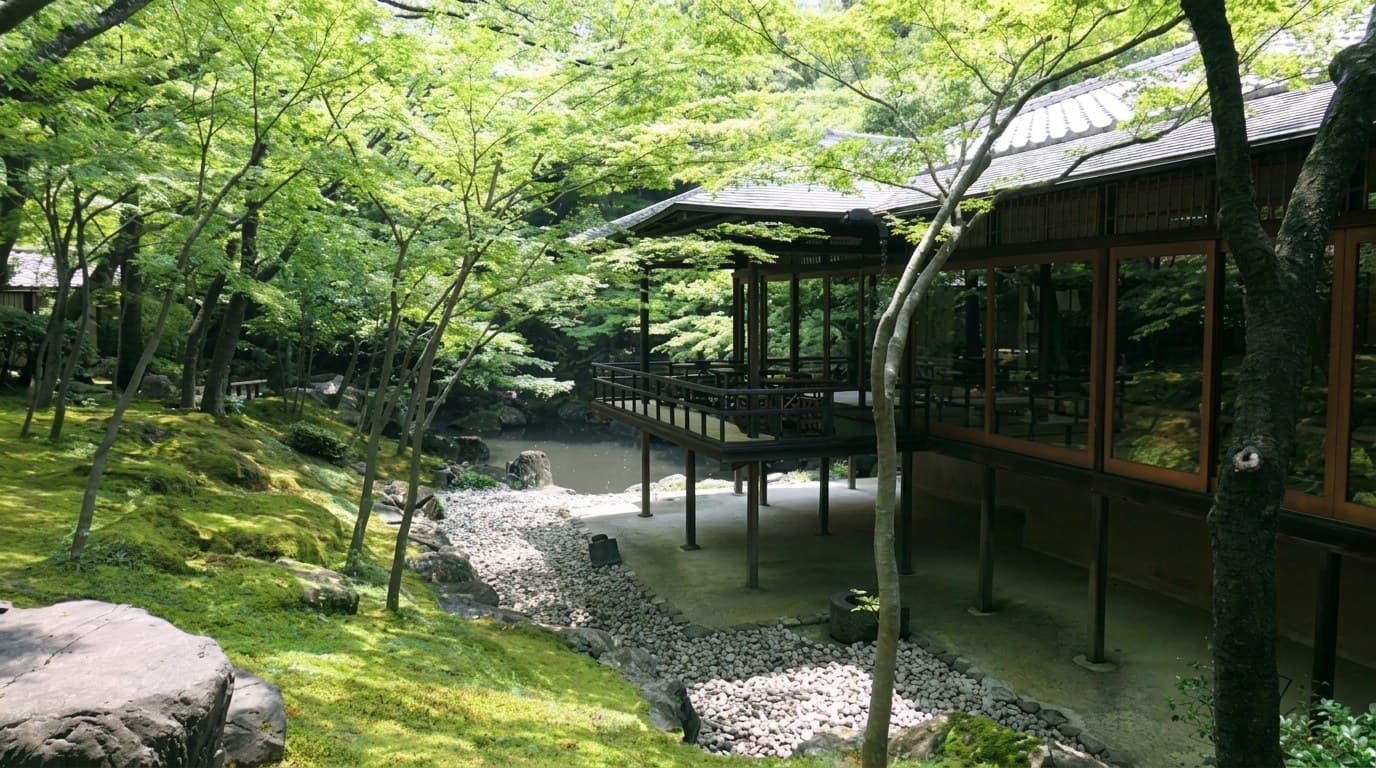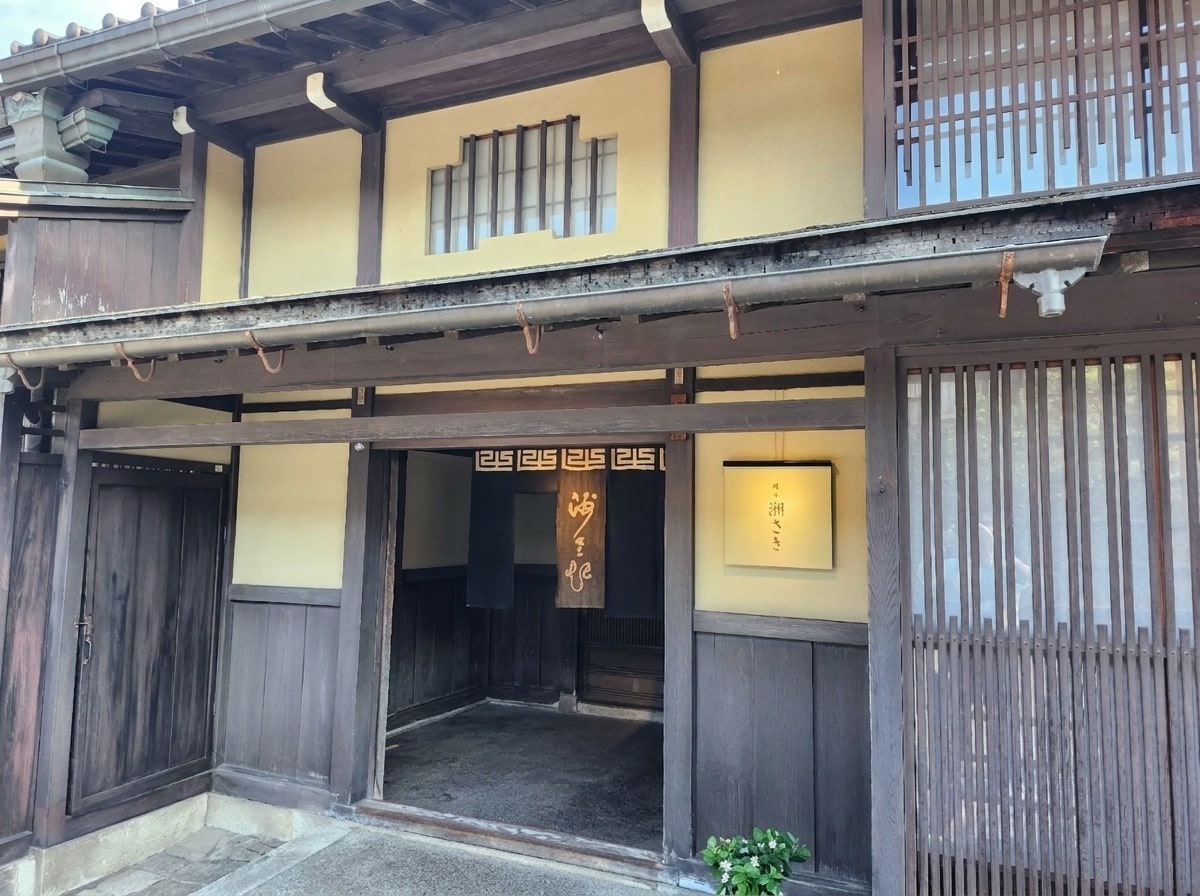
Susaki opened in 1794, in the sixth year of Kansei, and has served the same cuisine in the same house on the same street ever since. It is the oldest ryotei in Gifu; the main building and two others were designated National Important Cultural Properties in 2022, and the Michelin Guide Aichi‑Gifu‑Mie 2019 gave it two stars. What it cooks is Sowa‑ryu honzen — the formal banquet cuisine devised in the early Edo period by Kanamori Sowa, tea master and eldest son of Takayama’s second lord — whose rules of ingredient, seasoning and arrangement the house has passed down orally for ten generations. The rooms are simple sukiya tatami looking onto a dry garden; beyond it runs the Miyagawa, the river the town’s founder laid out as his Kamo. Shiba Ryotaro wrote the house into his travel series in 1987. Every room has a view of the garden, and the house will set chairs for up to sixty guests if you ask when booking.
What you eat
The full honzen runs to thirty dishes and, in its ceremonial form, ten hours; Susaki’s everyday answer is the honzen‑kuzushi, eleven of those dishes chosen to be eaten in an evening (¥15,730, lunch or dinner, tax and service included). Lunch has a shorter version, Ajimusubi (¥10,285), and a Hida‑beef steak kaiseki that keeps the sakizuke‑wan‑hassun frame of Japanese cuisine (¥11,253 at lunch, ¥15,730 at dinner); a fuller kaiseki starts at ¥16,940. Through the year the standard courses are replaced by seasonal ones at the same price — a hina‑festival table in March, blossom in April, iris in May–June, a summer‑night menu in July–August, moon‑viewing in September–October. The house’s own calendar of Hida foods shows the thinking: spring trout with sansho‑leaf miso, Miyagawa ayu grilled whole in summer, matsutake and carved autumn vegetables, and in December and January the salted yellowtail that Hida once carried over the Nomugi Pass. Lacquer is Wajima and Hida shunkei; the pottery is local Shibukusa and Koito ware. On the Takayama festival days (14–15 April, 9–10 October) only the honzen‑kuzushi is served.
The booking reality
The telephone, in Japanese — the house says so on its reservation page and offers nothing else. There is no release day and no queue; this is a big house of private rooms, listed at 120 seats, with tables for a couple as readily as for thirty, so a date asked for with normal travel notice is usually granted. Lunch runs 11:30–14:00 and dinner from 17:00 with last entry at 19:00; closures are irregular, so we confirm the day when we call. Children are welcome. The house does not publish a cancellation policy or a minimum party; our desk settles the course when it books, since the seasonal menu changes by the calendar.