Say “Hyogo” to most travelers and they hear one word: beef. That is a pity, because the prefecture that surrounds Kobe is one of the most rewarding stretches of eating in western Japan, and very little of it involves a steak. Hyogo runs from the Seto Inland Sea to the Sea of Japan. Its southern coast faces Awaji Island across the Akashi Strait, some of the most prized fishing water in the country, and a single rail line strings its towns together: Ashiya, Kobe, Akashi, Himeji.
The other good news is practical. The counters below are serious — Tabelog Bronzes, WEST 100 listings, a chef who ran a Ginza kitchen — and yet none of them has a release day, and most sell seats online. After Tokyo and Kyoto, Hyogo can feel like a region where the booking still works.
First, the beef — briefly
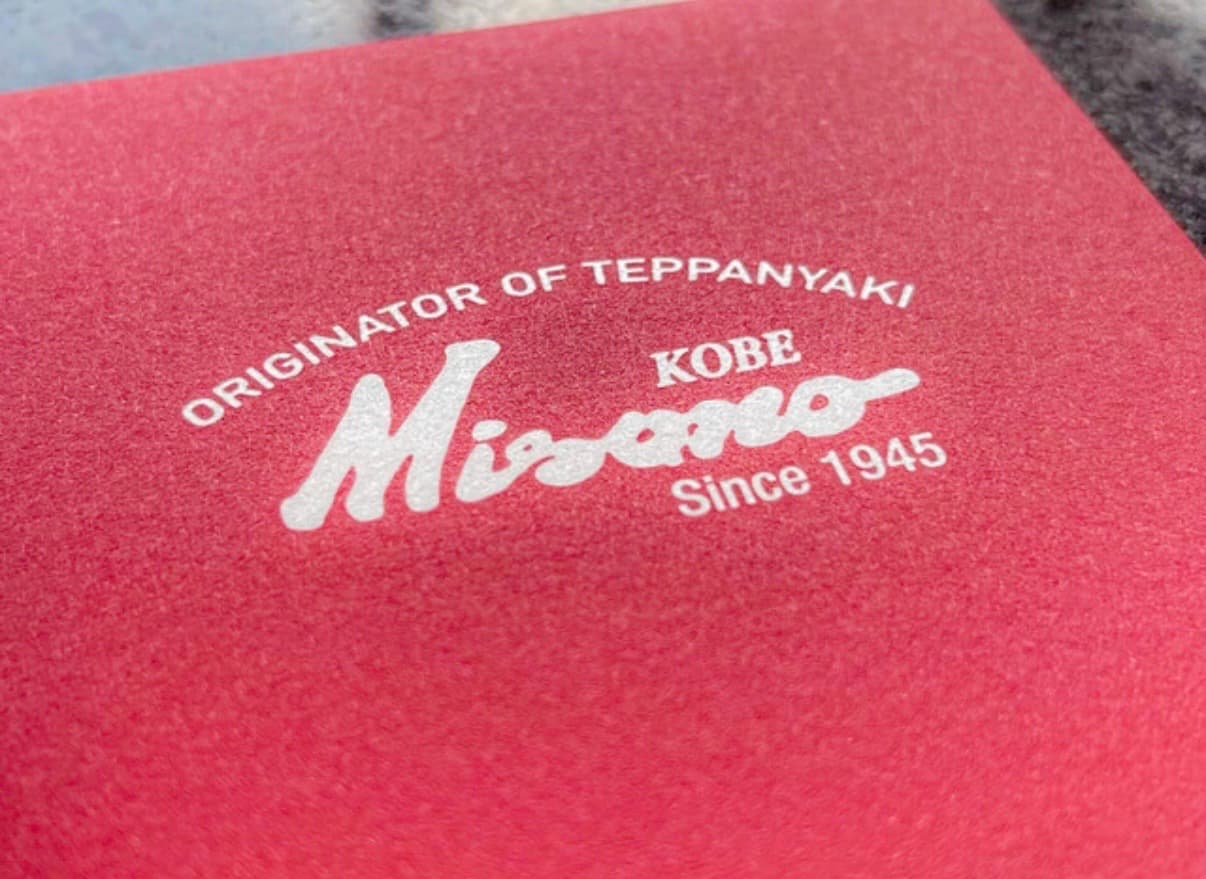
If Kobe beef is the reason you came, our guide to where to eat Kobe beef and wagyu covers certification, formats and where the specialists cluster, and Kobe vs Matsusaka vs Omi sorts the brands. We will add only one address. Misono, on the approach to Ikuta Shrine in Sannomiya, is said to be where teppanyaki steak began: Shigeji Fujioka opened it just after the 1945 surrender, grilling Tajima beef on a sheet of iron salvaged from a shipyard. The Kobe beef lunch at ¥21,000, or a wagyu lunch from about ¥11,000, is the gentler way onto the iron. Then go and eat fish.
Kobe: sushi from Hyogo’s own coasts
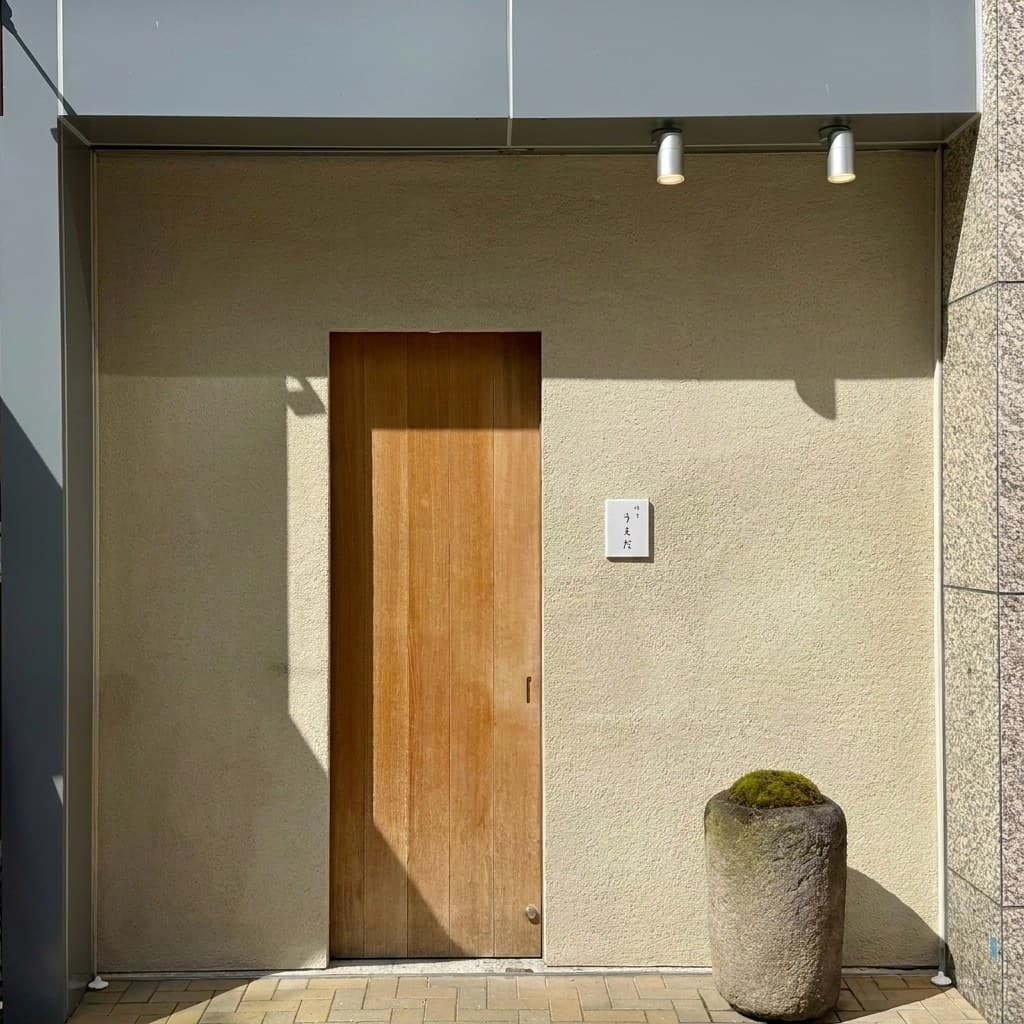
Sushi Ueda, near Motomachi station, is one of the city’s most decorated counters — a Tabelog Award Bronze every year from 2022 to 2026, and Gault&Millau 16/20. Masamichi Ueda was born on Awaji Island and opened here in 2018, and his sushi is an argument for the prefecture: sea bream and octopus from Awaji and Akashi, and the rest from the Harima Sea and the Sea of Japan ports of Hamasaka and Kasumi. Reviewers mention fugu milt in winter and a raw conger that few counters attempt.
There is one omakase, ¥33,000 with tax, at lunch and dinner. The room seats eight at a Tajima cypress counter, runs three seatings that start together, and states its rules plainly: no photographs, no perfume, no children, punctuality expected. It is the most contested table in this guide. A weekend lunch has been taken three months out, single seats sooner, and the house says same‑day bookings are possible when a seat is free.
Akashi: where the fish comes from
Akashi is where Kansai’s fish comes from. The strait between the city and Awaji Island runs so fast that its sea bream (tai) and octopus grow firm, and the morning “hiruami” auction at Akashi‑ura port sets the day’s prices for counters across Kobe and Osaka. Around JR Akashi station, the Uonotana market street sells the same catch, and the town’s own snack, akashiyaki — soft, egg‑rich octopus dumplings dipped in dashi — is the casual way to taste it.
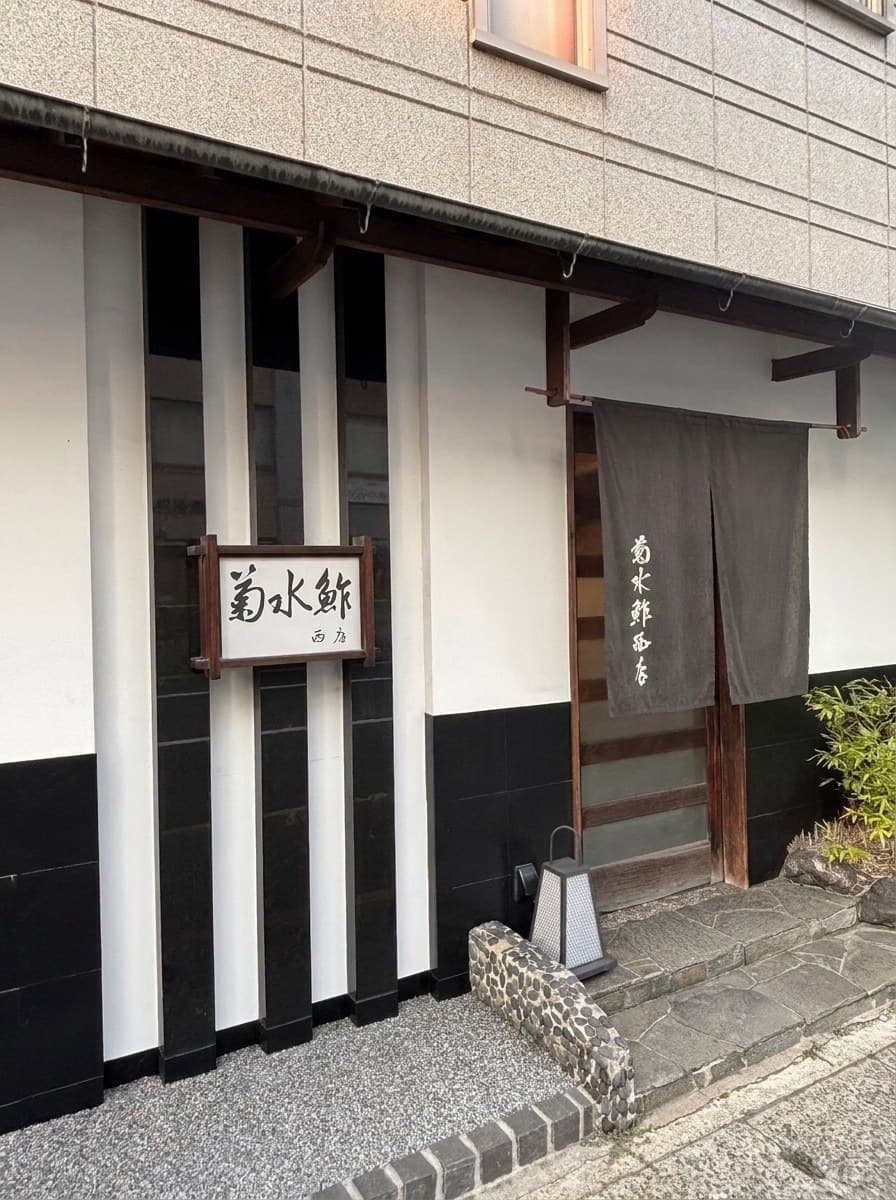
For the serious version, go one stop further. Kikusui‑zushi Nishi‑ten is a branch of a Kikusui‑zushi that has served Akashi since the Meiji era, four generations and more than a century, and it sits four minutes’ walk from Nishi‑Akashi, a Sanyo Shinkansen station one stop west of Shin‑Kobe. The fish is local: aged tai, the strait’s octopus, and a conger nigiri reviewers describe as almost fluffy. The omakase is priced by the day — around ¥12,000–13,000 for nigiri only, just under ¥20,000 with tsumami first, according to 2025 reviews. With ten counter seats, two tables of four, cards accepted and children’s tableware on hand, this is the family‑friendly serious counter of the region. Mind the calendar: it closes on Thursdays and on the first and third Wednesdays.
Ashiya: a quiet evening between Osaka and Kobe
Ashiya is the residential town between Osaka and Kobe, a short ride on either the JR or Hanshin line, and it eats like a neighbourhood with money and no need to show it. Its benchmark is Eragon, five minutes from Hanshin Ashiya station. The house cooks one bird: Oshioka jidori, a breed developed with a contract farm in Miyazaki for this counter, bought whole, aged around four days and grilled over Kishu binchotan. Tabelog has kept Eragon on its Yakitori WEST 100 since 2023, with Award Bronze in 2025 and 2026.
The omakase is seven skewers plus palate‑cleansers and a chicken soup for ¥8,800 with tax. Starters and finishing dishes — a chicken paitan ramen, or a clay‑pot rice — are ordered à la carte, so reviewers land at ¥15,000–20,000 with drinks. Dinner only, two seatings at 17:30 and 20:30, closed Sundays. The tempura counter Sakurabito is across the street, which is reason enough to give Ashiya a second evening.
Himeji: castle by day, counter by night
Most visitors treat Himeji as a half‑day: the castle, lunch near the station, a train out by evening. Tanryu is the argument for staying. It is eight minutes on foot from JR Himeji’s east exit and within walking distance of the castle, a sukiya‑style room of six counter seats and one private room. Hisafumi Nakae opened it in 2019, after serving as head chef of Ginza Kojyu in Tokyo. He is also an Omotesenke tea instructor, and the meal ends with matcha whisked in front of you.
The cooking is Banshu — the plain and coast of western Hyogo — with named sources: sweetfish from the Ibo River, wild abalone from Ako, eel from the Chikusa River, swimming crab from the Inland Sea in autumn. One course of around ten dishes, the same at lunch and dinner, about ¥29,000 plus 10% service; every sake comes from a Banshu brewery. Tabelog gave it Bronze in 2025 and 2026. On the third Sunday of each month there is also a breakfast course from ¥8,800 at 8:30, which pairs neatly with a morning at the castle.
The booking reality
Hyogo’s counters are unusually straightforward, but each has its own habits:
- No release days. None of the five houses opens its book on a fixed date. You book at normal lead times, and cancelled seats come back.
- Online channels are real. Sushi Ueda and Eragon sell through TableCheck; Tanryu has an English page with instant confirmation on Pocket Concierge, plus Tabelog and its own page; Kikusui‑zushi takes a Tabelog request that the house confirms. Misono is the exception: booking there runs in Japanese, and a table left thirty minutes without word is released.
- Lead times vary. Sushi Ueda: up to three months for a weekend lunch, sooner for one or two seats. Eragon: one to two months, with cancellations surfacing online. Kikusui‑zushi: about a month for weekend lunch, a week for a weekday dinner. Tanryu: a few weeks is sensible, though next‑day seats were showing in September 2026.
- Cancellation terms bite. Sushi Ueda’s published terms (on Ikyu) start at 20% three weeks out and reach 100% six days before; Tanryu charges 100% from seven days out. Eragon allows no changes — you cancel and rebook. Read our note on cancellation culture before committing.
- Phones answer in Japanese. Eragon asks that calls come between 14:00 and 17:00 or after 22:00.
Building the trip
Kobe is the base. From Sannomiya, Ashiya is a short ride east toward Osaka, and Akashi a short ride west; the fastest Shinkansen reach Himeji in about 15 minutes from Shin‑Kobe and 30 from Shin‑Osaka, and Kyoto and Hiroshima are each under an hour further on.
A sensible shape is two nights in Kobe and one in Himeji. Day one: Sushi Ueda for lunch, and dinner in Ashiya at Eragon. Day two: west to Akashi — the Uonotana market in the morning, lunch at Kikusui‑zushi at 12:00 — then on to Himeji for the castle in the afternoon and Tanryu at 18:00. Day three: continue west toward Okayama or Hiroshima, or back east to Kyoto. For travelers coming from Osaka, Ashiya and Kobe are both easy evening trips; see our Osaka booking guide for the city itself.
If you would like the Hyogo leg built around the seats that matter — the right seating at Sushi Ueda, the evening in Ashiya, the counter under the castle — our reservation desk can arrange it.