In shortKappo — no fixed course; each meal composed on the spot, in the creed of founder Sato Kenzo. Reservations run in Japanese and are hard to place from abroad, so our Tokyo desk requests the table for you, by phone and in Japanese.
About 32 — a 12-seat counter, a table for up to 10, tatami rooms
Private rooms
Yes — tatami rooms for up to 10
Payment
Visa/Mastercard at dinner · lunch cash only · no e-money
Getting there
Co-op Olympia 1F — one minute from Harajuku station's Omotesando exit
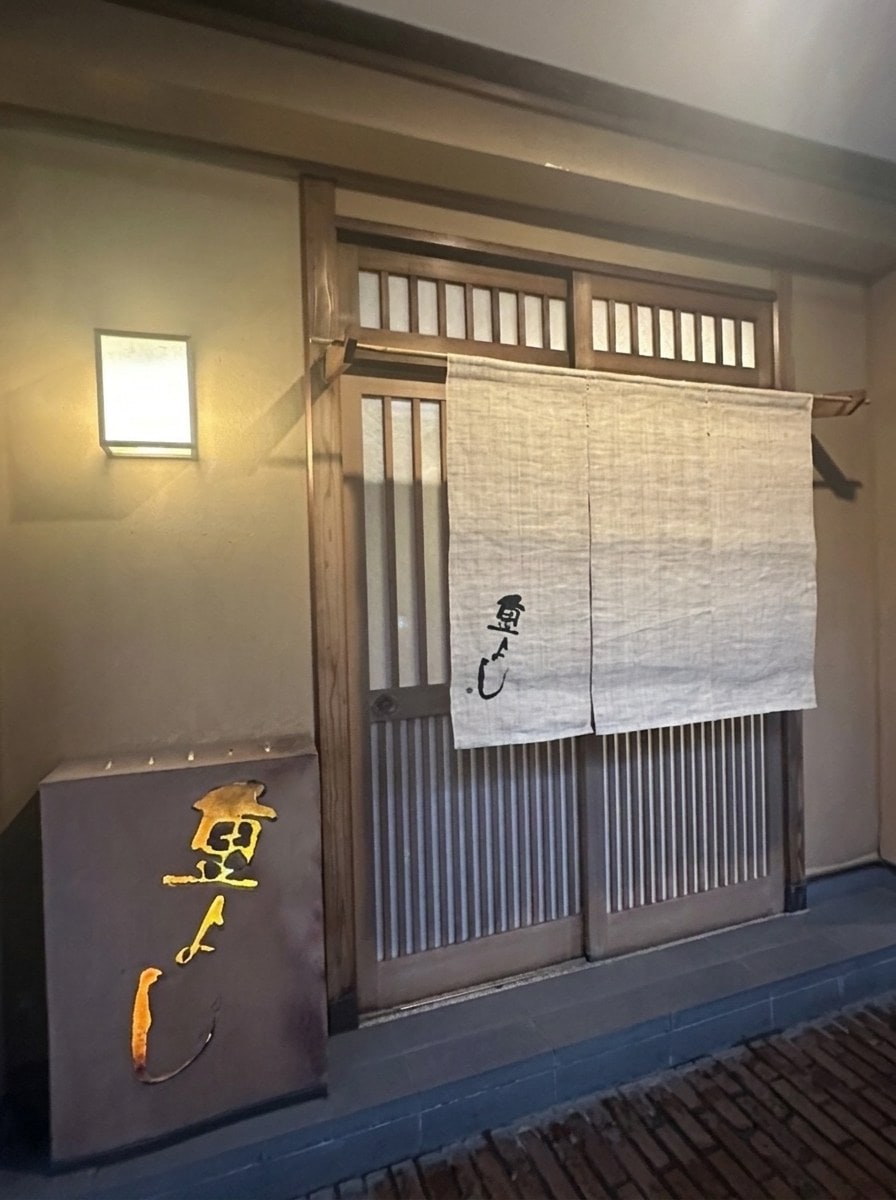
Shigeyoshi opened in 1972, when Sato Kenzo — born in Tokyo in 1944,
an economics graduate of Rikkyo University — carried the name of the
Nagoya ryotei (a traditional banquet restaurant) where he had trained
for five years to a first‑floor room in Co‑op Olympia, one minute
from Harajuku crossing. He was twenty‑seven. He stood at that counter
for fifty years practicing kappo — cook‑and‑serve dining, the chef
cutting and simmering in front of you — and Showa‑era literature ate
in front of him: the novelists Endo Shusaku and Mukoda Kuniko were
regulars. He died in March 2023, at seventy‑eight. Three months later,
three of his senior disciples — among them his longtime right hand,
who had charge of the soups and simmered courses — reopened the
doors, keeping the same room and the same restraint.
What you eat
There has never been a fixed course. The menu is composed on the
spot, reading each guest’s appetite and condition — Sato’s creed, set
down in his respected cookbook of the house’s methods, and still the
working practice. Seasoning is held back so the ingredient speaks;
rare things arrive through the house’s own channels, river fish among
them. The sawani‑wan — a clear broth crowded with julienned
vegetables and pork fat — is the dish visitors cite; the suppon
(softshell turtle) soup has been called the house’s true measure. The
Michelin guide gave one star in every edition from 2009 to 2020, and
Tabelog named the house to its list of Japan’s top hundred
Japanese‑cuisine restaurants in 2021.
The booking reality
Twelve seats at the counter, a table for up to ten, tatami rooms that
close as private rooms — about thirty‑two seats, Wednesday to
Saturday only, dark three days a week. Reservations are by phone only,
in Japanese; there is no online booking. It is neither
introduction‑only nor a lottery — the barrier is language and knowing
the house exists, since English information is nearly zero and the
schedule changed after the reopening. Lunch.
cash‑only, is the obtainable service. One Japanese phone call settles
the date, the seat and the guest count — which is exactly what our
desk places.
Want to eat the Tokyo that Showa writers ate — a counter where the
meal is written for you, not for the room — and would rather have a
living house carried by its disciples than a museum with a course
menu.
Free release-date alerts: the day before, on the morning of release day (08:00 JST) and about 30 minutes before when the time is known — or a weekly summary if the house opens a little every day.
Shigeyoshi: common questions
Can you book Shigeyoshi from abroad?
Yes, through our Tokyo desk. Phone only, in Japanese (03-3400-4044); there is no online booking. Not introduction-only, not a lottery — the barrier is language. Our desk can arrange. We call the restaurant for you, in Japanese, and the ¥6,000-per-seat fee is charged only if we confirm your table — no seat, no fee.
Some of these links are referral links: if you book through them we may earn a small commission, at no extra cost to you. Restaurants never pay us to be listed or ranked. Editorial policy
Cite this page
Facts on this page were checked by our Tokyo desk. You are welcome to quote them with a link:
Shigeyoshi — Harajuku, Tokyo — SHOKU NOREN (checked September 2026). https://shokunoren.com/restaurants/shigeyoshi-harajuku