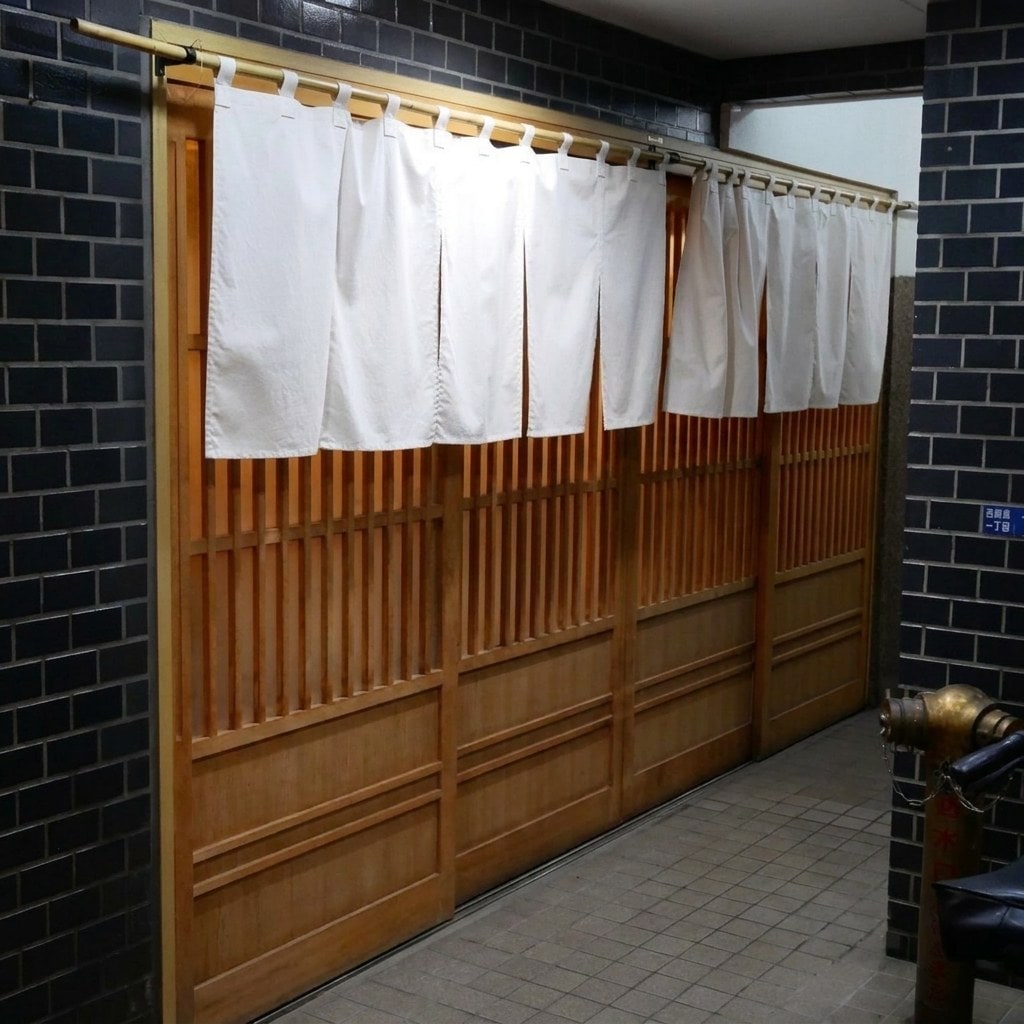
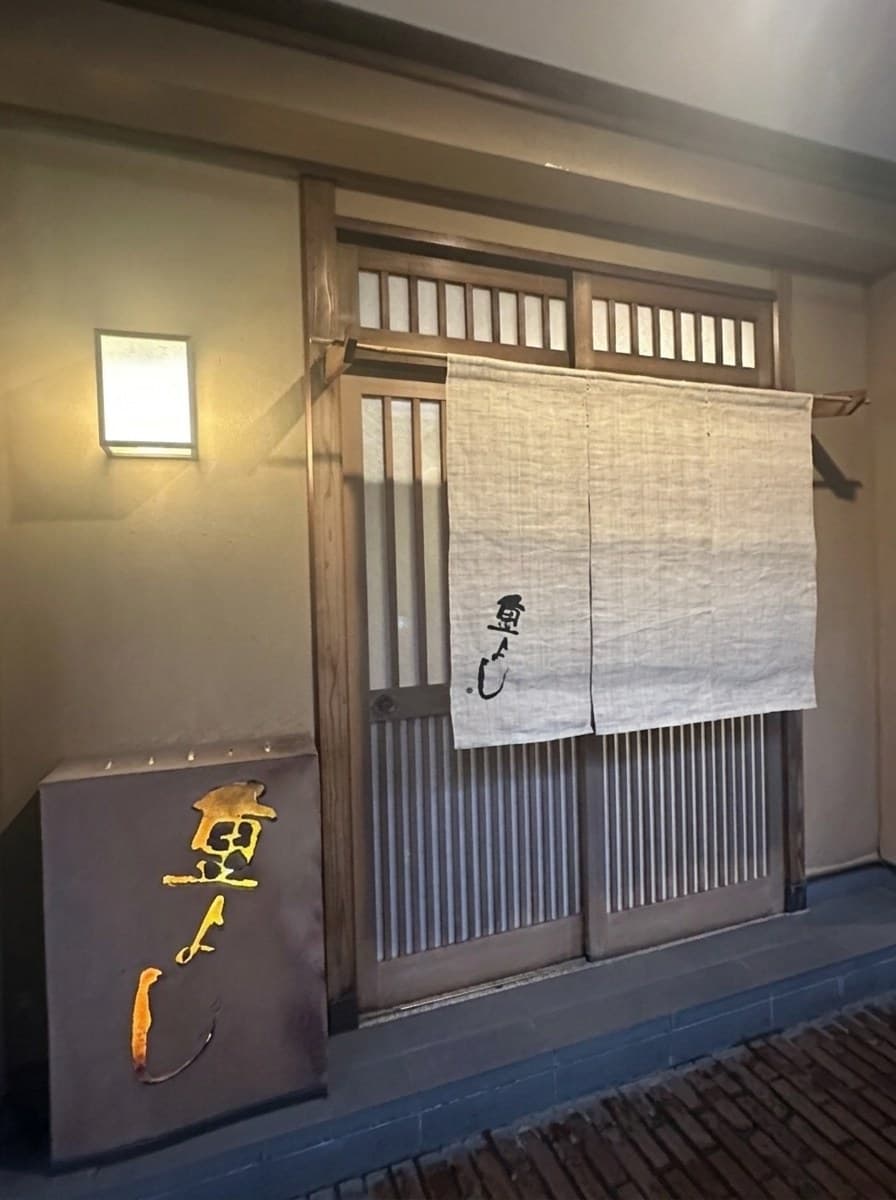
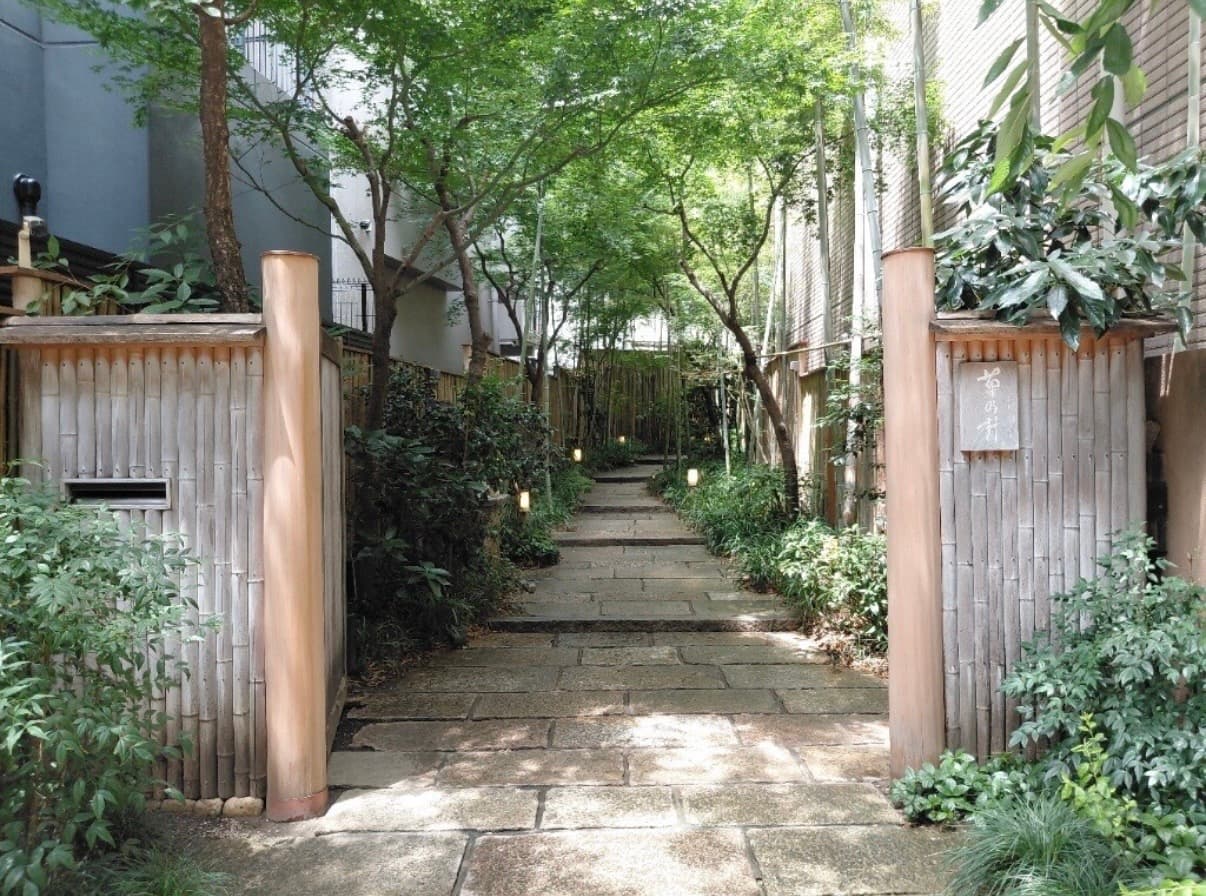
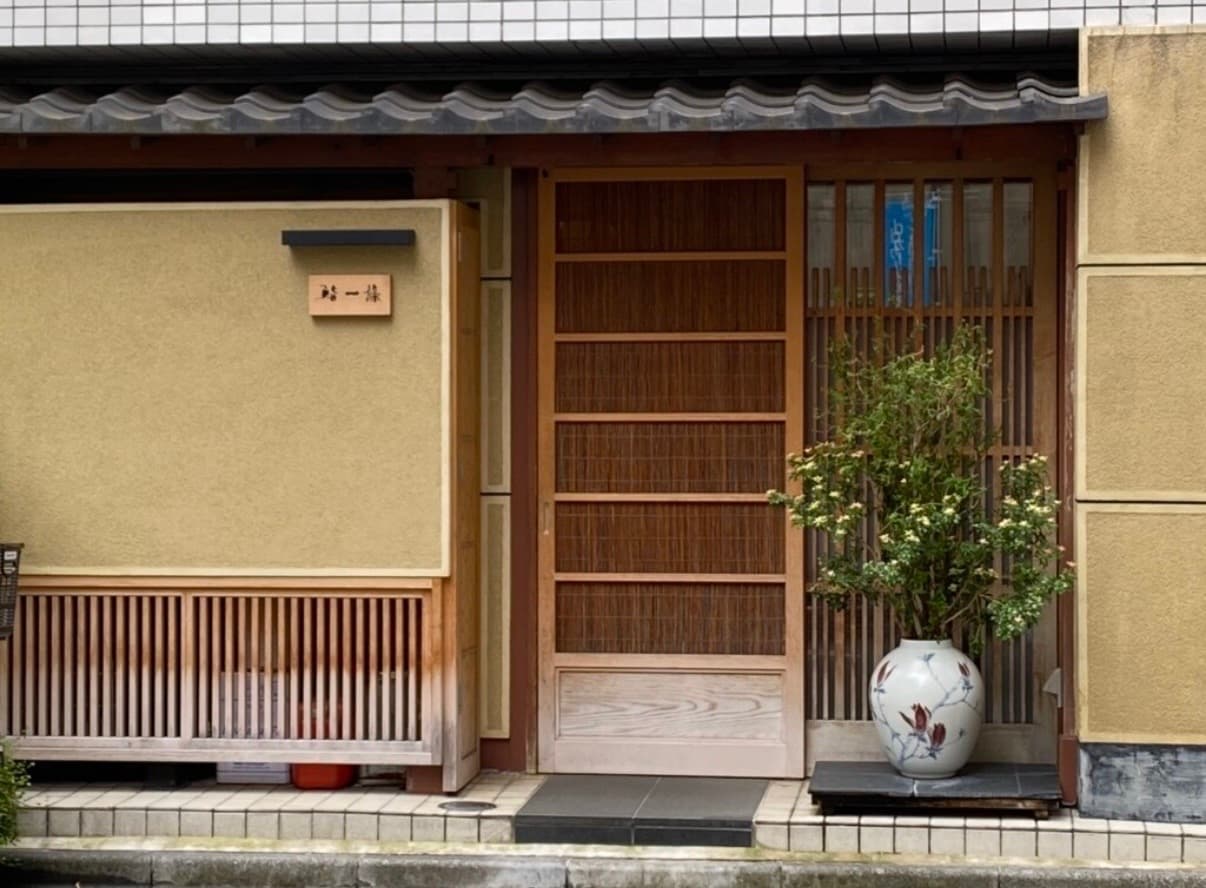
Eight seats in Nishi-Shinbashi. Its chef trained at Kyoaji for ten years before opening in 2018; the counter passes from guest to guest, almost never to the phone.
By SHOKU NOREN TeamFacts last verified September 2026How we check
In shortKappo — modest ingredients given maximum labor. Reservations run in Japanese and are hard to place from abroad, so our Tokyo desk requests the table for you, by phone and in Japanese.
Price
Omakase only.
Hours
Dinner only, 18:00–22:00
Closed
Sundays
Seats
An eight-seat counter — nothing else
Private rooms
None — the counter is the whole house
Payment
Cards accepted
Getting there
About 3–5 minutes on foot from Uchisaiwaicho; Shimbashi and Toranomon are walkable
Kyoaji was, by wide consent, the most revered Japanese restaurant in
Tokyo — the house of the late Nishi Kenichiro, which closed with his death in 2019. Chef Inoue spent more than
ten years there and ran the nikata — the simmering post, the station
that makes broths and stews, and the highest rank in a Kyoto kitchen.
He opened Mitaka in November 2018, months before his master’s death
closed the old house for good. The name is an act of devotion: the
character 味 (taste, read aji in Kyoaji and mi here) from his master’s
house, and the taka (享) of his own given name.
What you eat
Kappo — counter cuisine, where the cook works in front of you rather
than behind a kitchen wall — that gives modest ingredients maximum
labor. Uni (sea urchin) laid over eggplant;
taro stem simmered for three days; bamboo shoots cooked with black
sesame; a clam shinjo — a delicate steamed seafood dumpling — in a
clear soup that shows exactly what a decade at the simmering pot
means. The meal closes with sea bream chazuke (rice
finished with broth), crab rice with white miso, then the house
warabi‑mochi, the soft bracken‑starch sweet. Tabelog, Japan’s
restaurant‑ranking site, holds it at 4.39 and has medaled it every
year since 2020 — Silver in 2025 and 2026.
The honest arithmetic
Eight counter seats, dinner only, closed Sundays. Departing guests
book their next visit at the door, so the seats recycle among those
already inside; the phone technically takes what remains, which is
almost nothing — Japanese diners report calling for hours before
anyone can pick up. There is no introduction rule, but no real
openings either. This is, in practice, one of the hardest tables in
this collection. What a desk adds here is not magic but persistence in
Japanese: the repeated calls at the right times, the waitlist request
correctly phrased, the cancellation caught when it surfaces. We accept
the attempt knowing the odds, and nothing is charged unless a seat is
confirmed.
Go if you
Want an eight‑seat kappo counter whose chef ran Kyoaji’s simmering post — or you hold flexible dates and the patience
for a long campaign, with a cancellation seat as the realistic prize.
Free release-date alerts: the day before, on the morning of release day (08:00 JST) and about 30 minutes before when the time is known — or a weekly summary if the house opens a little every day.
Mitaka: common questions
Can you book Mitaka from abroad?
Yes, through our Tokyo desk. The phone (03-6812-7168) exists but is rarely answered. Guests book their next visit as they leave, so the eight seats pass among those already inside. No introduction rule — and few real openings either. A request here is a long campaign, not a phone call. We call the restaurant for you, in Japanese, and the ¥6,000-per-seat fee is charged only if we confirm your table — no seat, no fee.
Some of these links are referral links: if you book through them we may earn a small commission, at no extra cost to you. Restaurants never pay us to be listed or ranked. Editorial policy
Cite this page
Facts on this page were checked by our Tokyo desk. You are welcome to quote them with a link:
Mitaka — Nishi-Shinbashi, Tokyo — SHOKU NOREN (checked September 2026). https://shokunoren.com/restaurants/mitaka-shinbashi