In shortYama-no-be kaiseki — wild bear in winter, river ayu in summer, matsutake in autumn. Reservations run in Japanese and are hard to place from abroad, so our Tokyo desk requests the table for you, by phone and in Japanese.
Price
Courses from ¥30,000 · matsutake ¥60,000–90,000 · lunch ayu zen from ¥8,000 · +15% service
Hours
Lunch from 11:30, last entry 12:30 · Dinner from 17:00, last entry 18:30 (reservation only)
Closed
Tuesdays and Wednesdays (in April and October only, Wednesdays open on alternate weeks)
Seats
About 40 — tatami private rooms, dining at chairs
Private rooms
Yes — tatami rooms throughout
Payment
Visa, Mastercard and AMEX · no e-money · +15% service
Getting there
Bomura — 30–40 minutes from JR Katata by taxi or the infrequent local bus; 45–60 minutes by car from Kyoto
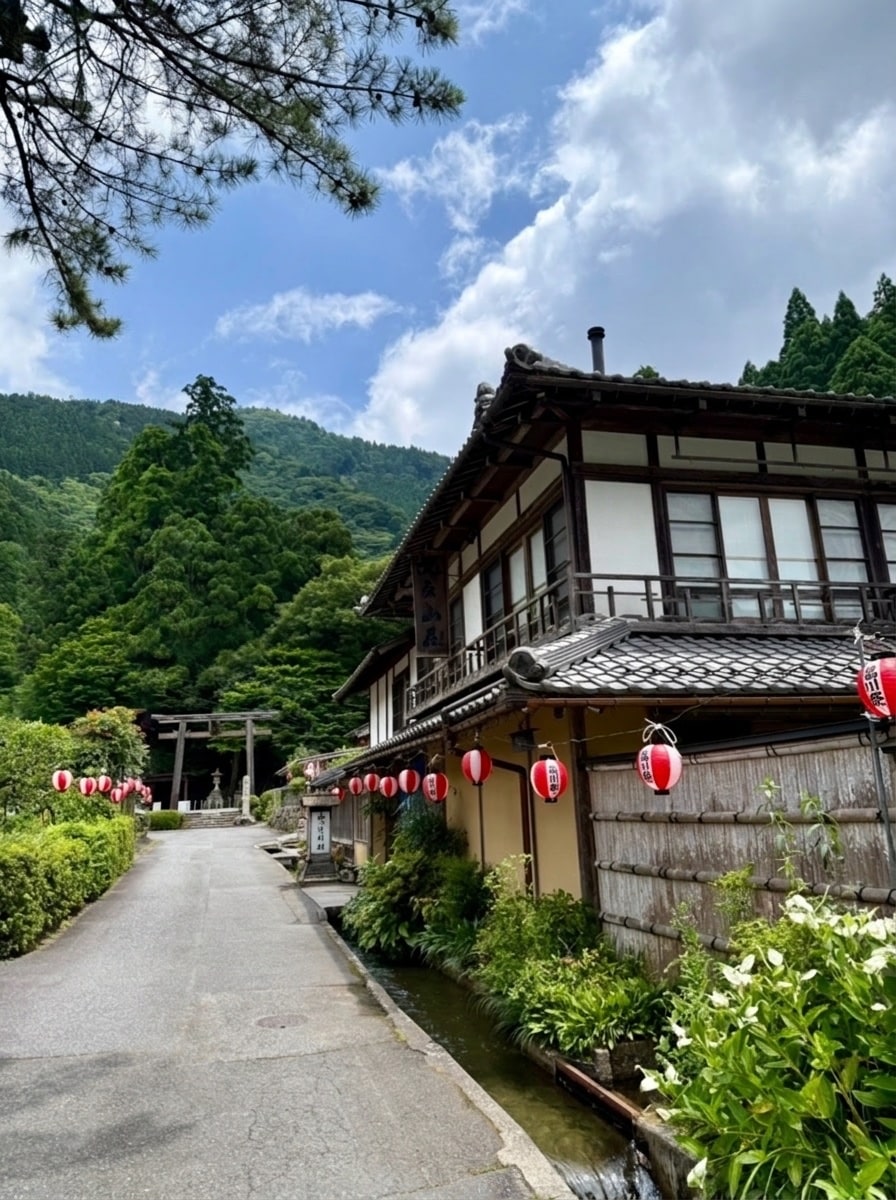
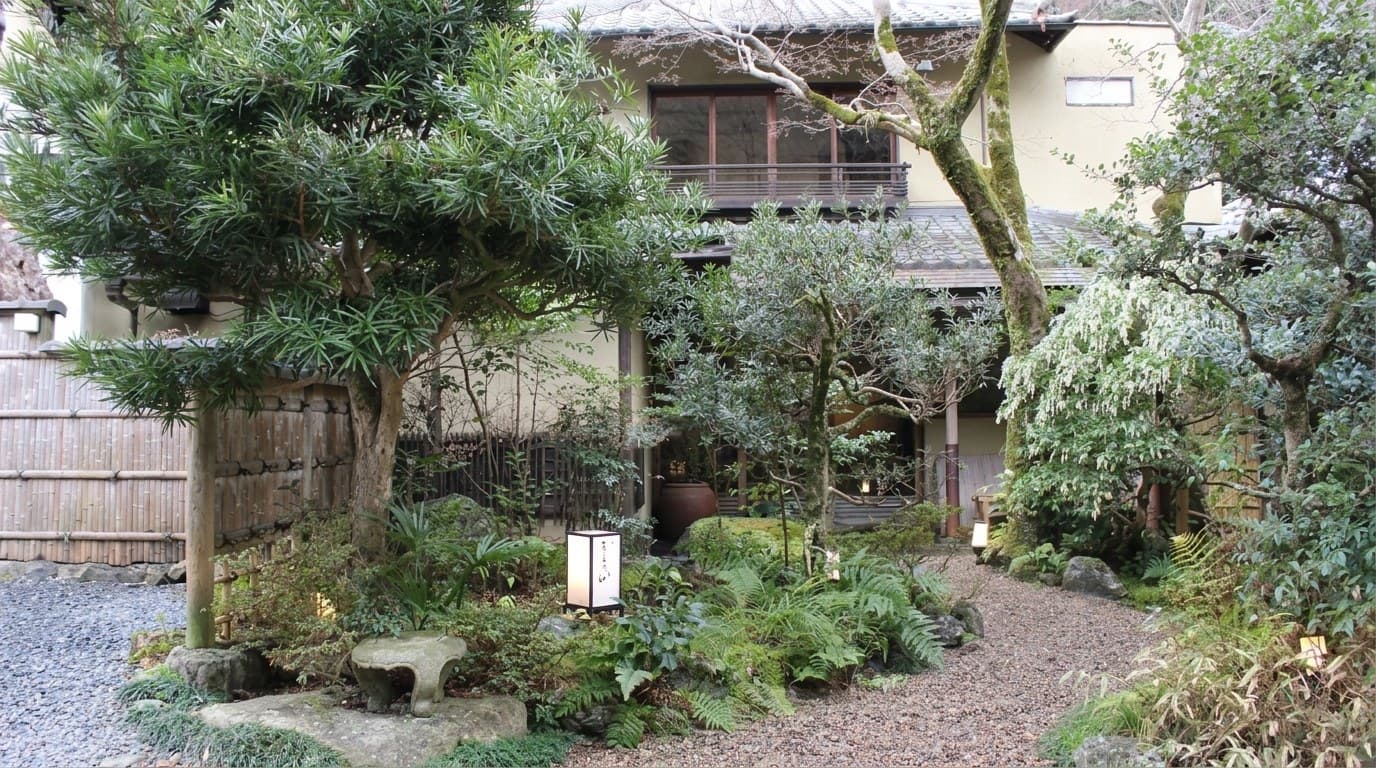
Hira Sansō began in 1959 as a mountain hut, built by the grandfather of the present master for climbers bound into the Hira range. It stands before the gates of Myōō-in temple in Bomura, a village on the Saba Kaidō — the old “mackerel road” that carried sea fish over the mountains to Kyoto. The second generation turned the hut toward cooking with summer ayu — the small sweetfish of clean rivers; Itō Takeji, the third, trained in Kyoto kitchens and took over in 1998. He calls what the house serves yama no be ryōri — “cuisine of the mountain’s edge” — and it has earned the agriculture ministry’s Ryōri Masters bronze, The Tabelog Award 2026 Silver, and a place in the Japanese Cuisine WEST Hyakumeiten 2025.
What you eat
From mid‑November to the end of March: tsuki‑nabe, the moon hotpot — wild Asian black bear, taken by a small circle of local hunters whose guild the master calls his greatest task to keep alive. The sweetness sits in the fat, drawn out in a lightly honeyed broth. From ¥30,000 before tax and the 15% service charge. One variant simmers the bear in a stock of suppon — Lake Biwa soft‑shelled turtle: moon and turtle in one pot. In spring the bear meets hanazanshō — the flower buds of mountain pepper — from ¥37,000; early summer brings a hotpot of junsai, a gelatin‑sheathed water plant, at the same mark. Summer is the ayu course from ¥30,000, the river running before the house; autumn is the mountain kaiseki — Japan’s formal multi‑course cuisine — from ¥30,000, and grilled matsutake, the prized pine mushroom, at ¥60,000–90,000 by the market.
The book
The phone (077‑599‑2058) is the main road; OMAKASE occasionally opens a period online, limited to one booking per two‑month block. The book opens at 10:00, three months ahead to the day — call on June 5 at 10:00 for September 5 — and for winter bear dates the line is a redial race; regulars report hundreds of attempts before it connects. The house takes only a handful of parties a sitting, and cancellation after booking is not accepted, so plans must be firm before anyone dials. That arithmetic is exactly why a desk in Japan matters: our desk dials in Japanese at opening, holds the redial, and confirms the no‑cancel terms on your behalf. We promise the attempt, not the seat.
Go if you
Want to taste what the mountains fed Kyoto before the sea did — bear, river fish, and pine mushrooms at their source — and will trade a Tokyo evening for a village an hour into the hills. The summer ayu lunch is the sane first visit; the winter moon is the pilgrimage.
Free release-date alerts: the day before, on the morning of release day (08:00 JST) and about 30 minutes before when the time is known — or a weekly summary if the house opens a little every day.
Hira Sanso: common questions
Can you book Hira Sanso from abroad?
Yes, through our Tokyo desk. Phone is the main road; the book opens at 10:00, three months ahead to the day, and winter bear dates are a redial race. Cancellation after booking is not accepted. Our desk dials at opening — we promise the attempt, not the seat. We call the restaurant for you, in Japanese, and the ¥6,000-per-seat fee is charged only if we confirm your table — no seat, no fee.
Some of these links are referral links: if you book through them we may earn a small commission, at no extra cost to you. Restaurants never pay us to be listed or ranked. Editorial policy
Cite this page
Facts on this page were checked by our Tokyo desk. You are welcome to quote them with a link: