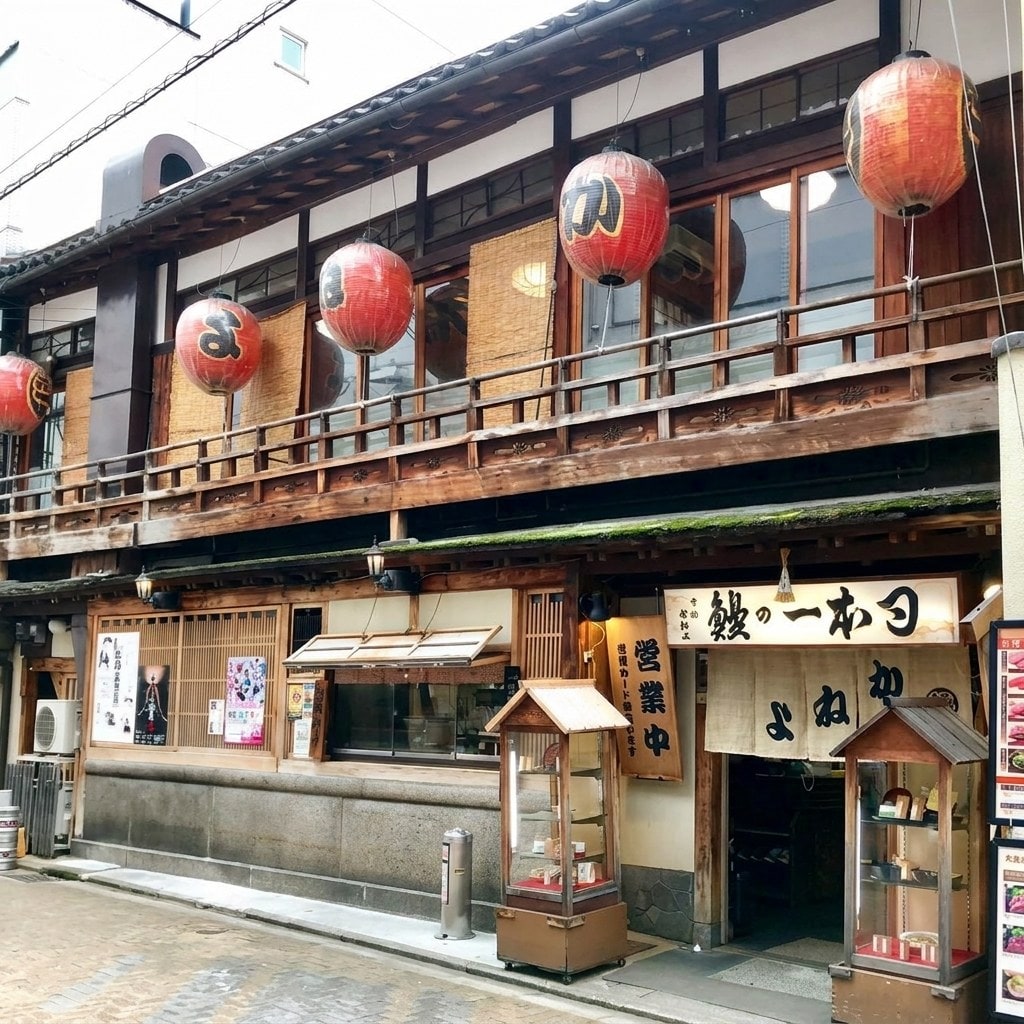
Kaneyo opened in 1912 in the Teramachi Kyogoku arcade and has stayed put ever since, retro interior intact. It is best known for the kinshi‑don — grilled eel crowned with a fluffy rolled omelet so large it spills over the rim of the bowl — a dish the house itself invented, back when the first master decided an eel bowl deserved a pillow. Kyoto has been photographing it ever since.
What you eat
The kinshi‑don is the order: eel glazed and grilled, buried under a soft, oversized omelet rolled with dashi — kelp‑and‑bonito stock — that hangs past the bowl’s edge. The regular bowl costs ¥3,000 including tax — startlingly reasonable for eel of this pedigree — and versions with larger cuts climb from there. The bowl is really a marriage of two capitals: eel grilled dark and glossy in the Edo manner, an omelet rolled soft and sweet with dashi in the Kyoto way, over rice seasoned with the sauce. Beneath the theater is a serious eel house — that sauce is the same continuously replenished tare the kitchen has kept topped up since it opened, a living thread back to 1912. Round it out with kimosui, the clear eel‑liver soup, or one of the classic unagi bowls if you want your eel unadorned.
How a visit works
You can simply walk in — guests without a booking are seated in order of arrival — but tables can also be reserved, online through Tabelog, Hot Pepper, Ikyu or AutoReserve (all Japanese‑language sites) or by phone in Japanese. The house sits in the middle of the Teramachi Kyogoku arcade, a covered shopping street a few minutes from Kyoto City Hall. At peak lunch hours a queue forms at the door, so book, or arrive before noon or after 13:30; service runs 11:30–15:30 and again 17:00–20:30, closed Wednesdays. Changes and late arrivals must be phoned in: thirty minutes late without a call (fifteen in busy seasons) cancels the table, and around New Year, Golden Week, the midsummer Day of the Ox and Obon the house may cut back or suspend reservations. Solo diners and couples sit at the ground‑floor tables by the little garden; families with small children are seated upstairs in the tatami room, as there are no children’s chairs. Dishes other than the rice bowls can sell out, so set meals are best requested by phone a few days ahead — exactly the kind of Japanese call we place for guests. Cards and PayPay are accepted.
The house and its legend
There is a story Kyoto likes to tell: when fire threatened the restaurant before the war, the owner ran not for the cash box but for that founding pot of sauce, and saved it. The room has scarcely changed since — worn wood, old fittings, a cashier’s perch like a bathhouse attendant’s stand, a miniature waterfall murmuring in the courtyard garden — and the second‑floor tatami hall still hosts a monthly rakugo storytelling evening. Eating here, you are inside a piece of the city’s daily life that simply never modernized itself away. When you surface, the arcade obliges: Honnō-ji, the temple where Oda Nobunaga met his end, is a few minutes’ walk north on Teramachi, and Nishiki Market is about five minutes south.
Come here if
You like your history unpretentious and still running — a generous, century‑old bowl in a downtown arcade, with a good tale served alongside. Kyoto sells refinement by the ounce; Kaneyo sells abundance by the bowl, and after a morning of temples and tea rooms that swap can feel like relief. It is also a Kyoto lunch that welcomes children, solo travelers and muddy‑shoed walkers with exactly the same nod.