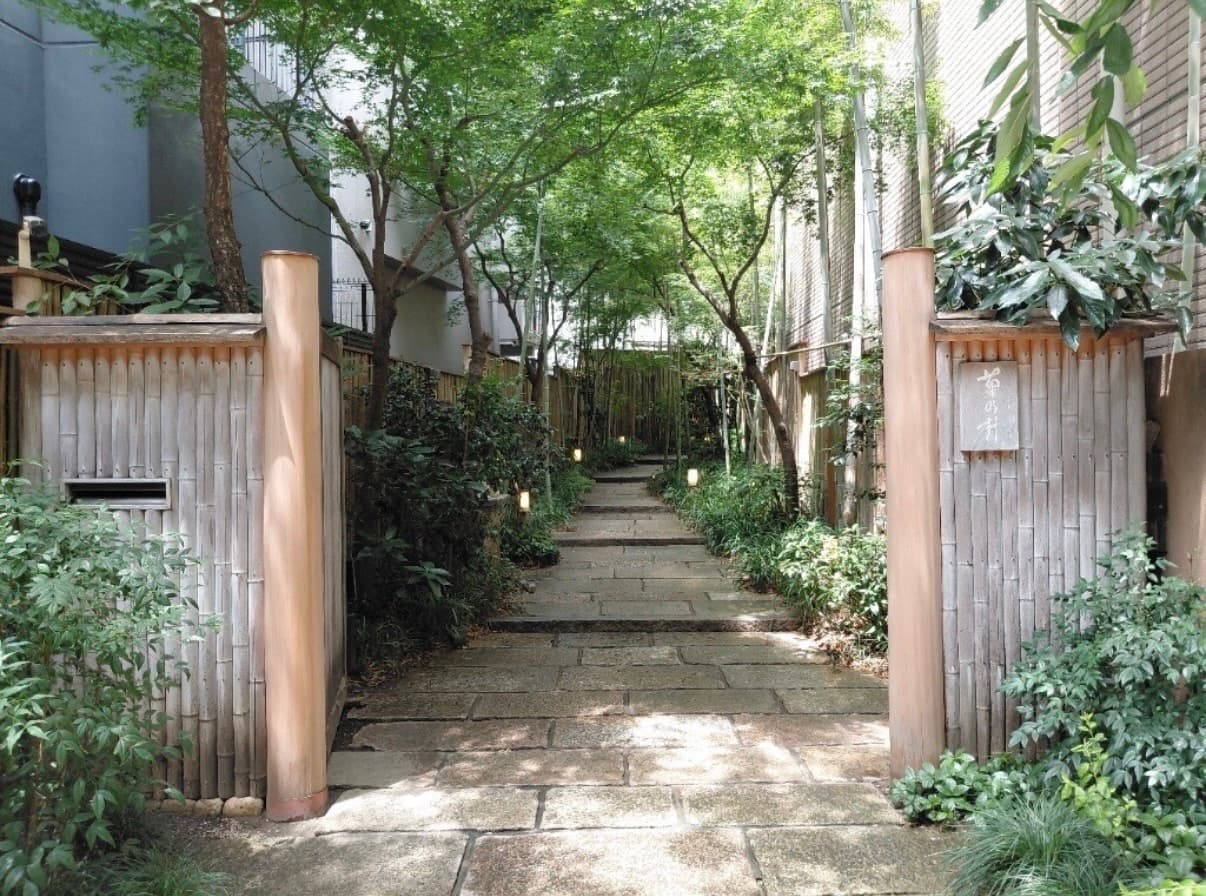
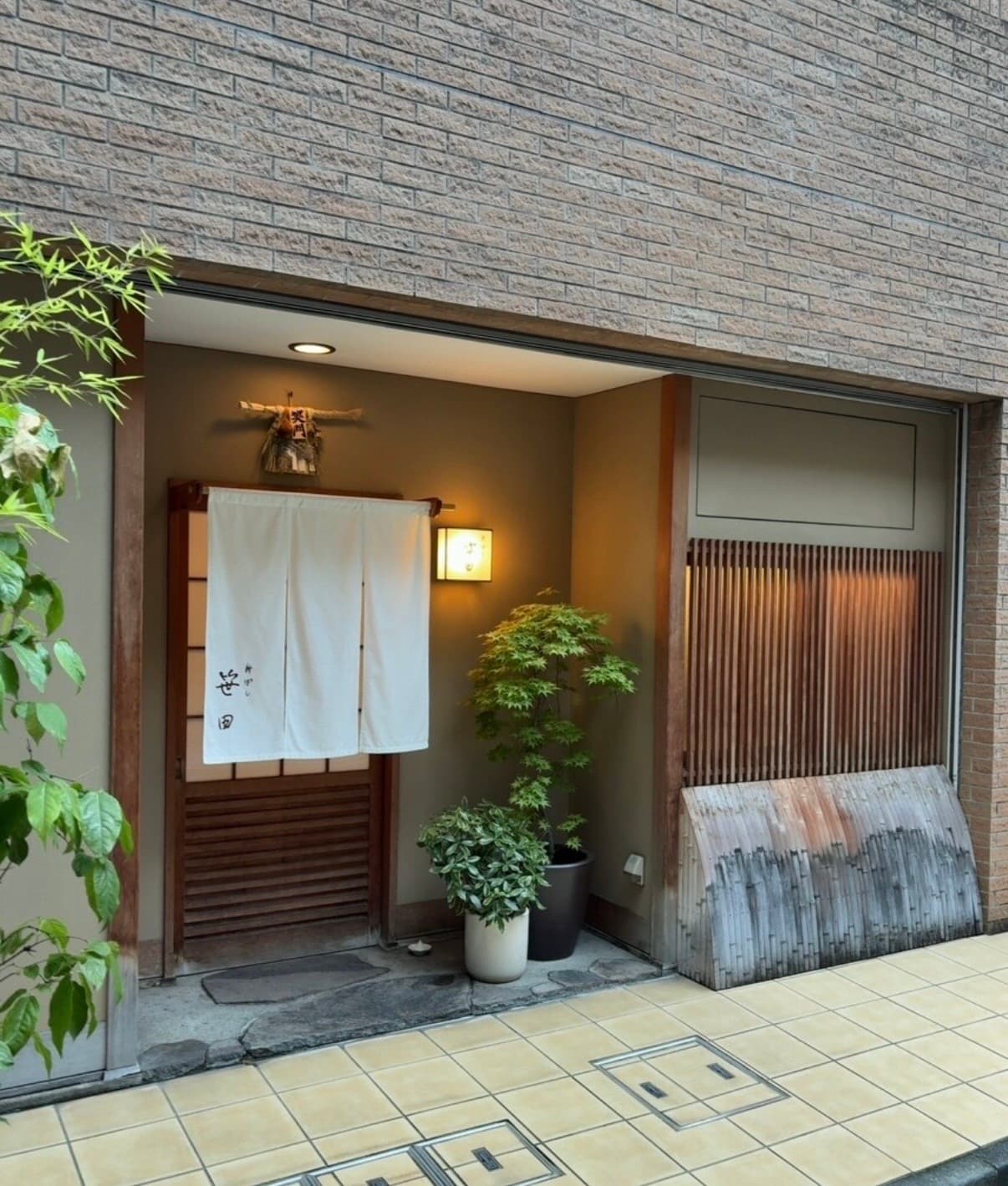
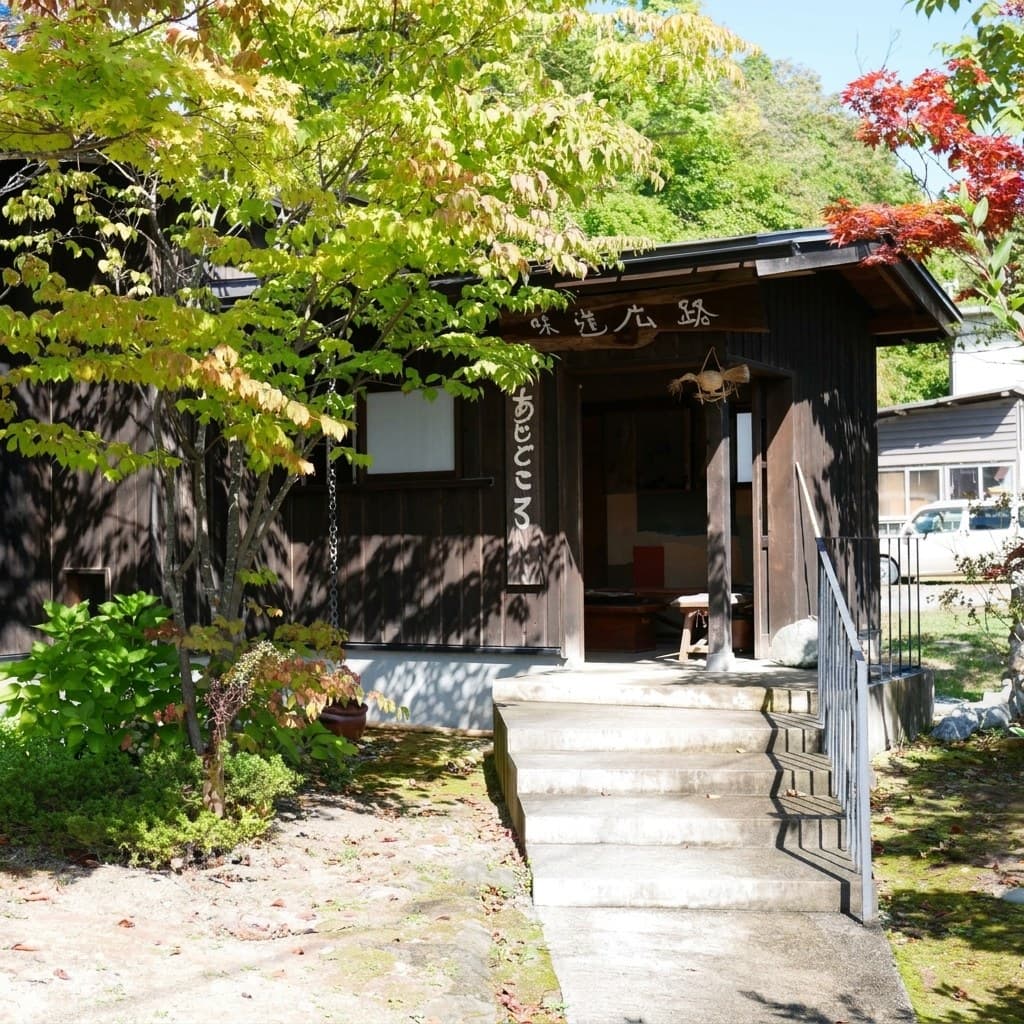
A kaiseki house or a ryotei is the one format where the rules begin before you reach the table: at the door, with your shoes. None of it is difficult, and the staff will guide you through all of it. But knowing the shape of the evening in advance turns a slightly anxious first visit into a relaxed one.
At the door
Shoes come off at the genkan, the stone‑floored entrance, and are turned to face the door by the staff — you need not do it yourself. Step up onto the wooden floor in your socks (so: socks, without holes; no bare feet), and from there into slippers if they are offered. Slippers come off again at the edge of any tatami room and are left outside it, pointing away from the room.
Two small things the staff will notice. Do not step on the raised threshold of a doorway; step over it. And avoid walking on the cloth borders (heri) that edge each tatami mat — walk on the mats themselves. Neither is a grave sin; both are the marks of a guest who has been in a Japanese room before.
Sitting
The room has a seating order, and the staff will show you your place. The seat with its back to the tokonoma — the alcove with the scroll and the flowers — is the seat of honor, given to the eldest or the host’s guest. Do not step on the zabuton cushion; kneel onto it from the side. A brief moment of seiza (kneeling upright) for the first greeting is polite if your knees allow it, and after that sit however is comfortable: cross‑legged, or with the legs to one side. Many rooms now have a sunken well under the table so your legs hang naturally, and most houses will bring a small back‑rest or a low chair if you ask when you book.
Bags go beside you, not on the table. Coats are taken at the door. Your phone lives in your bag: the room is quiet by design, and a screen on the table is the one thing that visibly changes its mood. The general rules on that are in counter manners.
The nakai
A ryotei is run, from your point of view, by the nakai — the attendant who greets you, brings each course, explains it, pours the first sake and answers anything you ask. She is your point of contact for the whole evening. If you need something, wait for her; there is no bell and no kitchen to go looking for. At the end of the meal, a thank‑you addressed to her by name is the right gesture. A tip is not — see do you tip in Japan.
The courses, and how to handle them
Kaiseki arrives one course at a time, each timed to your finishing the last. The sequence is fixed — an appetizer, a clear soup, sashimi, a grilled dish, a simmered dish, and so on to rice — and each is small so that the whole can be long. A few habits make it flow:
- Lift small bowls. Soup and rice bowls are lifted to the mouth with the left hand; drink the broth directly. Larger plates stay on the table.
- Lids go back on. A lidded bowl is opened with the lid held so the drops fall back inside, set to the right, and replaced when you are done. The staff read a replaced lid as “finished”.
- The hassun is a picture. The course of several small seasonal bites is arranged to be looked at first; then eat it in any order.
- The rice course is where you adjust. Rice, pickles and miso soup close the meal, and this is the moment to ask for less or for a second bowl. It is also the last savoury course — do not expect another dish after it.
- Chopsticks rest on the rest. Not across a bowl, and not in the rice.
Sake and tea
The first cup is poured by the nakai; after that, pour for each other and let others pour for you, holding the cup up to receive it. A cup left full means you have had enough. Matcha or a light tea often closes a ryotei meal, sometimes in a separate room or with a view of the garden — accept it, take your time, and that is the signal the evening is ending.
Time and pace
A full kaiseki takes two to two and a half hours, three at a ryotei with a garden and a tea finish. You can slow it a little; you cannot rush it, because each course is cooked when the last is cleared. Book the earlier seating if you have somewhere to be. Lateness matters as much as at a counter — the house has one room and one night planned around you — so arrive on time, and if you cannot, have someone call in Japanese.
Everything else — allergies at booking, no strong fragrance, asking before you photograph the room or the garden, never no‑showing — is in Japan restaurant etiquette. For the houses themselves, start with the best kaiseki in Japan you can actually book and the best kaiseki in Kyoto.