In shortHitsumabushi — chopped charcoal-grilled eel over rice, eaten three ways. Reservations run in Japanese and are hard to place from abroad, so our Tokyo desk requests the table for you, by phone and in Japanese.
Price
Hitsumabushi ¥4,950 at the main house; kaiseki from ¥12,100 at lunch and ¥16,500 at dinner (+10% service)
Hours
11:30–14:00 · 16:30–20:30 (last orders)
Closed
Wednesdays and the 2nd & 4th Thursday (open when these fall on a holiday)
Seats
180
Private rooms
For kaiseki guests only, reserved at least three days ahead
Payment
Cards accepted (no e-money or QR codes) · +10% service on kaiseki
Getting there
Atsuta, beside the old Miya-juku post-town site
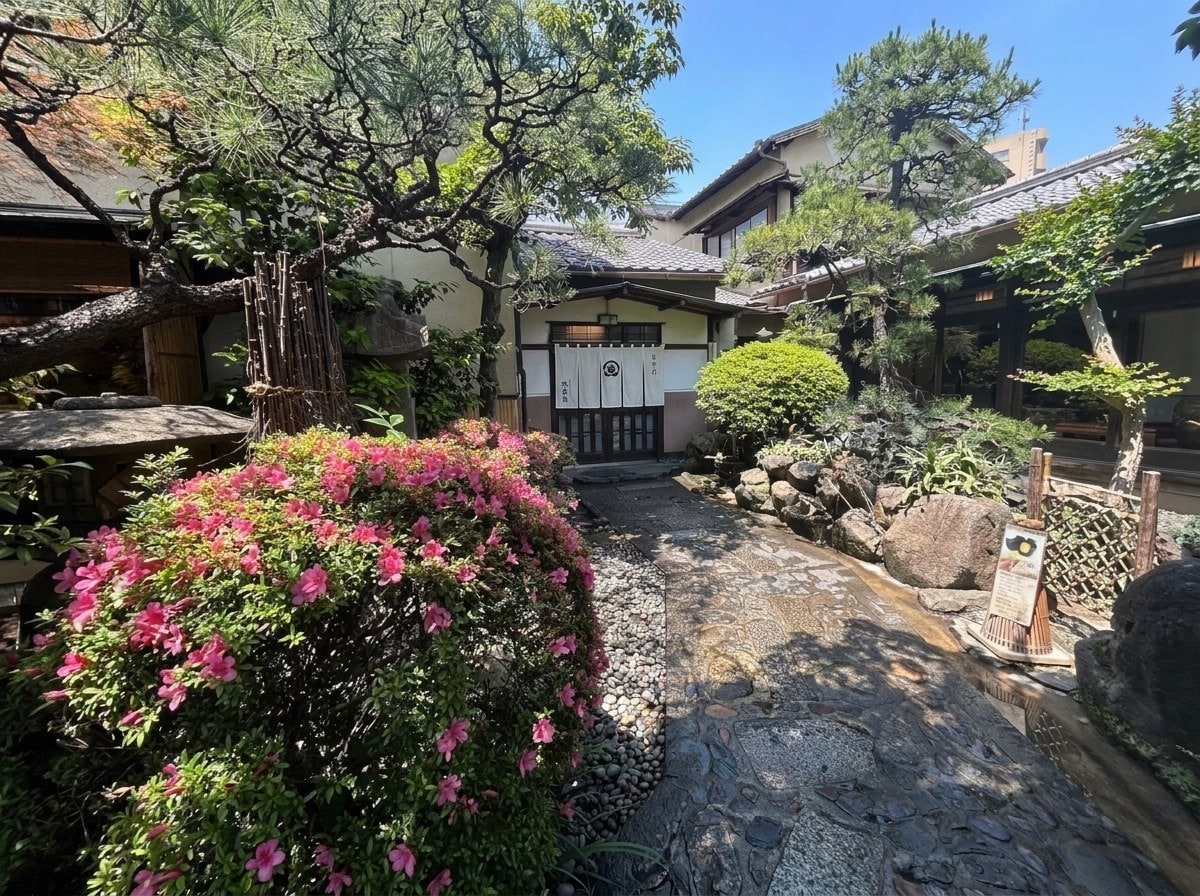
Atsuta Horaiken opened in 1873, and in the Meiji years that followed it faced a delivery problem: bowls kept breaking on the way back from deliveries. Its answer was to gather several
portions into one wooden ohitsu — a lidded rice tub — and chop the
grilled eel fine so it settled into the rice. That workaround became
hitsumabushi, and Atsuta Horaiken still holds the word as a registered
trademark a century and a half later. The tare — the soy‑and‑mirin
glaze brushed on as the eel grills over binchotan white charcoal — has
been topped up rather than remade across the generations, never
restarted, never sold.
What you eat
One order, ¥4,950 at the main house, arrives in the wooden tub with a paddle and
an empty bowl, portioned for three passes. The first is eel and rice
plain, the tare and the char doing all the talking. The second adds
the condiments — spring onion, wasabi, shredded nori seaweed — worked
through the bowl. The third is the same again but flooded with dashi,
the clear bonito‑and‑kelp stock, the grain loosening into something
between rice and soup. Kaiseki courses — multi‑course dinners built
around the eel — run above the single tub.
The booking reality
There is no seat reservation, at any price. The main house runs a
same‑day name list: you give your name and party size at the door, and
staff quote you an entry window — often around two hours at weekend
lunch, shorter on weekday evenings. The one thing the telephone does
accept, in Japanese only, is a kaiseki‑course booking with a private
room, taken at least three days ahead. The house closes Wednesdays and
the second and fourth Thursday, staying open when those fall on a
holiday. That is exactly the split a desk in Tokyo untangles: we
confirm the closing calendar against your itinerary, time your arrival
to the list, or place the kaiseki call the house actually answers.
Travelers with an afternoon in Nagoya — the great Atsuta Shrine is a
short walk, on the site of Miya‑juku, the busiest post town on the old
Tōkaidō highway — who want to eat a dish at its source rather than a
copy, and would rather queue where hitsumabushi began than book an
imitation elsewhere.
Free release-date alerts: the day before, on the morning of release day (08:00 JST) and about 30 minutes before when the time is known — or a weekly summary if the house opens a little every day.
Atsuta Horaiken: common questions
Can you book Atsuta Horaiken from abroad?
Yes, through our Tokyo desk. No seat reservations — a same-day name list at the door. Phone, in Japanese, takes kaiseki-course bookings only, at least three days ahead. We call the restaurant for you, in Japanese, and the ¥6,000-per-seat fee is charged only if we confirm your table — no seat, no fee.
Some of these links are referral links: if you book through them we may earn a small commission, at no extra cost to you. Restaurants never pay us to be listed or ranked. Editorial policy
Cite this page
Facts on this page were checked by our Tokyo desk. You are welcome to quote them with a link:
Atsuta Horaiken — Atsuta, Nagoya — SHOKU NOREN (checked September 2026). https://shokunoren.com/restaurants/horaiken-nagoya