Kyoaji is a name you will meet again and again when you look into who trained Tokyo’s kappo and kaiseki chefs. The restaurant itself closed in 2019. What remains are the people it trained: cooks who stayed six, nine, thirteen, sixteen years in Kenichiro Nishi’s kitchen and then opened places of their own, and the cooks who trained under them. This guide lays out who they are, where they cook now, and which of their tables you can realistically get.
Kyoaji in Shinbashi
Kenichiro Nishi (1937–2019) trained at Tankuma, a Kyoto restaurant, and opened Kyoaji in Shinbashi in 1967. The restaurant closed in 2019, about five months after his death. It can no longer be booked.
What made Kyoaji a school is how long its cooks stayed and the posts they held. Of the chefs in the tree below, one spent sixteen years there, mostly on the grill; another thirteen, leaving as hanaita, the head of the kitchen; another more than ten as nikata, the cook in charge of simmered dishes; others nine and twelve.
The houses they opened are, for the most part, hard to get into:
- Several are introduction‑only. Shinbashi Hoshino, Iyuki, Ajiyuki and Morikawa take new guests only through a regular, and Ajihiro has stopped taking new bookings.
- Others are held by regulars. At Mitaka, guests rebook as they leave, so few seats reach the phone; at Kawada, most seats go to regulars on repeat visits.
- A handful have a public door. Those are the counters listed under “Counters that are easier to book” below.
The family tree
Each line gives the restaurant, its area, and the training and opening dates we have on record.
- Kyoaji (Shinbashi, closed 2019) — Kenichiro Nishi, opened 1967
- Mitaka (Nishi‑Shinbashi) — chef Inoue, more than 10 years at Kyoaji as nikata; independent November 2018, in the premises Shinbashi Hoshino had left
- Shinbashi Hoshino (Shinbashi) — chef Hoshino, about 12 years under Kenichiro Nishi; opened February 2012; introduction only since 2023
- Isoda (Ningyocho) — Taketo Isoda, about 8 years at Shinbashi Hoshino; opened April 2021, moved within Ningyocho in November 2024
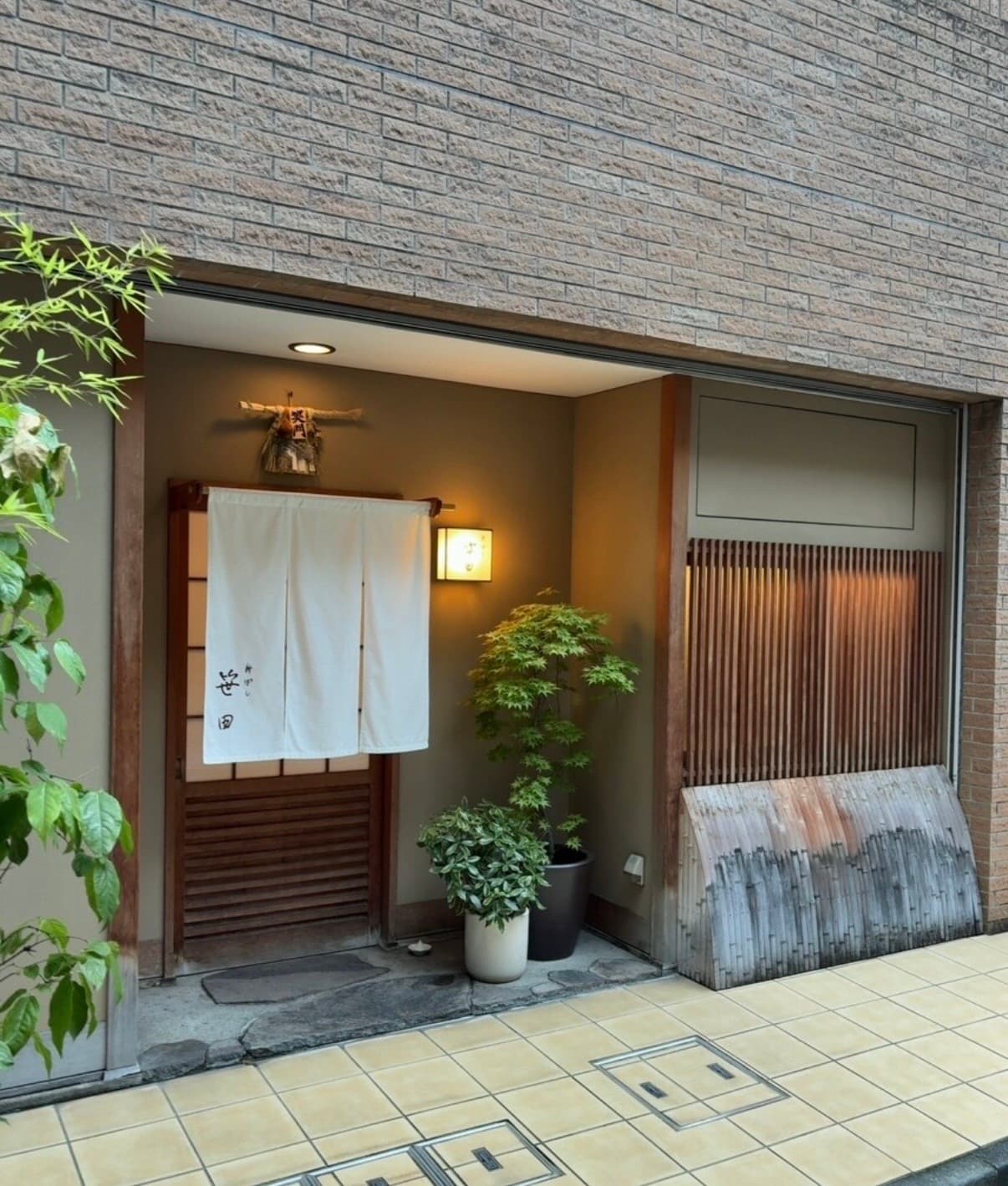
- Shinbashi Sasada (Toranomon) — chef Sasada, about 9 years at Kyoaji; opened 2005 and later moved to its present site; One MICHELIN Star (MICHELIN Guide Japan 2026)
- Iyuki (Higashi‑Ginza) — chef Ueda, 10 years at Tankuma, then 13 years at Kyoaji, leaving as hanaita; opened 2006
- Kawada (Ningyocho) — Haruji Kawada, 13 years at Iyuki
- Ajihiro (Irifune, near Shintomicho) — chef Gunji, 16 years at Kyoaji, mostly on the grill; opened July 2016. The sign over the door is in Kenichiro Nishi’s hand
- Ajiyuki (Shintomicho) — chef Minami, Kyoaji, then Ajihiro; opened October 2022
- Kurogi (Shiba‑Daimon) — Jun Kurogi, at Kyoaji in his twenties; opened in Yushima in 2010, later moved to Daimon
- Moto‑Azabu Kushima (Azabu‑Juban) — Hayato Kushima, the Fujiya Hotel in Yaesu, then 5 years at Kurogi; opened 9 October 2024
- Onarimon Haru (Onarimon) — Haruyuki Ogawa, joined Kyoaji at 20, then Ginza Suzaku and Kurogi in Daimon; opened March 2019
- Tomura (Toranomon) — Kimio Tomura, 13 years at Arashiyama Kitcho, also trained at Kyoaji; opened in Akasaka in 1992, moved to Toranomon in 2007. Also covered in our Kitcho family guide
- Koguma (Ginza) — Hirotaka Koiwa, 6 years at Kyoaji, then head chef at Kaiseki Koiwa; opened June 2014
- Shutei Tanaka (Kanegafuchi, Sumida) — Soichiro Tanaka, a fugu restaurant, then 7 years at Kyoaji; formerly Tori Tanaka. His younger brother cooks the yakitori
- Morikawa (Akasaka) — Toshiyuki Morikawa, formerly hanaita at Kyoaji
- Ginza Asami (Ginza 8-chome) — Kenji Asami, Kudanshita Kabura and other kitchens, then Kyoaji; opened 2000
- Tsuroku (Goshominami, Kyoto) — chef Ueda (not the chef of Iyuki), at Kyoaji until it closed; opened March 2020, aged 25
Points worth getting right:
- Isoda is a grand‑apprentice. Taketo Isoda trained at Shinbashi Hoshino, not at Kyoaji itself.
- So is Moto‑Azabu Kushima. Hayato Kushima’s five years were at Kurogi.
- Kawada trained at Iyuki, for thirteen years.
Counters that are easier to book
These are the restaurants in the tree where a table realistically comes up. Each is its own house with its own chef.
Shinbashi Sasada
- The chef: chef Sasada, about nine years at Kyoaji; opened in 2005. One MICHELIN Star (MICHELIN Guide Japan 2026). Seventeen seats: an eight‑seat hinoki counter and private table rooms for two to eight.
- Price: dinner about ¥30,000–40,000, plus 10% service. Cancellation costs 50% the day before and 100% on the day.
- How to book: by phone in Japanese; there is no online booking on Tabelog, and no release day is published. Dinner only, Monday to Saturday from 18:00; closed Sundays, national holidays and over the year‑end. Two guests or more. See the Shinbashi Sasada page.
- Through us: yes. Shinbashi Sasada is in our collection, so the fee is ¥6,000 per seat, charged only if we secure the table and you approve it. We call in Japanese.
Onarimon Haru
- The chef: Haruyuki Ogawa, who joined Kyoaji at 20 and went on to Ginza Suzaku and Kurogi before opening in March 2019. Seventeen seats: a seven‑seat counter, a four‑seat table room and a six‑seat sunken‑kotatsu room. The private rooms take children.
- Price: omakase about ¥35,000–45,000, plus 10% service. Booked on Ikyu, cancellation costs 100% from the day before.
- How to book: first come on Ikyu, or by phone in Japanese. No release day is published, and how far ahead dates open is unconfirmed. The counter usually fills first. Lunch at 12:00 on some days; dinner 18:00–23:00 (last order 20:00); irregular closures. See the Onarimon Haru release page.
- Through us: yes, at ¥12,000 per seat, charged only if we secure the table and you approve it.
Koguma
- The chef: Hirotaka Koiwa, six years at Kyoaji, then head chef at Kaiseki Koiwa; opened in Ginza in June 2014. Twenty‑two seats: an eight‑seat counter and three private rooms.
- Price: omakase ¥39,600, plus 10% service. Cancellation costs 50% from two days before, 80% from the day before and 100% on the day. Ages 16 and over.
- How to book: OMAKASE, Ikyu, Tabelog, Toreta or phone in Japanese. OMAKASE has shown the following month opening on the 1st at 10:00 Japan time, with up to two bookings a month per account; the other routes do not state their windows. Closed Sundays, holidays and the 1st, 3rd and 5th Saturdays. See the Koguma release page.
- Through us: yes, at ¥12,000 per seat, charged only if we secure the table and you approve it.
Ginza Asami
- The chef: Kenji Asami, who worked at Kudanshita Kabura and other kitchens before Kyoaji, and opened in 2000. The restaurant reopened in April 2026 at a new address in Ginza 8-chome. A ten‑seat counter plus private rooms.
- Price: dinner kaiseki ¥25,000–50,000, plus tax and 10% service. The tai‑chazuke (sea bream over rice) lunch is ¥2,500, cash only. Cancellation costs 50% from one business day before.
- How to book: phone only, in Japanese. Kaiseki courses and lunch bento need booking at least two days ahead, not counting closed days; the tai‑chazuke lunch can be booked or walked into. How far ahead the book opens is not stated. Closed Saturdays, Sundays and holidays. See the Ginza Asami release page.
- Through us: yes, by phone in Japanese; ¥12,000 per seat, charged only if we secure the table and you approve it.
Moto‑Azabu Kushima
- The chef: Hayato Kushima, who worked at the Fujiya Hotel in Yaesu and then spent five years at Kurogi; opened in Azabu‑Juban on 9 October 2024. Charcoal‑grilled jidori chicken is the house signature. Eleven seats: a seven‑seat counter and a four‑seat private room.
- Price: omakase from ¥22,000, or from ¥33,000 with spiny lobster; prices change with the season. Service is 13%.
- How to book: Tabelog online booking or phone in Japanese; the house may call the day before to confirm. No release day is published. Open 17:30–22:30 with irregular closures. See the Moto‑Azabu Kushima release page.
- Through us: yes, at ¥12,000 per seat, charged only if we secure the table and you approve it.
Other counters in the family
The rest of the tree, including the houses that take new guests only through a regular.
- Mitaka — eight counter seats, dinner only, closed Sundays; omakase ¥50,000–60,000 (2026). Guests book their next visit as they leave, so the seats pass among regulars, and the phone is rarely answered. It is in our collection, so you can send a request at ¥6,000 per seat, charged only if a seat is confirmed, but expect a long attempt rather than a booking.
- Shinbashi Hoshino — introduction only since 2023; three parties a night, and callers are asked for the date of their last visit. We do not request it.
- Isoda — eight counter seats; OMAKASE only, with no published release day, and the book is reported full four to five months ahead. It can be requested through us at ¥12,000 per seat: we do not book from your account, but our desk can phone the house and ask, and if no seat can be secured, nothing is charged.
- Iyuki — introduction only; neither the phone number nor the address is published. We do not request it.
- Kawada — seven seats in a Ningyocho basement; Tabelog online request or phone, but most seats go to regulars on repeat visits. The house asks that the person who booked attends.
- Ajihiro — seven counter seats; no new bookings, and no waiting list. We do not request it.
- Ajiyuki — introduction only; phone bookings are not taken, and regulars rebook at the counter about a year out. We do not request it.
- Kurogi — lunch is the public door: the following month opens on TableCheck on the 1st and on OMAKASE on the 15th at 13:00 Japan time, and cancellations are posted at any time. Dinner is largely held by regulars who book by phone.
- Tomura — a six‑seat counter and rooms for four and eight; dinner ¥60,000–80,000 plus 10% service. Online request booking on Tabelog (two guests minimum) or Pocket Concierge. It can be requested through us at ¥12,000 per seat.
- Shutei Tanaka — ten counter seats, two seatings at 17:30 and 20:00, cash only; omakase ¥9,800 prepaid. OMAKASE only, with no published release timing. It can be requested through us at ¥12,000 per seat: we do not book from your account, but our desk can phone the house and ask, and if no seat can be secured, nothing is charged.
- Morikawa — referral only; the address and phone number are not published. We do not request it.
- Tsuroku — chef Ueda’s restaurant in Goshominami, Kyoto, opened in March 2020. It is not yet on our release calendar.
Where we fit
Kyoaji itself can no longer be booked by anyone. Several of the houses its cooks opened take new guests only through a regular, and we do not request those. Where a restaurant in this tree can be requested, we have said so above: send the restaurant and your dates on the request form, and we will tell you plainly what is achievable. Shinbashi Sasada and Mitaka are in our collection and are requested at ¥6,000 per seat, charged only if we secure the table and you approve it.
SHOKU NOREN research, checked October 2026.