Kaiseki is a cuisine. Omakase is a way of ordering. Kaiseki is a seasonal procession of small courses — soup, sashimi, grilled, simmered, rice — rooted in Kyoto and the tea ceremony. Omakase means “I leave it to you”: the chef decides, and in Tokyo the word almost always means a sushi counter.
The prices overlap: at the restaurants on our release calendar, dinner at most Tokyo sushi counters and at most Kyoto kaiseki houses costs about ¥20,000–40,000 per person in 2026 (as of October 2026). What differs is the food, the room, the length of the meal and who it suits.
Kaiseki vs omakase at a glance
Prices are per person for food only, from the prices we record for the restaurants on our release calendar and in our collection, as of October 2026.
| Kaiseki | Sushi omakase | |
|---|---|---|
| What the word names | A cuisine with a set order of courses | A way of ordering: the chef decides |
| Where it comes from | The meal served before the tea ceremony; Kyoto | Counter dining; the word can apply to any cuisine |
| How the meal is built | Many small courses: opening bite, clear soup, sashimi, seasonal platter, grilled, simmered, rice, fruit | Several small dishes, then roughly 10–15 pieces of nigiri, tamago and miso soup |
| What leads | Dashi and vegetables, with fish; meat in a supporting role | Fish and rice |
| Where you sit | Private rooms, tables or a counter | A counter, usually of about 6–12 seats |
| How long | About 2.5–3 hours | About 1.5–2.5 hours, often in fixed seatings |
| Party size | Rooms for larger groups; some houses take two guests or more only | Best for one to three; larger parties often by phone |
| Dinner, most restaurants | Kyoto ¥20,000–40,000; Tokyo ¥25,000–50,000 | Tokyo ¥20,000–40,000; elsewhere ¥15,000–30,000 |
| Lunch | Kyoto ¥8,000–25,000; Tokyo ¥8,000–33,000 | Tokyo ¥5,000–22,000 |
| The most expensive | ¥60,000–100,000 or more | ¥50,000–80,000; Sukiyabashi Jiro ¥88,000 |
| Usual extras | Service charge, most often 10%, up to 15% (20% in some private rooms); sometimes a room fee | Often no service charge, 10% at some counters; sake |
| Dietary changes | Possible with notice, but dashi contains bonito | Hard: the fish is the meal |
| Best for | Occasions, groups, privacy, the season on a plate | Craft up close, eating alone or as a pair |
What is kaiseki?
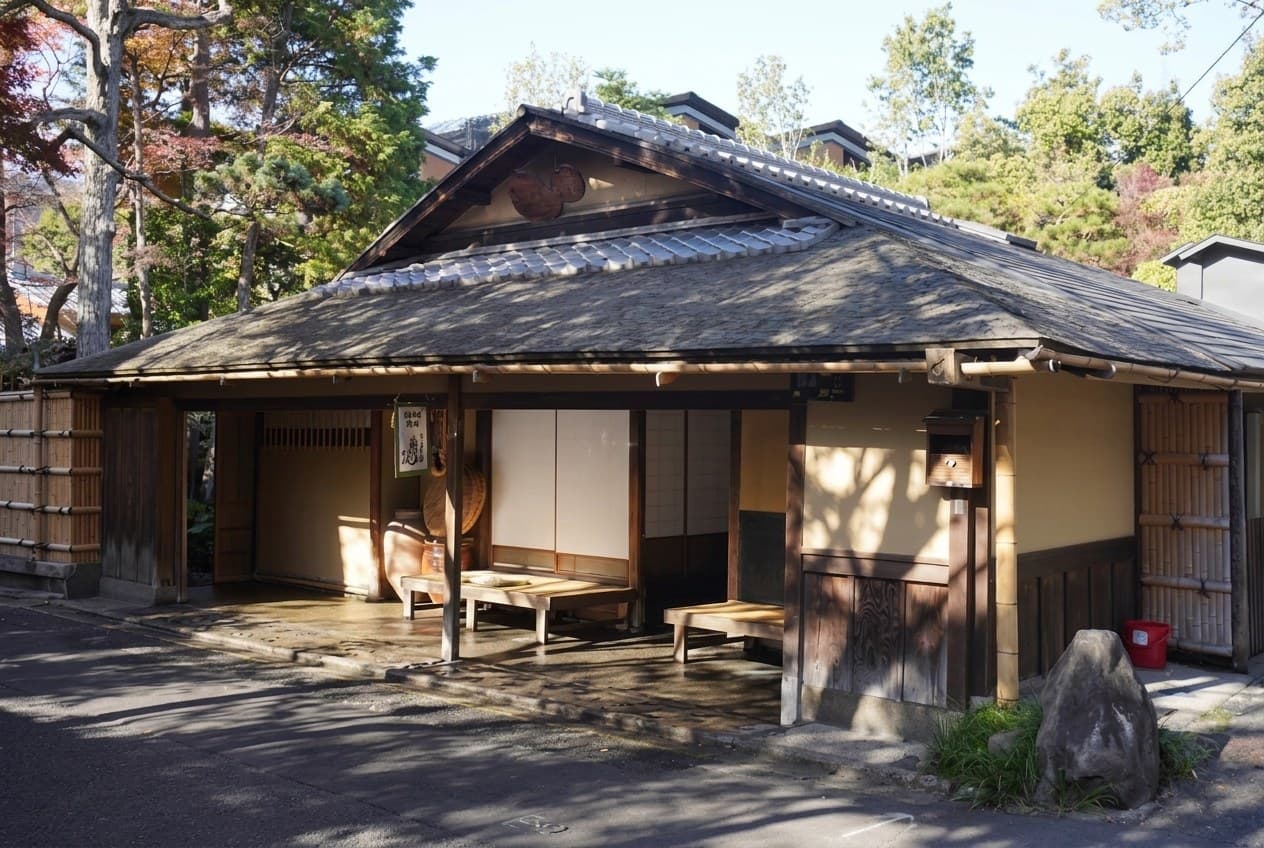
Kaiseki is Japan’s multi‑course haute cuisine, grown from the meal served before a formal tea gathering. Its identity is structure: a set procession through which the season is expressed in dashi, vegetables and restraint. You sit in a private room, at a table or at a counter, and the courses arrive in an order that changes little from house to house. The great Kyoto houses — Hyotei, Three MICHELIN Stars (MICHELIN Guide Japan 2026), among them — have refined that order for generations.
What is omakase?
Omakase is not a cuisine but a format: the chef decides what you eat, piece by piece, from what was best at the market that morning. Any restaurant can serve this way — tempura and yakitori counters do — but abroad the word has fused with the sushi counter, where a chef half a meter away builds the meal in real time. There is a structure (small dishes, then nigiri), but its essence is immediacy.
Which is more expensive?
Neither, as a category. Most Tokyo sushi counters and most Kyoto kaiseki houses on our release calendar charge ¥20,000–40,000 at dinner; Tokyo kaiseki runs higher, at ¥25,000–50,000.
The difference is in the extras. Kaiseki houses more often add a service charge — Akasaka Kikunoi adds 15% at dinner and 20% in private rooms — and some charge for the room itself. Many sushi counters add no service charge at all, but sake adds up quickly at a counter. Kaiseki prices also climb in matsutake and crab season. For every cuisine’s numbers, see what fine dining in Japan costs.
Can kaiseki be omakase?
Yes. A kaiseki meal is chosen by the kitchen, so it is a form of omakase, and many kaiseki counters sell their course under that name — Mizuno in Gion, for example, serves one omakase at ¥25,000. Prices are indicative, as listed on TableCheck (September 2026). The reverse is not true: a sushi omakase is not kaiseki, because it does not follow kaiseki’s order of courses.
Between the two sits the kappo counter: kaiseki‑style cooking served across a counter, often with more freedom in the order. Our restaurant‑types guide explains the formats.
How long does each take?
A kaiseki dinner is composed and unhurried: about two and a half to three hours, and some Kyoto houses describe three‑hour meals. A sushi omakase runs tighter, about one and a half to two and a half hours. Many counters seat everyone together in two fixed seatings a night — 17:00 and 20:00, or 17:30 and 20:30 — which is why a late arrival at a sushi counter misses part of the meal rather than delaying it. Skim our counter etiquette guide once beforehand.
Which suits a group, a solo diner or a family?
Our group runs restaurants in Tokyo, and our desk phones restaurants every day; party size decides more bookings than taste does.
- Groups of four or more: kaiseki. Ryotei serve in private rooms — Kenninji Gion Maruyama seats parties of 2 to 30 — while a sushi counter of eight seats may take larger parties only by phone or for the whole counter.
- Solo diners: a sushi counter, usually. Some kaiseki houses take two guests or more only — Hyotei is one — and Azabu Kadowaki, Three MICHELIN Stars (MICHELIN Guide Japan 2026), seats a solo diner only at the counter after 20:00, for an extra ¥5,500. Prices are indicative, as listed on OMAKASE (September 2026).
- Children: check the house rule either way. Counters and ryotei alike set age limits, from 10 to 18 and over.
What about dietary needs?
Both formats need notice, given when you book, because the course is bought and partly prepared before you arrive. Kaiseki has more room to adjust — many dishes are vegetable‑led — but almost everything rests on dashi made with bonito. A sushi omakase has little room: the fish is the meal. Our guide to dietary needs at Japanese restaurants explains how to ask.
Which should you choose?
The useful question is not which is better but what you want the meal to do:
- Ceremony, season, privacy, a group → kaiseki.
- Craft at arm’s length, the theater of the counter, eating alone or as a pair → omakase.
- A first visit → one of each if you can. They show Japanese cooking from different sides. Kyoto is kaiseki’s home, and Tokyo the home of Edomae sushi.
Both worlds share one trait: the best rooms are small, and their books open on fixed days and close fast. Our release calendar shows when each one opens. If you would like us to request a table in Japanese, it costs ¥6,000 per seat for restaurants in our collection and ¥12,000 for other restaurants, charged only if we secure the table and you approve it.