Ramen carries none of sushi’s centuries — and that is precisely what makes its history remarkable. In barely a hundred years, a Chinese port‑town noodle became Japan’s national comfort food, its greatest culinary export, and a craft scene with pilgrimage lines around the block. This guide follows the four eras of the dish, then shows where each of them is still served, with the exact queue and ticket rules of the houses in our dataset.
From China, through the ports (1870s–1910s)
The dish enters Japan as Chinese noodles in broth, served in the Chinatowns of Yokohama, Kobe and Nagasaki after the treaty ports opened — the name itself most likely from lamian, “pulled noodles.” Japanese cooks adopted it as shina soba (“Chinese soba”), and the conventional first ramen shop is Rairaiken, opened in Asakusa in 1910 by a Japanese proprietor who hired Chinese cooks from Yokohama. Its formula is still recognisable: a soy‑seasoned broth, wavy wheat noodles, sliced pork, bamboo shoot, a working‑class price. Shops in Sapporo, Kitakata and elsewhere had their own early histories, but the Tokyo bowl of the 1910s is where the dish is usually said to have turned Japanese.
Postwar: hunger builds a cuisine (1945–1960s)
Ramen’s real engine was the postwar decade: hunger, cheap American wheat sold under aid programmes, and soldiers returning from China with noodle skills and noodle cravings. Black‑market stalls spread nationwide, “shina soba” gave way to the politer chuka soba, and each region bent the bowl to its own climate:
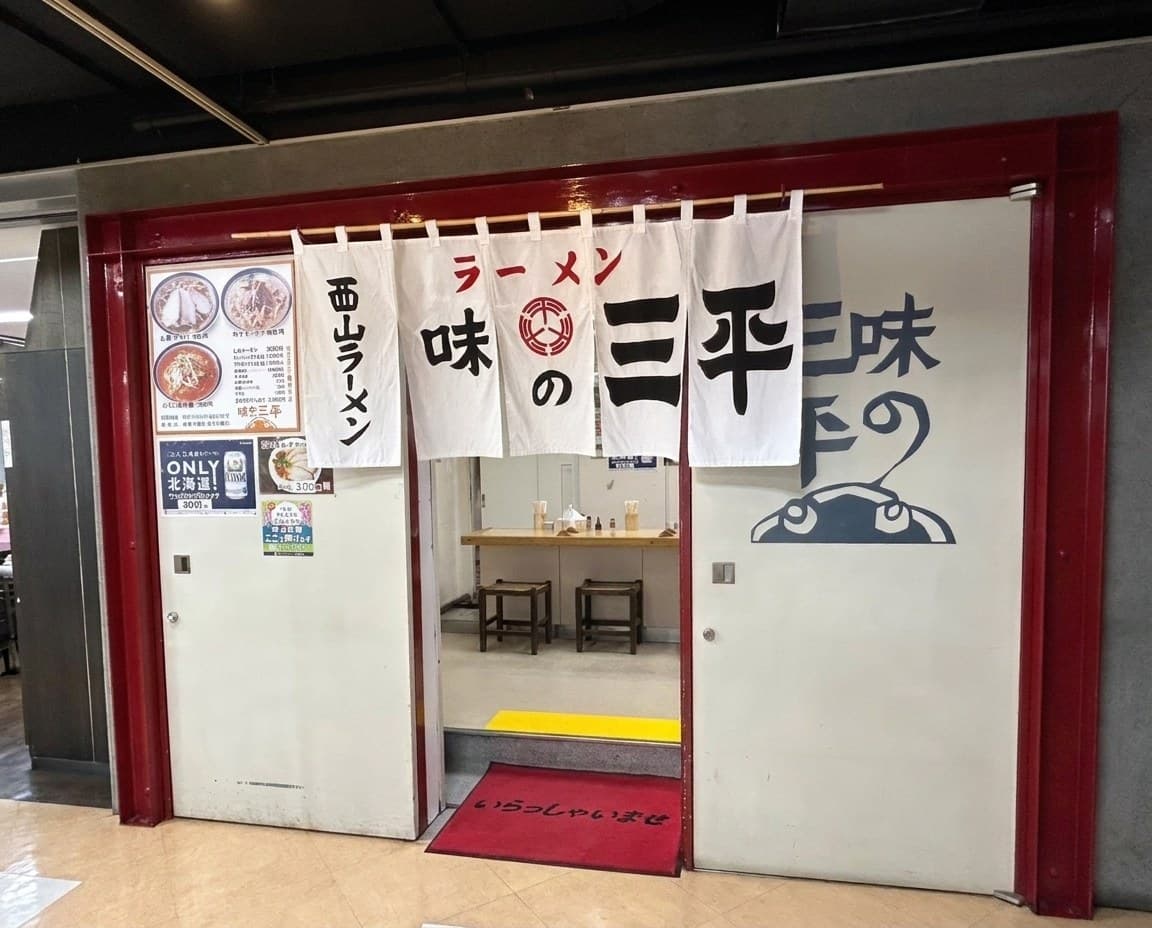
- Sapporo produced miso ramen — at Aji no Sanpei, which began as a stall in 1950 and worked out the miso bowl in the mid-1950s: a wok stir‑fry of pork and vegetables hit with broth, engineered against northern winters. The house still works from a fourth‑floor room in central Sapporo, cash only, no bookings; see our Sapporo guide.
- Hakata perfected tonkotsu — pork bones boiled to milk, thin straight noodles, the kaedama refill system; the anchor of Fukuoka’s food culture.
- Tokyo, Kitakata, Onomichi and dozens of others codified their shoyu schools.
In 1958, Momofuku Ando of Nissin flash‑fried cooked noodles into Chicken Ramen, the first instant ramen; Cup Noodle followed in 1971. A street dish became one of the most consumed prepared foods on earth, and Japan came to regard the invention as a point of national pride.
The four bases, and why “soup” is the wrong word
A bowl is built from two things a ramen cook keeps separate: the soup (pork, chicken, fish, kombu, or a blend) and the tare, the concentrated seasoning ladled into the bowl before the soup goes in. The four bases everyone names are really tare styles — shoyu (soy), shio (salt), miso — plus tonkotsu, which describes the soup rather than the tare. Then come the noodles (thin and straight in Hakata, thick and wavy in Sapporo), the aroma oil, and the toppings: chashu pork, menma bamboo, negi, nori, and the marinated soft egg that became standard only in the 1990s.
| Style | Base | Signature | Where |
|---|---|---|---|
| Tokyo shoyu | Soy tare, chicken and dashi soup | Clear, wavy noodles, menma | Tokyo, Asakusa origin |
| Sapporo miso | Miso tare, pork soup | Wok‑fried vegetables, butter and corn variants | Sapporo |
| Hakata tonkotsu | Pork‑bone soup | Thin straight noodles, kaedama refills | Fukuoka |
| Kitakata | Soy tare | Flat, thick, high‑water noodles | Fukushima |
| Onomichi | Soy tare with pork back fat | Flat noodles, small fish in the soup | Hiroshima |
| Hakodate shio | Salt tare | Pale, clean, thin straight noodles | Hokkaido |
| Tsukemen | Any | Noodles served separately, dipped in a thick soup | Tokyo, from the 1950s |
The craft turn (1990s–now)
The last three decades inverted ramen’s identity: from cheapest meal to obsessive craft — single‑origin wheat, double soups, chefs with tasting‑menu résumés. The Shin‑Yokohama Ramen Museum, opened in 1994, gathered regional shops under one roof and made “ramen tourism” a phrase. The symbolic peak came with the 2016 Michelin Guide Tokyo, published in December 2015, when Tsuta in Sugamo took the dish’s first star, and the guide’s Bib Gourmand list now carries a long ramen section. Today the scene’s other scoreboard is Tabelog’s ramen Hyakumeiten — the hundred‑best lists locals actually use.
Where the eras are served
Every house below is in our dataset. Most take no reservations at all; the two that do are the exception worth knowing about.
- Japanese Soba Noodles Tsuta (Yoyogi‑Uehara) — relocated from Sugamo in 2019. Book on TableCheck or OMAKASE (¥390 per seat): every Tuesday at 11:00 JST the following Monday–Sunday opens; no phone bookings. Walk‑ins queue for unreserved seats. Closed Tuesday, cashless only.
- Nakiryu (Otsuka) — tantanmen. No reservations: numbered tickets from 08:00 at the door for the 11:00–15:30 service; you are called back by number. Open Monday to Saturday; closed Sundays and holidays, with each month’s opening days posted on X.
- Ginza Hachigo — reservations are TableCheck only (¥500 per person): every Saturday at 09:00 JST the following Tuesday–Sunday opens, and slots go in minutes; walk‑ins queue from 11:00. Closed Mondays and some Tuesdays.
- Konjiki Hototogisu (Shinjuku‑Gyoen) — clam‑and‑sea‑bream ramen. Numbered tickets from 09:30 for lunch and 17:30 for dinner, Tuesday to Saturday, until capacity is reached.
- Ginza Kagari Honten — no reservations: join the day’s queue through EPARK on your phone or at the door; 18 seats, 11:00–21:30 daily; waits are short outside 12:00–13:30.
- Fuunji (Shinjuku) — tsukemen, 15 seats, buy a ticket while queuing; about 30 minutes, and the shop closes when the soup runs out.
- Rokurinsha (Tokyo Ramen Street) — the other tsukemen standard; 26 seats, a fast line, least crowded 07:30–09:30 and around 15:00.
- Kikanbo (Kanda) — spicy, numbing miso; ticket, queue, and state your spice level when called.
- Ramen Jiro Mita Honten — the original Jiro beside Keio University: 13 seats, cash only, opens around 08:00, closed Sundays and holidays. Buy your ticket when six from the door and expect 30–90 minutes.
- Chuka Soba Ibuki (Itabashi) — Tokyo’s benchmark niboshi bowl, eight seats. On busy days you sign the book outside in the morning (the house’s X account posts each day’s system) and return at the time given; closed Sunday and Monday.
- Chuka Soba Shibata (Komae) — Hyakumeiten regular, now one minute from Komae Station after a 2024 move; queue and buy a ticket at the touchscreen machine; closed Thursdays and Sundays.
- Menson RAGE (Nishi‑Ogikubo) — shamo‑chicken soba, 13 seats, queue only, open every day; check X for closures.
Etiquette at the counter
- The ticket machine. Most shops sell tickets at a machine by the door; choose, pay (often cash only), and hand the ticket over when seated. Some houses ask you to buy before joining the line, others when you are close to the door — Jiro’s “six from the door” rule is typical of the second kind.
- Slurping is normal and cools the noodles; it is not required, and nobody will mind either way.
- Kaedama. In Hakata‑style shops you order a second helping of noodles while soup remains; ask before the bowl is empty.
- The ten‑minute rule. A serious counter is turned in about ten minutes: eat when the bowl arrives, do not photograph the queue or the staff, and leave as soon as you finish. Lingering over a phone at a 13-seat counter with a line outside is the one real breach.
- Customisation (noodle firmness, oil, “sukuname” for less noodle) is welcome where the house invites it, and not elsewhere.
Eating the history
The eras coexist on any Japan trip: a Yokohama Chinatown bowl for the origin, a Sapporo miso pilgrimage to the source, midnight tonkotsu in Fukuoka, a craft‑school queue in Tokyo — and one Cup Noodle at 2 a.m., for history’s sake. Most ramen needs no reservation, which makes it the perfect counterweight to your booked counters; for how the two Japans of eating fit into one itinerary, that is our specialty.