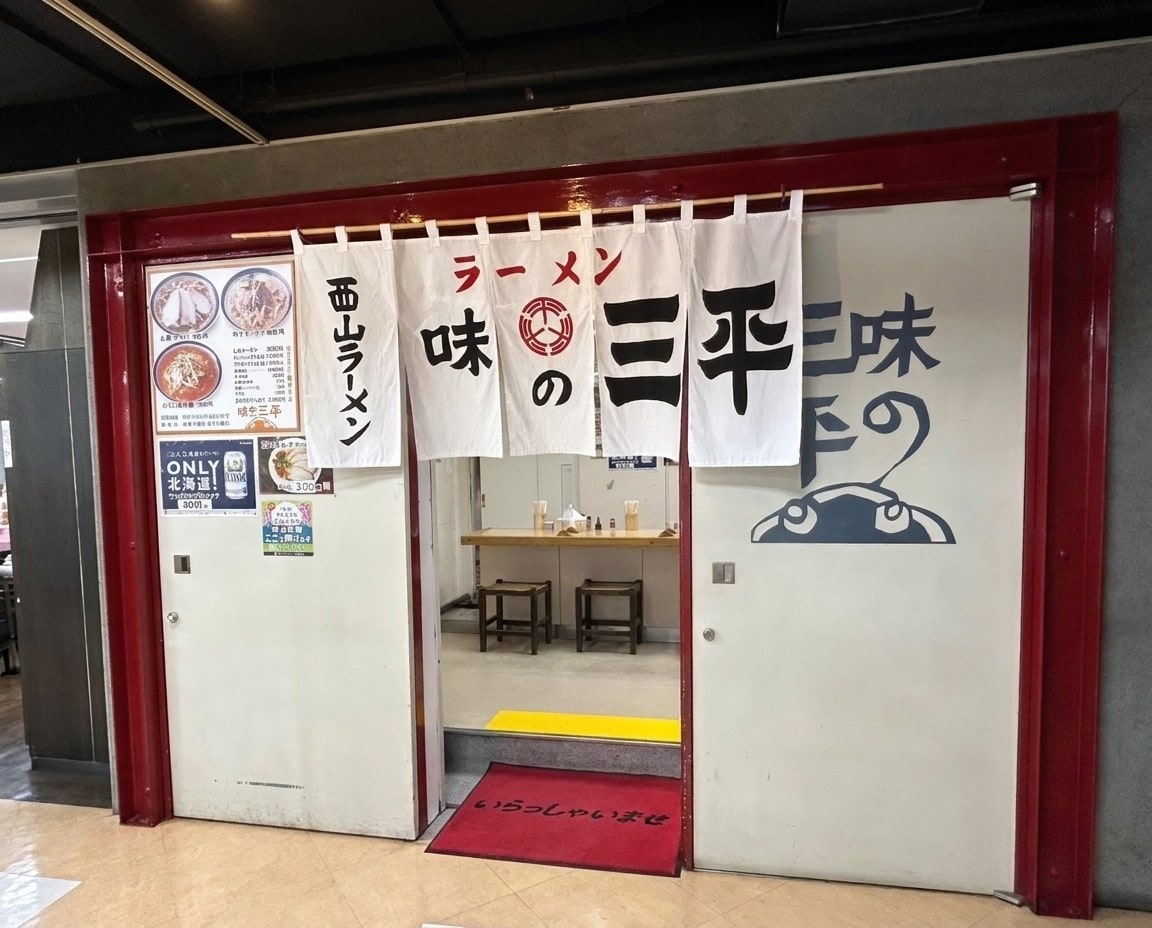
Miso ramen is eaten across Japan now, but it started in one Sapporo kitchen. Morito Omiya — a former South Manchuria Railway man — began Ajino Sanpei as a street stall in 1950 and worked out the miso ramen in the mid-1950s, building a bowl on the logic of miso soup: a stir‑fry of ground pork, onions, bean sprouts, cabbage and garlic, hit with broth in the wok, the miso carrying it all. The thick, wavy, yellow noodle that now defines Sapporo ramen was developed for this shop with the milling house Nishiyama Seimen. In 1968 the shop moved to the fourth floor of the Daimaru Fujii Central building on Minami 1-jo Nishi 3 — above a stationery store — where it still works. Every miso ramen in Japan descends from this counter.
What you eat
The original, at ¥1,200 since September 2026: that vegetable‑and‑pork stir‑fry logic makes the bowl — the wok, not just the pot, is where Sapporo miso ramen happens. The house shumai, ¥80 apiece, are the traditional side while you wait for the bowl. Shoyu (soy‑sauce) and shio (salt) ramen share the menu at the same price, but you came for the source.
Arriving without a booking
There are no reservations, ever — the desk cannot hold you a seat here, and says so plainly. What matters is arithmetic and address: one single‑line counter, hours that end by 18:20 with a mid‑afternoon break, closed Mondays and one or two Tuesdays a month (usually the second and fourth; the house posts each month’s dates on its site). Staff take your order while you queue, so the line moves faster than it looks. Cash only. The real risk is logistical — arriving at 19:00 to a closed door, or on a Tuesday the house has taken off that month. That is what a desk checks by phone in Japanese the day before, then slots the bowl into your Sapporo day where it actually fits.
Go if you
Want the ramen at its historical source rather than a queue‑famous newcomer — and would rather have the floor, the schedule, and a first order (miso, shumai) confirmed than face the fourth‑floor door cold.