In Chōfu's old castle town, the sixth master of a three-century house lays wild torafugu, 150 petals to a 40-centimeter dish, beside ponzu pressed from five thousand bitter oranges.
By SHOKU NOREN TeamFacts last verified September 2026How we check
In shortWild-fugu ryotei — once the Mōri domain's inn, in the same family since 1871. Reservations run in Japanese and are hard to place from abroad, so our Tokyo desk requests the table for you, by phone and in Japanese.
Price
Lunch from ¥3,300 · fugu lunch kaiseki ¥6,600 · fugu courses from ¥13,200 (farmed) and ¥22,000 (wild) · tax included, service separate
Hours
Lunch 11:30–14:00 (last order 13:00) · Dinner from 16:30 (last order 19:00)
Closed
Irregular holidays
Seats
Seven private tatami rooms, from two guests to sixty, each looking onto the garden
Private rooms
Yes — dining is in private tatami rooms only
Payment
Visa · Mastercard · JCB · AMEX · Diners
Getting there
Chōfu, Shimonoseki — the old samurai quarter is close by · 30 parking spaces
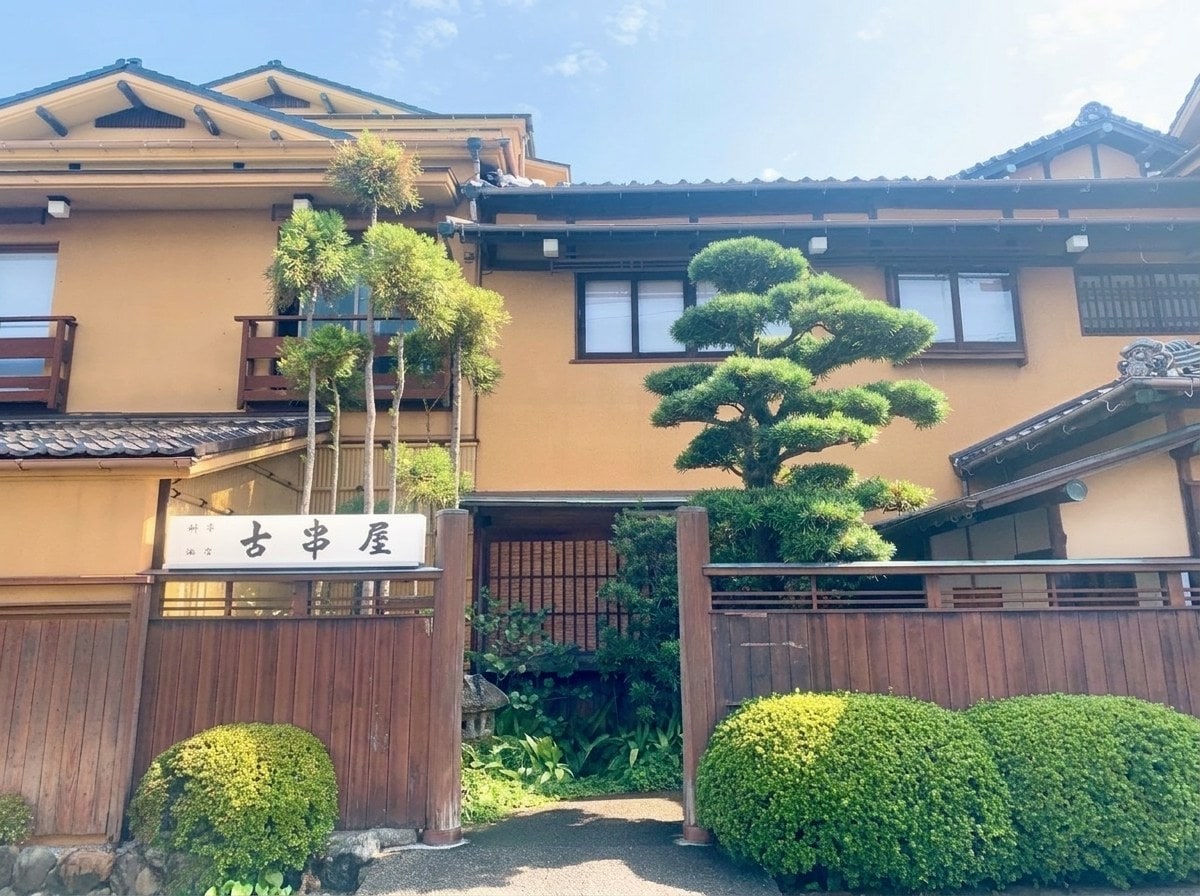
The Kamiari family came to Chōfu, Shimonoseki’s old castle town, as
retainers of the Mōri lords; they served the domain as money changers,
then kept its inn and its table, and when the domains were dissolved
the business passed to the family, which counts 1871 as its founding
year — three centuries of trade in all, under the name Kogushiya since
the early Shōwa era. The house fed Takasugi Shinsaku, the young
revolutionary of the 1860s, and General Nogi. Today the sixth master,
Kamiari Kuniyuki, stands in the kitchen himself, in a garden‑wrapped
sukiya house (built in the restrained tea‑ceremony style) of 1949 that
won Shimonoseki’s first cityscape prize.
What you eat
Fugu — the pufferfish, Japan’s most ceremonial winter fish, legal only
from licensed hands. The signature is wild torafugu, the top species,
from Haedomari, the Shimonoseki market where most of Japan’s fugu
changes hands by sleeve auction; of that wild catch, only the top one to five percent enters this kitchen (top‑grade domestic farmed torafugu is also served, at lower prices). The season runs mid‑September to
early May — northern fish early, Seto Inland Sea fish heavy with
shirako (the prized milt) from November. Tessa, the sashimi of the
form, is aged to the day and laid some 150 petals across a
40-centimeter dish; the ponzu — the citrus‑soy dipping sauce — is
pressed from five thousand bitter oranges and rested a year, the
scallions a local variety grown for fugu. Grilled fins go into
hirezake, hot sake infused at the table. In summer the house turns to
Kitaura sea urchin, river ayu (sweetfish), and hamo (pike conger).
The booking reality
The telephone, in Japanese, and no other door. Dining is entirely in
private tatami‑mat rooms — seven of them, seating two to sixty — so
the constraint is not seats but rooms, and through fugu season the
small rooms go first. Same‑day sometimes works; a set date, a garden
room, and the full wild‑fugu course are a call placed ahead. The
ryokan lineage survives too: overnight stays with dinner from ¥30,800.
All of it is a five‑minute Japanese phone conversation — the kind our
desk in Tokyo has, confirms, and hands you done.
Want the whole argument for wild fugu on one table in a room of your
own — ideally in November, when the Seto fish carry shirako — or a
castle‑town night in a three‑century merchant house, a short walk from
Chōfu’s samurai quarter.
Free release-date alerts: the day before, on the morning of release day (08:00 JST) and about 30 minutes before when the time is known — or a weekly summary if the house opens a little every day.
Kogushiya: common questions
Can you book Kogushiya from abroad?
Yes, through our Tokyo desk. Phone only (083-245-0051). Same-day is sometimes possible, but the seven private rooms argue for booking ahead — our desk calls in Japanese. We call the restaurant for you, in Japanese, and the ¥6,000-per-seat fee is charged only if we confirm your table — no seat, no fee.
Some of these links are referral links: if you book through them we may earn a small commission, at no extra cost to you. Restaurants never pay us to be listed or ranked. Editorial policy
Cite this page
Facts on this page were checked by our Tokyo desk. You are welcome to quote them with a link: