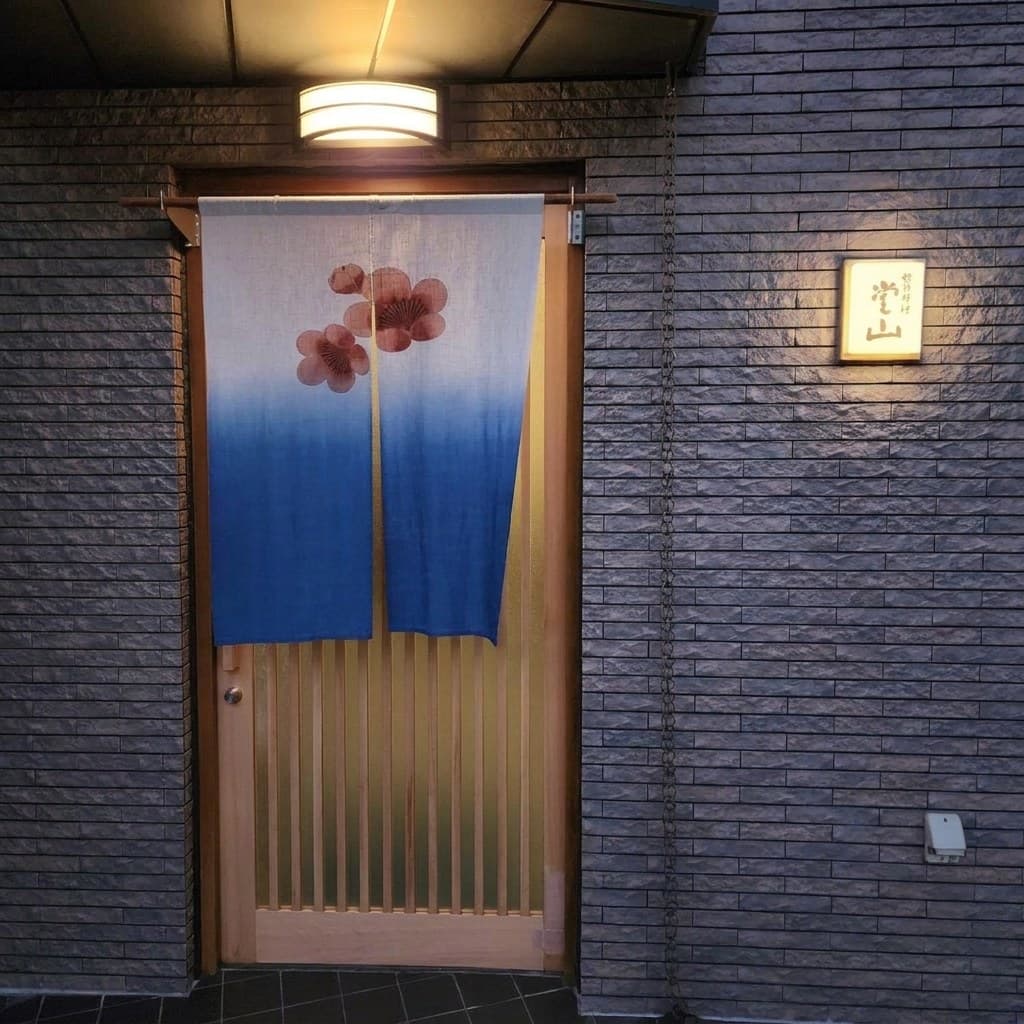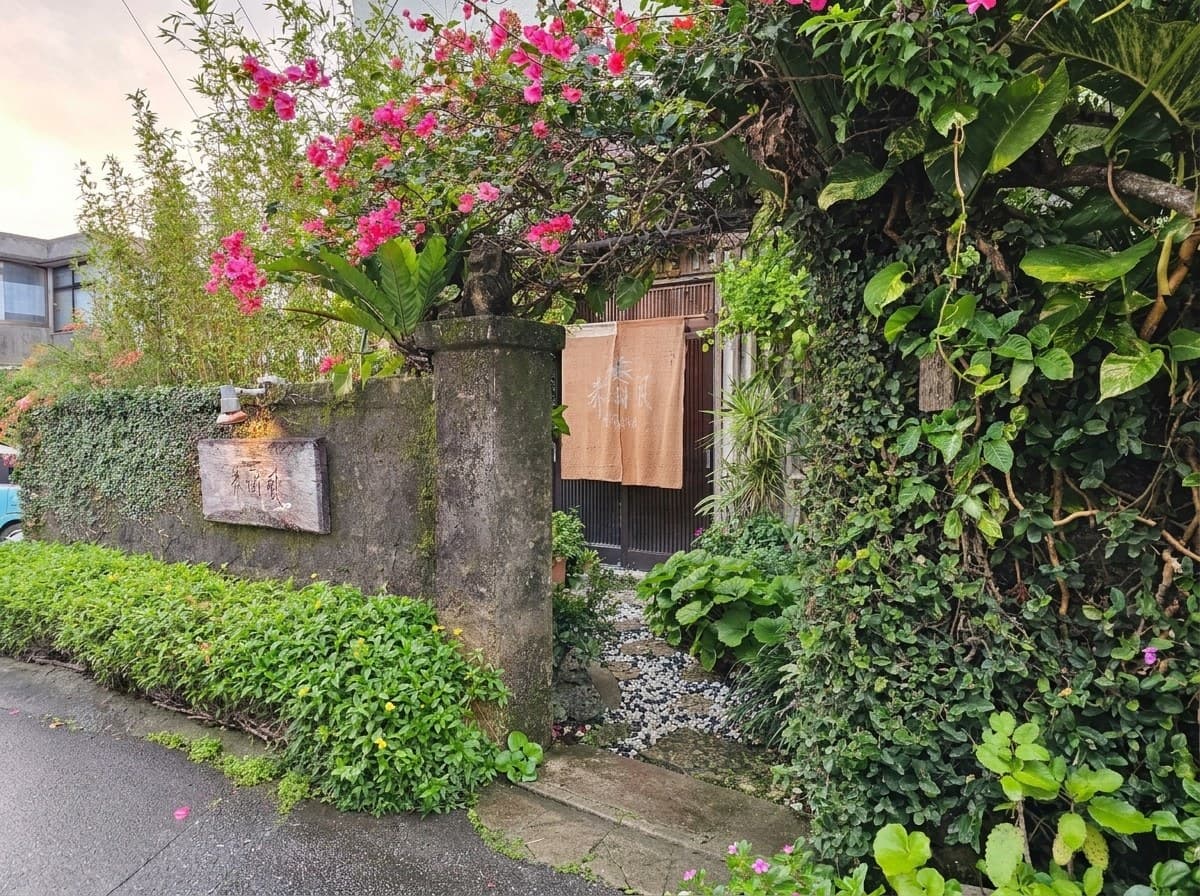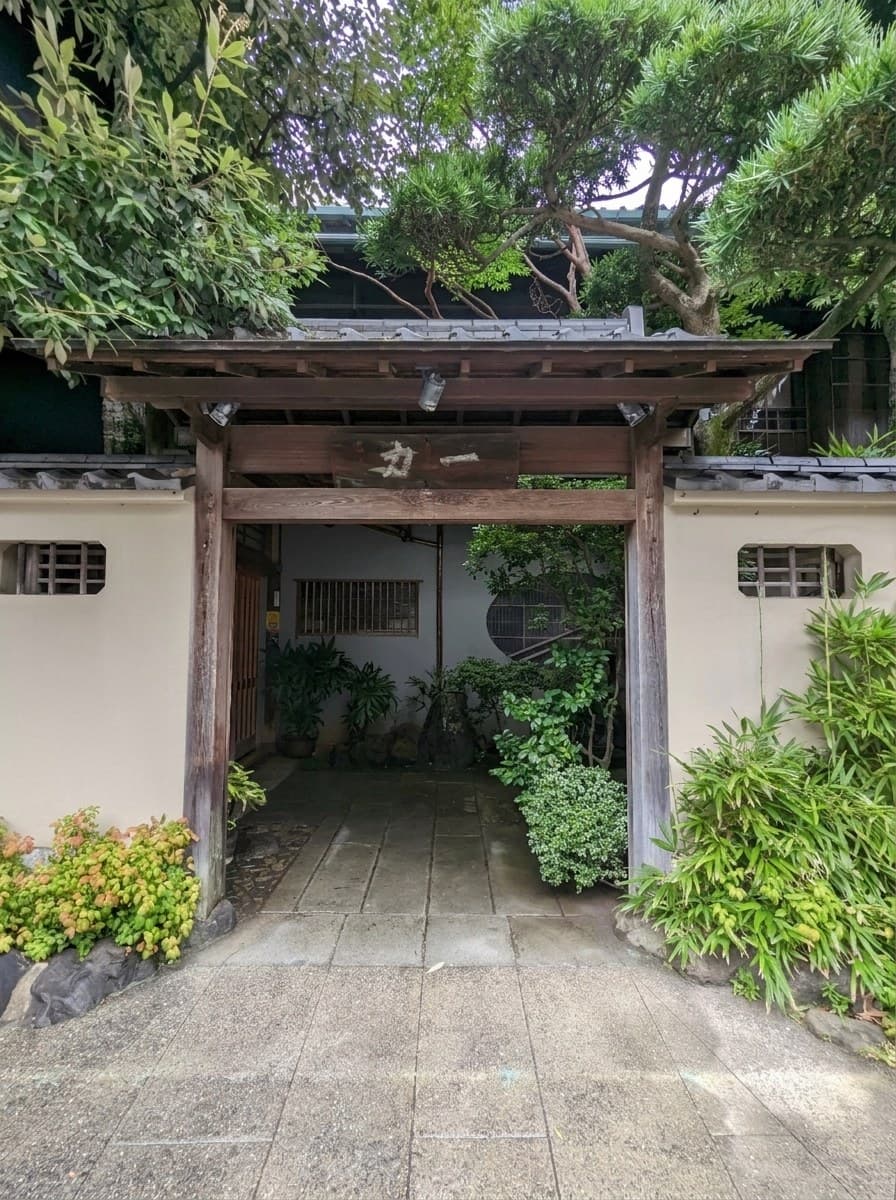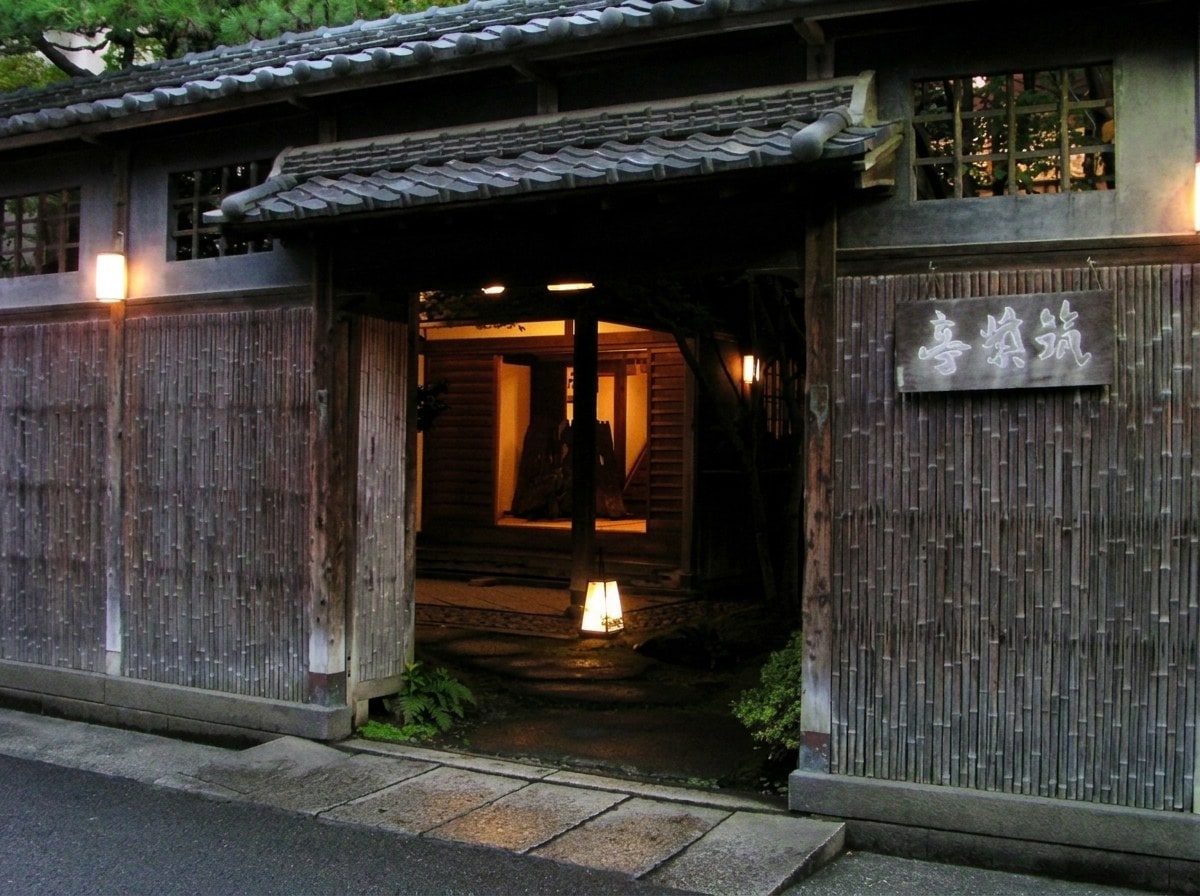
Nakatsu, on Oita’s northern coast, was once sung about in the Meiji railway song as the rival of Hakata, and its riverside had ryotei to match. Chikushitei, founded in 1901, is the only one that survived the war intact — its main house, annex and wall, all built in 1914, were registered as national tangible cultural properties in 2003. The annex served as an officers’ club; pilots of the Usa naval air group spent their last night here before sorties, and the sword cuts one of them left in an alcove pillar are still there, as Saburo Shiroyama recorded in Shikikan‑tachi no Tokko. The kitchen belongs to Ryuichi Habu, born 1969, a Keio literature graduate who trained at Shofukuro for five years before coming home in 2000; under him the house took one Michelin star in the Kumamoto‑Oita 2018 special edition and cooked the Oita–Hakata menu for JR Kyushu’s 36+3 train. Tabelog lists it among the hundred best Japanese restaurants in western Japan (2023).
What you eat
Hamo, the pike conger of the Buzen Sea, which the house calls the best in Japan. The bone‑cutting — some twenty‑five strokes to the inch, a technique the house says Nakatsu cooks began in the Edo period — is done on fish so fresh the flesh does not cling to the blade. The signature is hamo shabu‑shabu, swished in a paper pot and dipped in a ponzu the house builds on dashi, sake, mirin and local citrus rather than the plum paste of Kansai; it won a soy‑sauce masters’ award in 2004. Dinner kaiseki runs ¥14,000, ¥19,000 and ¥25,000 before tax and service and adds the season’s Buzen crab, seki‑saba mackerel or flounder; the lunch set with hamo shabu is ¥8,000 all in, ¥10,000 with two pieces of hamo nigiri. The meal ends with kenchin, a steamed sweet of white soy beans, wood‑ear and soy that dates to an Edo‑era Nakatsu physician.
The booking reality
The house is completely reservation‑only, but there is no release day. Reservations are taken by telephone in Japanese at 0979‑22‑3441 — the house itself recommends the phone for first‑time and short‑notice guests — or by fax and a web form that the house answers with a call; nothing is confirmed until that call comes. Since 2025 Ikyu has sold lunch and dinner plans as well. You choose the course when you book, and the house asks for generous notice because some dates cannot be accommodated; reviewers nonetheless report tables a few days out. Our desk calls in Japanese and settles the course, the room and the hour in one conversation.
The details matter here: cards are accepted only on the three kaiseki courses, so the lunch set is cash; changes and cancellations are due by the previous day, with a fee on the day; Ikyu bookings are charged in full from three days out. Ikyu lists children as not admitted — ask the house directly. The house does not publish a solo‑diner policy.