In shortFugu kaiseki in Japan's first licensed pufferfish house. Reservations run in Japanese and are hard to place from abroad, so our Tokyo desk requests the table for you, by phone and in Japanese.
Price
Fugu courses ¥8,800–60,500 (tax incl.) · the fugu full courses ¥24,200 / ¥29,700 / ¥35,200
Open year-round (year-end and New Year dates announced each December)
Private rooms
Banquet halls, private rooms, and a former guest-of-honor chamber
Payment
Cards accepted (no e-money or QR codes) · +10% service
Getting there
Amidaiji-chō, above the Kanmon Strait
Dress code
No dress code
For centuries fugu — the pufferfish whose liver and ovaries carry a
lethal toxin — was banned in Japan, a prohibition tracing back to
Toyotomi Hideyoshi. By one account it was Itō Hirobumi, the country’s
first prime minister, who ate the fish here, was won over, and had the
ban lifted. In 1888 Shunpanro became the first restaurant in the nation
licensed to serve it, and it still does, on a bluff above the Kanmon
Strait at the tip of Honshū, where the fugu trade of Japan concentrates.
What you eat
Fugu as kaiseki — a formal multi‑course progression, not a single
plate: paper‑thin sashimi fanned so the pattern of the dish shows
through, the hot pot, the fried course, the naturally lean, firm flesh
carrying an entire dinner. Three full courses anchor the menu at
¥24,200, ¥29,700 and ¥35,200 per person; the top course, at ¥60,500, is
built on tiger fugu bought at Shimonoseki’s Haedomari market, the
auction floor through which most of Japan’s fugu passes. Note the
calendar: the wild‑torafugu full course is not served May through
September or over the New Year — winter is the fish’s season, and the
house keeps to it.
The booking reality
The house takes no walk‑ins: reservations from two guests, and the book
closes four days before your date — miss that cutoff and no amount of
standing at the door helps. Tables book online through Tabelog or Ikyu,
both in Japanese, or by phone in Japanese (083‑223‑7181, answered
9:00–22:00); requests about the course, the seating or a particular room
are easiest to settle by phone. A 10 percent service charge is added,
and cancellation fees start at 20 percent three days before. In 1895
Shunpanro hosted the peace talks that ended the First Sino‑Japanese War
— Itō and Mutsu Munemitsu for Japan, Li Hongzhang for Qing China — and
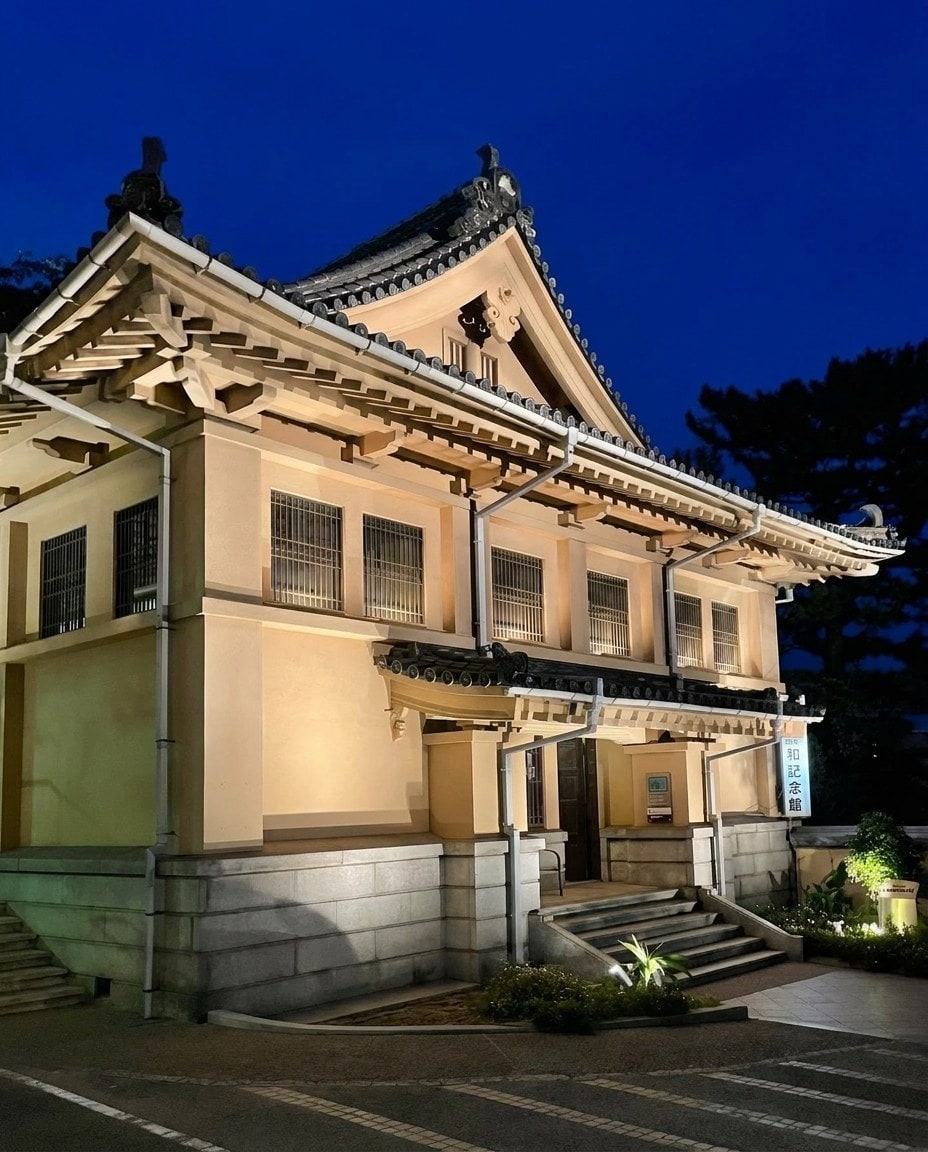
the Treaty of Shimonoseki was signed here; the memorial hall next door
preserves the furnishings of the conference room. A desk that
calls in Japanese can fix the course tier, the date inside the cutoff,
and a room with the strait view in one conversation.
Are drawn to where history and cuisine occupy the same address — and
want the one fish Japan once forbade, in winter, in the house that was
licensed to serve it first.
The house's cancellation charge
From 3 days before20%
From 2 days before20%
From 1 day before50%
Same day, with notice100%
Same day, no notice (no-show)100%
Charged by the house, not by us. A plan's own policy takes precedence.
Free release-date alerts: the day before, on the morning of release day (08:00 JST) and about 30 minutes before when the time is known — or a weekly summary if the house opens a little every day.
Shunpanro: common questions
Can you book Shunpanro from abroad?
Yes, through our Tokyo desk. Online on Tabelog or Ikyu (both in Japanese), or by phone in Japanese (083-223-7181, 9:00–22:00); reservation only, from two guests, closing four days before your date. We call the restaurant for you, in Japanese, and the ¥6,000-per-seat fee is charged only if we confirm your table — no seat, no fee.
Some of these links are referral links: if you book through them we may earn a small commission, at no extra cost to you. Restaurants never pay us to be listed or ranked. Editorial policy
Cite this page
Facts on this page were checked by our Tokyo desk. You are welcome to quote them with a link: