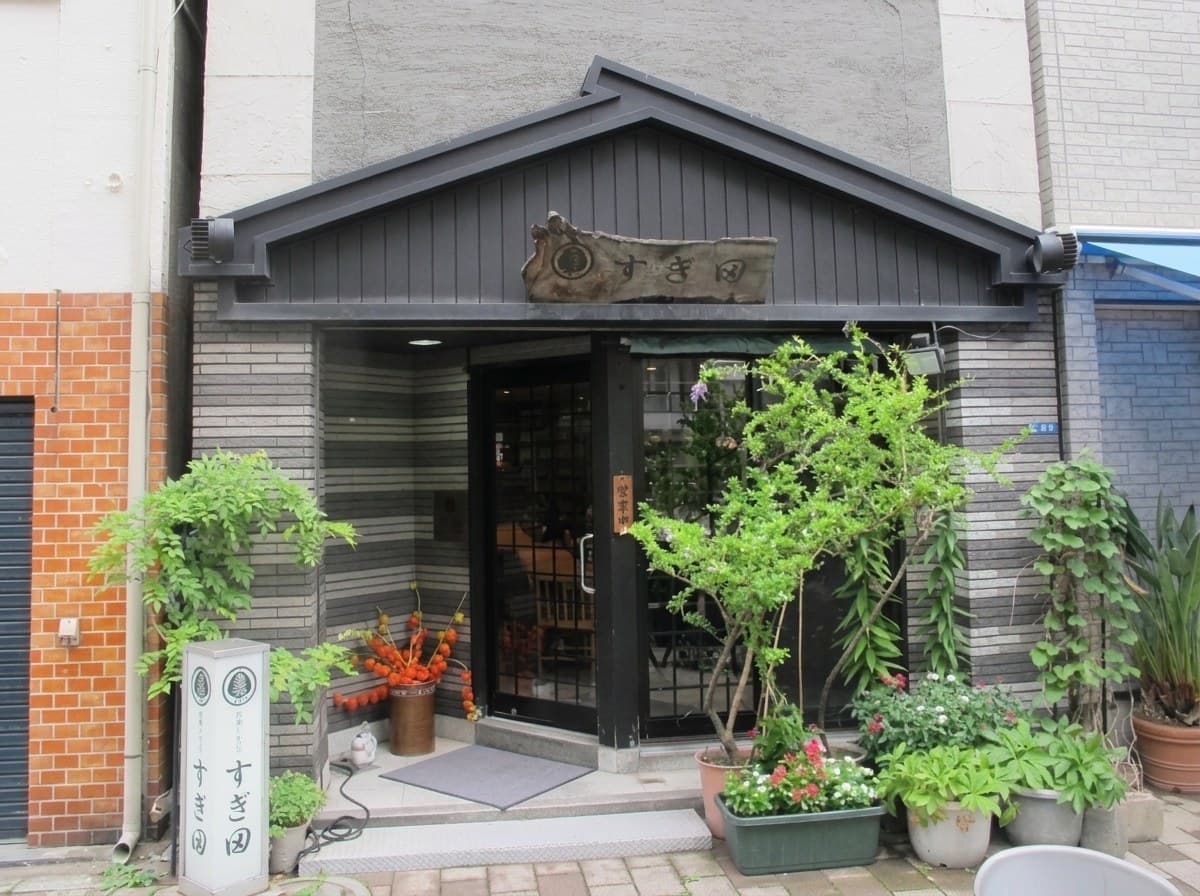
Tonkatsu Sugita (とんかつ すぎ田) is the pork‑cutlet house near Kuramae Station that Tokyo’s tonkatsu devotees keep returning to, for a reason you can see from the counter: two copper pots of lard, managed by eye, producing a cutlet with a thin, fine crust and a juicy center. It has twenty seats. Lunch is a queue anyone can join. Dinner can be booked. What follows is how the craft works, where the house comes from, and how to get in.
A note before anything else, because the name is shared: this is not the sushi counter Sugita in Nihonbashi Kakigaracho. That is a different restaurant with a very different book, covered in our guide to booking Sushi Sugita.
What separates serious tonkatsu
Tonkatsu is a simple dish, which is exactly why the gap between an ordinary cutlet and a great one is so wide. Four decisions do most of the work.
The cut. Rōsu is loin, carrying a band of fat along one edge; it is the richer, more fragrant choice and the cut many regulars judge a house by. Hire is the fillet, lean and tender, milder in flavor. Serious houses trim the loin rather than serve its fat untouched, and cut it to a thickness that suits their frying.
The crumb. Japanese panko is made from crustless bread, and the size of the crumb decides the texture: coarse crumbs stand up in spikes, fine ones fry into a tight, thin shell. Many specialists buy particular bread rather than generic crumbs.
The fat. Lard gives a cutlet a sweeter, rounder flavor and a crisper finish than neutral vegetable oil, which is why a number of Tokyo’s established houses still fry in it.
The heat. A thick cutlet cannot be fried at one temperature: hot enough to color the crust quickly and the center is underdone; gentle enough to cook the center and the crust turns oily. The answer at most serious houses is to control temperature in stages, and to let the cutlet stand briefly before slicing so the heat finishes its work and the juices settle.
How Sugita does it
At Sugita the stages are built into the equipment. There are two copper pots of lard held at different temperatures, and each cutlet moves between them. Hitosara’s chef profile and a 2023 feature on Kobunsha’s Washoku Style both describe the sequence as high heat first, then a low‑temperature pot to cook the meat through, then high heat again to finish, a last hot bath that these accounts describe as cutting the oil with oil. Premium Japan’s 2023 write‑up adds that the lard is Dutch and that the timing is judged by eye, not by timer.
The crumb is fine and the coating thin, and the panko comes from Pelican, the Asakusa bakery founded in 1942. The MICHELIN Guide’s description notes that the loin is trimmed of excess fat before it is breaded. The pork is mostly from Chiba Prefecture, bought from a long‑standing supplier rather than chosen for a brand name.
The menu is short: tonkatsu in loin or fillet, a pork sauté, fried prawns, an omelet and a salad, with rice and tonjiru ordered separately. Michelin records one quiet signature of the house philosophy: the tonjiru contains no pork, because the cutlet is meant to be the only star.
The lineage: father to son
Sugita’s history is short and well documented. The shop was founded in 1977 near Kaminarimon in Asakusa and moved to its present address in Kotobuki, a few minutes from Kuramae Station, in 1991. The founder’s son, Satō (佐藤光朗), was born in 1980, grew up helping with prep before school, trained under his father after university, and took over as second‑generation owner in 2011, according to his Hitosara profile and the house’s Gurunavi page.
We have not found a credible published account of where the founder trained, so we make no claim about a mentor house. What Satō has said on the record is his aim: tonkatsu is everyday food, but he wants it to taste like a feast. Michelin’s inspectors mention a photograph of his father in chef’s whites watching over the counter.
Recognition, with dates
- Tabelog Hyakumeiten: Tabelog’s page lists Sugita among its tonkatsu Hyakumeiten selections for 2017, 2018, 2019, 2021, 2022, 2024 and 2026. Our explainer on the Hyakumeiten lists covers what that selection means.
Kuramae, briefly
Kuramae takes its name from the rice storehouses of the shogunate that once stood along the Sumida River. Today it is a quiet district of small workshops and makers’ shops between Asakusa and Asakusabashi, and Sugita sits among them rather than on a tourist street. It pairs naturally with an afternoon in Asakusa, a short walk north.
How to get a seat
Lunch (11:30–14:00): queue. Lunch mostly runs on a line. Being outside before the 11:30 opening is the dependable approach. Recent Tabelog reviews range from only just finding a counter seat at weekday noon to walking straight in after 12:30 on a weekday, so later is possible, but not something to plan a day around.
Dinner (17:00–20:30): book. The house takes reservations by phone in Japanese on 03‑3844‑5529, and Tabelog’s online calendar holds a portion of times; when we checked on 14 September 2026, it offered 17:00, 18:30 and 19:00. Tabelog lists twelve as the largest party the house will book.
Punctuality is a rule, not a courtesy. The house states that a party not present by the booked time is treated as a cancellation, and that a smaller party on the day is treated as a cancellation with a fee. Our guide to Japanese cancellation policies explains how these policies work.
Check the calendar. Sugita is closed on Thursdays and on irregular days, which the house asks guests to confirm by phone or on its social media. Payment by card, e‑money and QR code is accepted, with no service charge.
If you would rather not make a Japanese phone call for dinner, our desk can make it for you. Requesting is free. We call the house, and when a seat is held we ask you to approve it; the booking fee of ¥6,000 per seat for houses in our collection is charged only after you approve, and nothing is charged before. For lunch you do not need us at all: join the queue. For the full picture of how Tokyo’s books work, see our Tokyo booking guide, and for the house details, our Tonkatsu Sugita page.