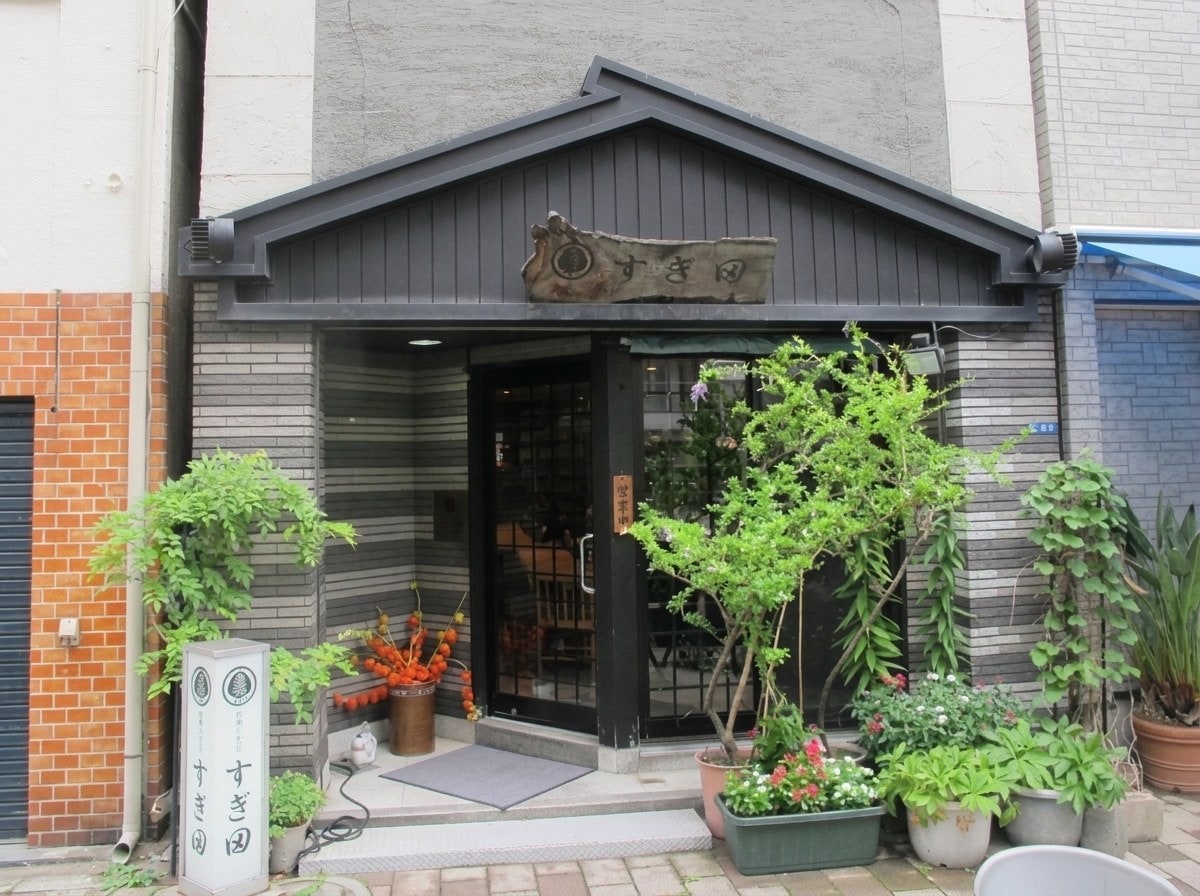
Kuramae is the old toy‑wholesaler district reborn as Tokyo’s craft quarter: chocolate roasters, notebook ateliers, coffee that takes itself seriously. Its culinary anchor predates the beards: Sugita, founded 1977 near Kaminarimon and settled here since 1991, where second‑generation master Mitsurō Satō fries pork in two burnished copper pots of lard — high heat to set the crust, a low‑temperature pot to cook the center through, high heat again to finish, "to cut the oil with oil." Tokyo’s devotees of tonkatsu — the breaded, deep‑fried pork cutlet — count it among the city’s canonical few.
Satō grew up in the shop his father opened, helping with prep as a schoolboy, and took over the pans in 2011. The menu he inherited is almost defiantly short — tonkatsu, the pork sauté, fried prawns, an omelet, a salad — because a house that has spent nearly fifty years on five dishes has nothing left to prove with a sixth.
One clarification worth making, since the name trips up half the people searching for it: this is not the sushi Sugita. The famously unbookable sushi counter of the same name sits across town in Nihonbashi Kakigaracho and is a different house entirely — if that pilgrimage is the one you’re planning, start with our guide to booking Sushi Sugita. What follows here is the tonkatsu Sugita: easier to enter, and in its own discipline just as revered.
What you eat
Rōsu (loin) katsu with a thin, shattering crust — the panko, fine breadcrumbs, comes from Pelican, the cult 1942 bakery down the road — over pork chosen by eye from trusted Chiba farms, deliberately cut to the old‑school thickness rather than the fashionable slab. The regulars’ secret is the pork sauté, finished with a flambé, a dish people cross the city for. Miso soup and rice are ordered separately, as a proper katsu‑ya insists.
How a visit works
This is one of the rare houses on our list where simply showing up is a legitimate strategy. At lunch the twenty seats turn on a queue: be outside before the 11:30 opening and you will almost certainly eat in the first seating; arrive at noon and you’ll wait through one. Dinner is calmer and can be booked by phone or online on Tabelog, both in Japanese — exactly the sort of booking we make for guests. Be on time: a party not there by the booked time is treated as a cancellation, and a party smaller than booked is treated as a cancellation with a fee. Remember the rhythm of the place: closed Thursdays plus the occasional irregular day, last order 13:45 at lunch and 20:15 at night. Unusually for a shop this storied, cards, e‑money and QR payments are all welcome, and there is no service charge — you pay for the katsu and nothing else.
The Noren View
“A neighborhood tonkatsu shop,” the master calls it. "But I want it to be called a feast." That sentence is Kuramae in one line. Build the classic afternoon around it: coffee and leather shops along the Sumida, katsu at the counter watching the copper pots, then a fifteen‑minute walk upriver to Sensō-ji as the lanterns come on. Time the pilgrimage properly and you can even stop at Pelican itself — the bakery whose loaves become this kitchen’s panko — though its bread routinely sells out by early afternoon. Few Tokyo afternoons connect a neighborhood’s ingredients to its table so neatly.
Come here if
Come here if you suspect that Japan’s everyday food, done perfectly, can outshine its ceremonies. It also suits design‑minded travelers already heading to Kuramae’s workshops.