Most travelers cross Shizuoka without stopping. The Nozomi, the fastest train on the Tokaido Shinkansen, does not call at Shizuoka Station, and between Tokyo and Nagoya the window offers a long run of tea hills, the blue of Suruga Bay and, on a clear day, Mount Fuji — and then the prefecture is gone. That is a loss, because this is one of Japan’s most generous food provinces. Suruga Bay, the deepest bay in Japan, feeds the counters of Shizuoka City from ports such as Yaizu. Shimizu is where the bulk of Japan’s frozen tuna comes ashore. The hills west of the city, around Shimada and Kakegawa, are lined with the rounded rows of tea bushes that made Shizuoka’s name close to a synonym for green tea. And the Izu peninsula, hanging south from Atami, has its own coast of small fishing ports, hot springs and wasabi.
This guide covers five houses in our collection — two in Shizuoka City, one in Shimizu and two on the Izu coast — and how each fits a trip that is traveling between Tokyo and Kyoto anyway.
Shizuoka City: a ryotei between trains
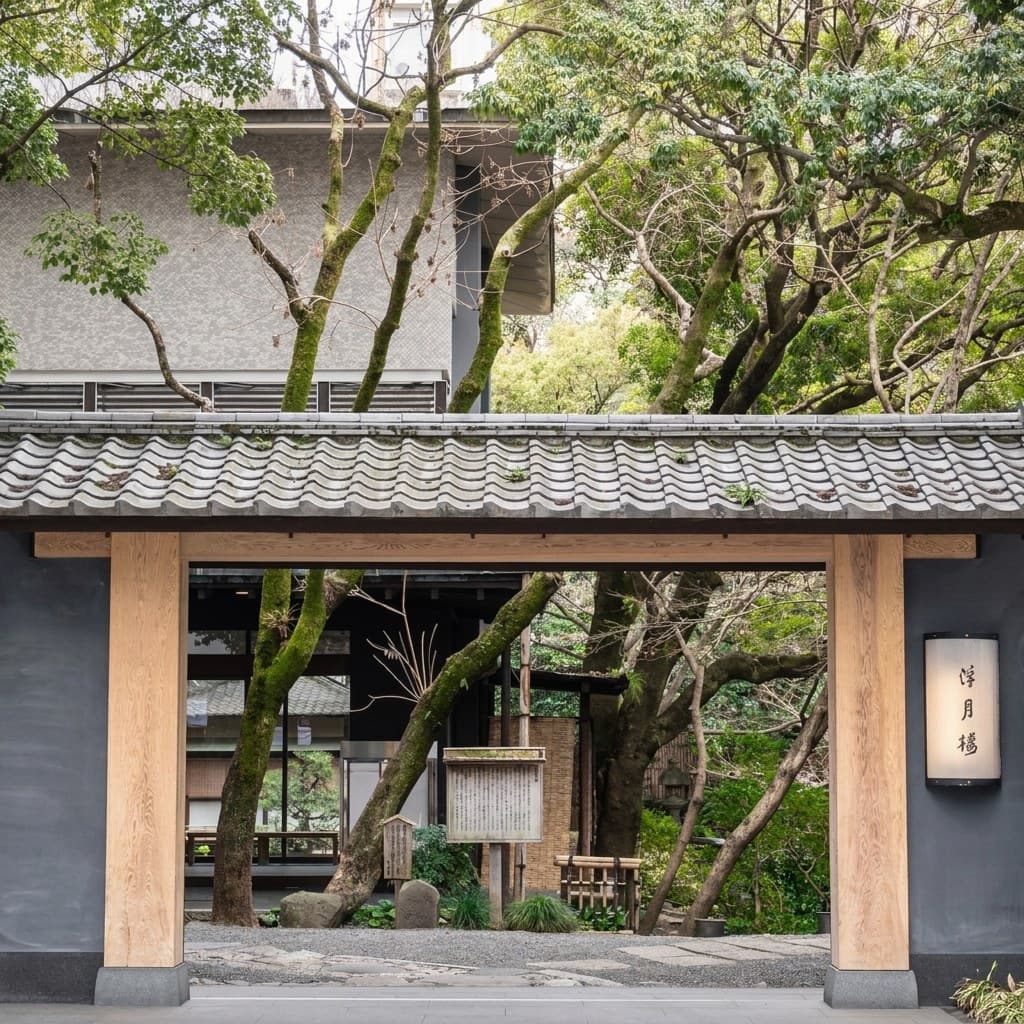
Fugetsuro is three minutes on foot from the shinkansen, and it is where the Tokugawa story ends. After handing power back to the emperor in 1867, the last shogun, Tokugawa Yoshinobu, withdrew to Shizuoka and from 1869 spent nearly twenty years on this plot, building the pond garden, hunting duck and taking up oil painting. It opened as a ryotei in 1891; the garden is now a nationally registered scenic site, and the dining pavilion was rebuilt in 1950. Lunch and dinner are the same seasonal kaiseki in the classical order — kumizakana, a dobin‑mushi teapot broth, simmered vegetables, rice and fruit — at ¥13,310 or ¥19,360, with the chef’s special at ¥25,410 and ¥37,510, all tax included. Seating is at tables in rooms the house assigns, and there is a ¥3,300 children’s lunch: this is a house built for family occasions as much as for travelers.
The other name in Shizuoka City is a different proposition. Naruse, chef Takeo Shimura’s eight‑seat hinoki counter beside Sengen Shrine, turns fish from Naoki Maeda’s shop in Yaizu into tempura — some pieces dried before frying, some nearly steamed inside a whisper of batter — in one omakase per service at ¥47,300 plus service. It is widely counted the hardest tempura seat in Japan. How its seats move is set out in how to book Naruse, and we say plainly there that most of the book is spoken for.
Shimizu: tuna at the port that lands it
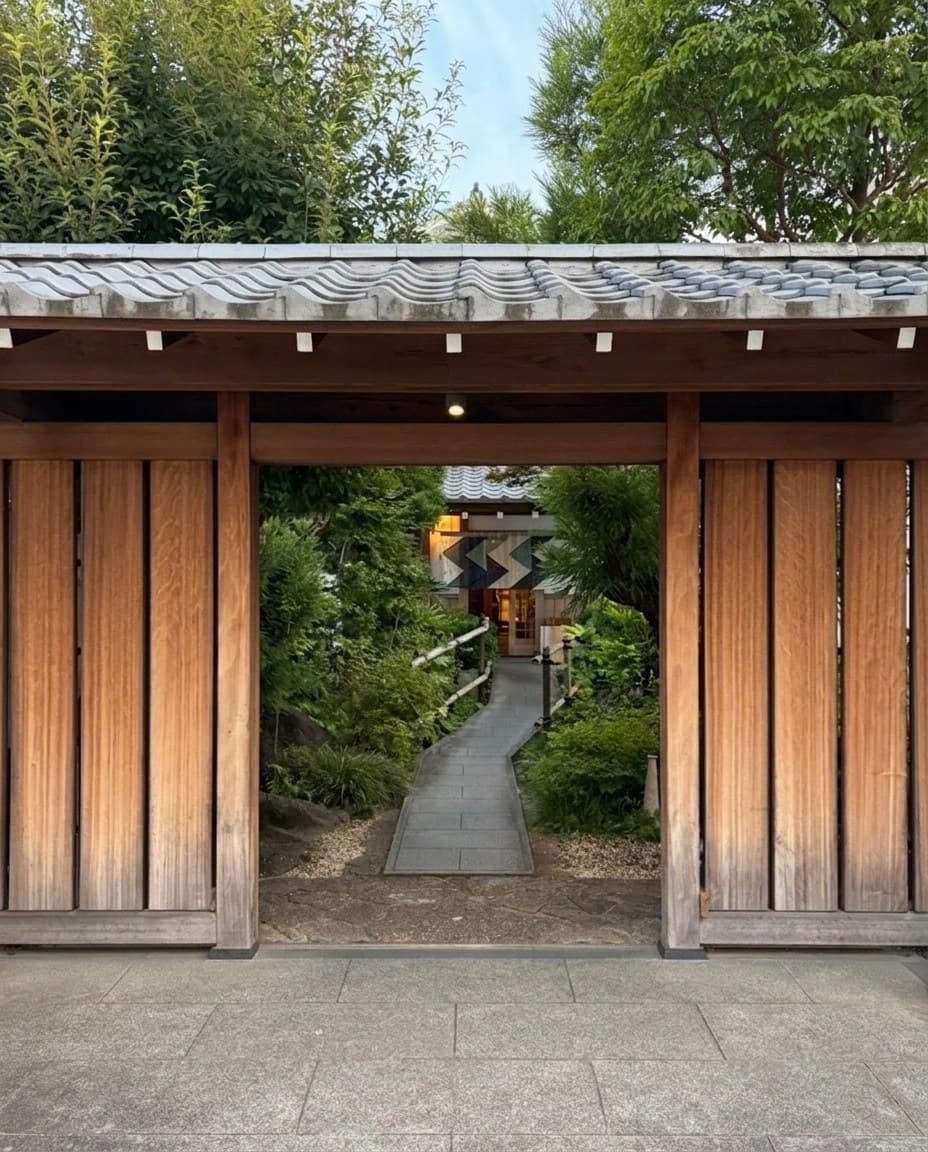
One stop along the Tokaido Line from Shizuoka, and about eight minutes’ walk from JR Shimizu Station, Suehirozushi has served tuna since 1966. Its founder, Eiji Mochizuki, bet that the coming appetite for toro could be met with southern bluefin from the Indian Ocean rather than ruinously priced domestic fish; he bought the tuna whole, one a week, and used it head to tail. The second generation now works the counter too, and Tabelog listed the house on its Sushi East 100 in 2021 and 2025. Expect every cut — akami, chutoro, otoro, kamatoro — alongside seasonal Suruga Bay fish, with a slice of Crown melon from Fukuroi to finish. You book the seat, not the meal: on the day you order nigiri piece by piece or take the omakase nigiri course. A local listing gives lunch courses from about ¥5,800 and dinner from ¥8,640 to ¥27,000. With eighty‑three seats, tatami rooms among them, it takes families and groups easily, and it pairs naturally with the pine beach at Miho no Matsubara and its views of Fuji.
Izu: eel in Ito, French above Sagami Bay
Atami sits at the neck of the Izu peninsula, under an hour from Tokyo by shinkansen, and the JR Ito Line runs south from it along the east coast.
Ichiunagi is three minutes on foot from JR Ito Station, about an hour and forty‑five minutes from Tokyo on the Odoriko limited express. Nine seats at an L‑shaped counter wrap around one cook who bones, grills and serves everything himself; Tabelog put the house on its Unagi 100 in 2024 and 2026. The menu is essentially two dishes — unadon, and shioyaki, eel salt‑grilled without sauce — each ¥7,480 at a 2024 visit, grilled crisp outside and soft inside in the lighter Edo manner and served with Ito wasabi and liver soup. The eel is boned to order, so say when you book if you want both. Cash only. For how eel is eaten across the rest of Japan, see our unagi guide.
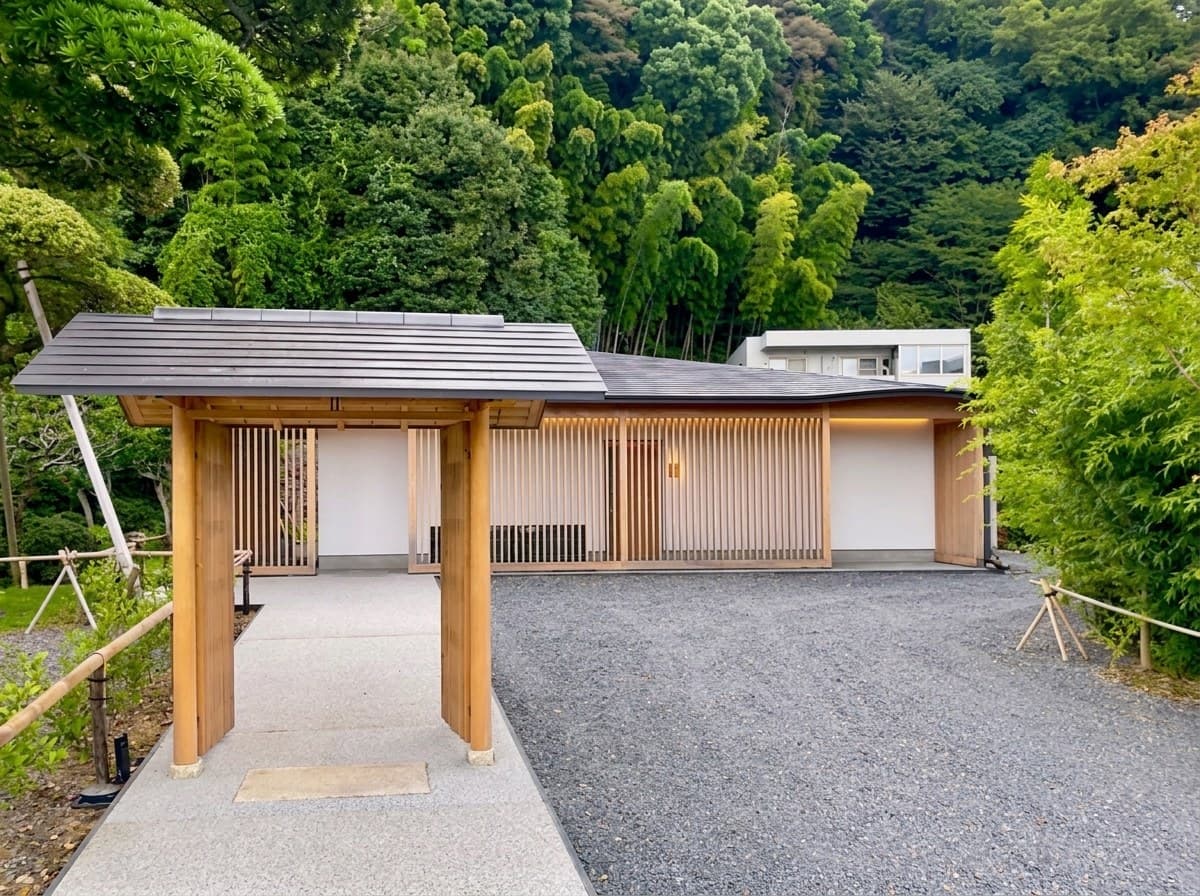
Back up the line at Ajiro, LAT.34°N by Ao opened in August 2025 as the dining room of an eighteen‑room hot‑spring auberge, overseen by Kosuke Minemura of Ao in Nishi‑Azabu and run day to day by head chef Masaya Fukaumi. There is one course of about twelve dishes, ¥24,200 with tax plus service, built on fish landed at Ito and Inatori and on Izu produce; a published sample runs through a consommé of local fish, fedelini with shirasu, Ao’s signature gratin of snow‑cellar‑aged potatoes and a risotto of Ito spiny lobster. The line that matters: dinner‑only guests are welcome. Mind two things. The kitchen cannot work around shellfish, dairy, alcohol or wheat. And the hotel sits up a steep hill 20 to 30 minutes by taxi from Atami Station; the free shuttle runs only from Ajiro Station, by prior arrangement.
The booking reality
Shizuoka is gentler than Tokyo, and most of it runs on notice rather than release days. Fugetsuro has no release day: book online through Tabelog or Ikyu, through its form, or by phone, at least two days ahead (five for the chef’s special). Suehirozushi takes seat‑only bookings by telephone in Japanese, sometimes the day before; only the eleven‑seat counter is contested, so ask for it early. Ichiunagi is phone only, in Japanese, with no release day — about a month ahead for a weekend, a few days for midweek — and because the cook answers the phone himself, calls during service can go unanswered. LAT.34°N is the one fixed release: OMAKASE opens the next block on the 1st of each month at 12:00 JST, with a ¥390 fee per seat and a cancellation charge of 5 percent from the moment of booking; the hotel also takes calls in Japanese. Naruse is the outlier, running on an OMAKASE release (the 1st of each month at 11:00 JST, for the month two months ahead, one booking per account per quarter), invitation platforms, a cancellation auction and a regulars’ book; start months out and hold several dates.
Check the closing days before you fix a route. Ichiunagi closes Tuesdays and Wednesdays; Suehirozushi closes Wednesdays plus one Tuesday–Wednesday pair each month; Naruse closes Sundays plus an alternating Tuesday or Saturday; Fugetsuro takes a summer break and the New Year holidays.
Fitting it into a Tokyo–Kyoto trip
Check the train type first. The Nozomi skips Shizuoka; a Hikari reaches it in roughly an hour from Tokyo, a Kodama in about ninety minutes. Kodama trains, and some Hikari, also stop at Atami.
The lunch stop, no hotel. Take a Hikari from Tokyo, lunch at Fugetsuro (entry by 13:00) or ride one stop on to Shimizu for Suehirozushi, and continue west in the afternoon. If Nagoya is next, our Nagoya food guide picks up the thread.
One night on the Izu coast. Ride the Odoriko from Tokyo to Ito for Ichiunagi’s 12:00 seating. Come back up the Ito Line to Ajiro in the afternoon, with the shuttle arranged, for the first dinner seating at LAT.34°N, and take a pre‑booked taxi to your hotel in Atami afterwards. Next morning, take the shinkansen west from Atami to Shizuoka for lunch at Fugetsuro or Suehirozushi, and be in Kyoto by evening. Avoid Tuesdays and Wednesdays for this version.
If Naruse comes through, build the day around it: lunch starts at 12:30, the counter does not hold a seat, and it is a short taxi ride from central Shizuoka.
Tell us the dates you are passing through and which of these meals matters most, and we will book the seats in Japanese — or tell you plainly when one will not come.