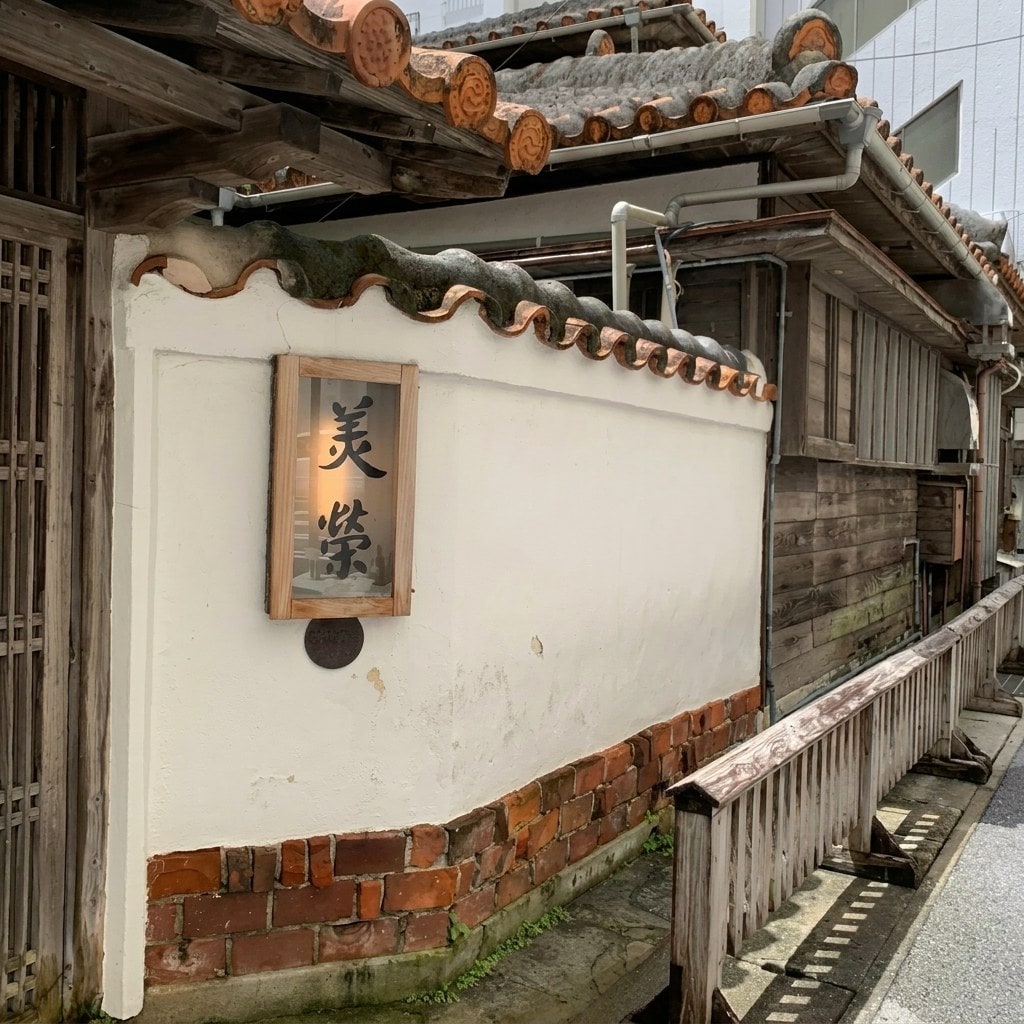
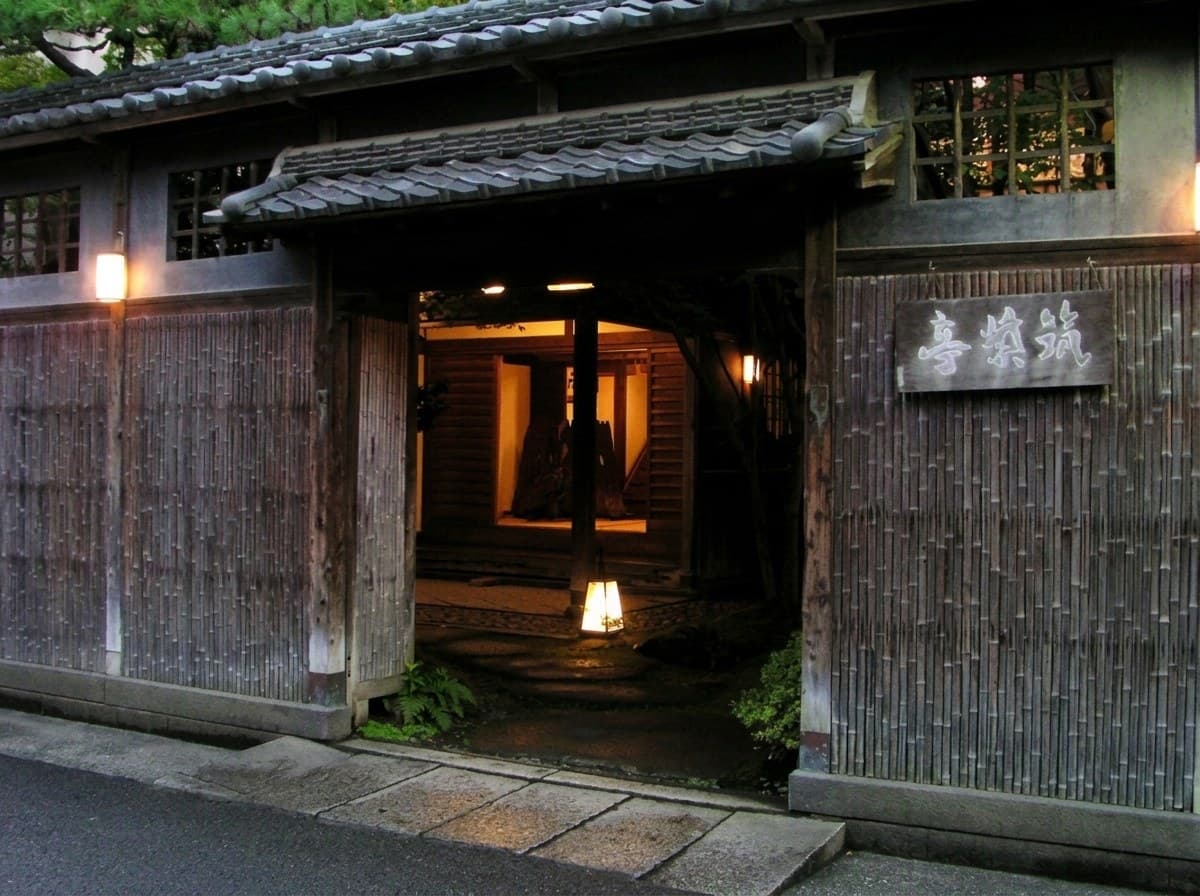
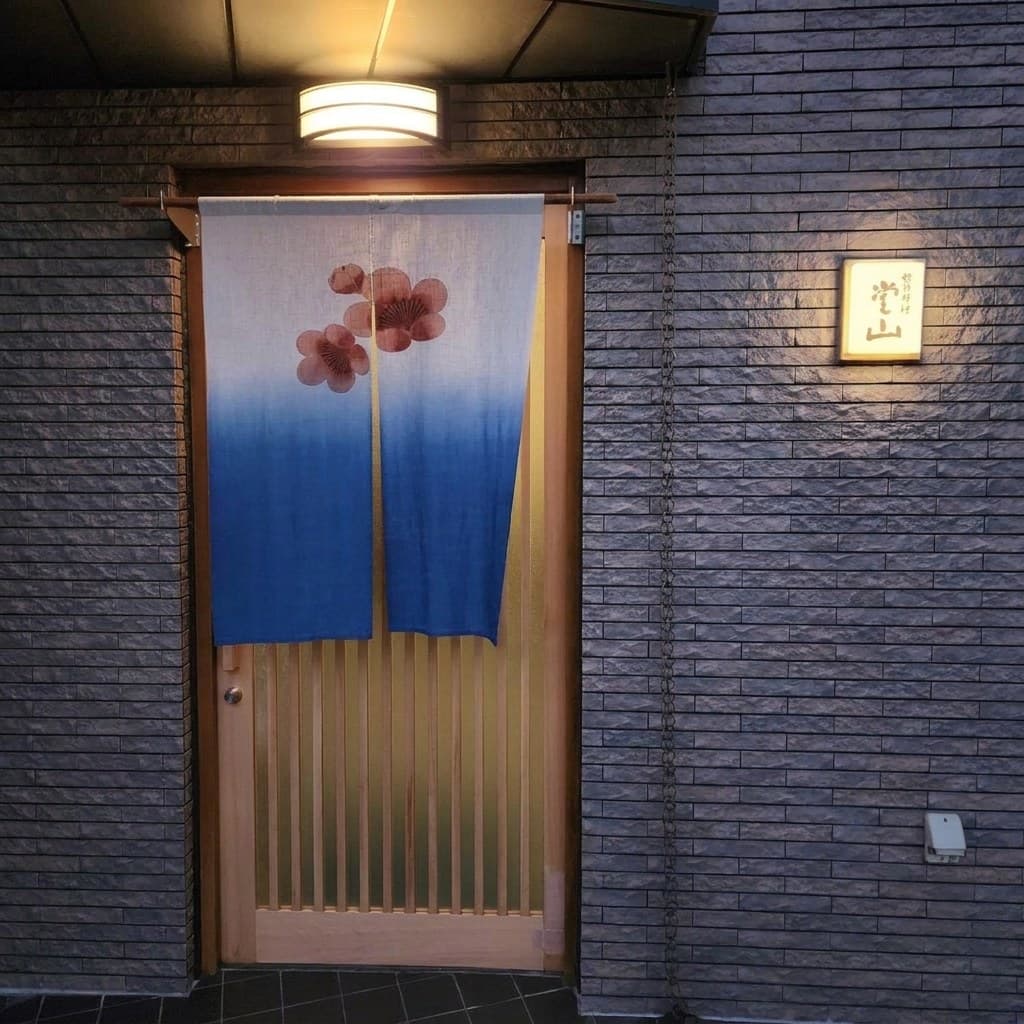
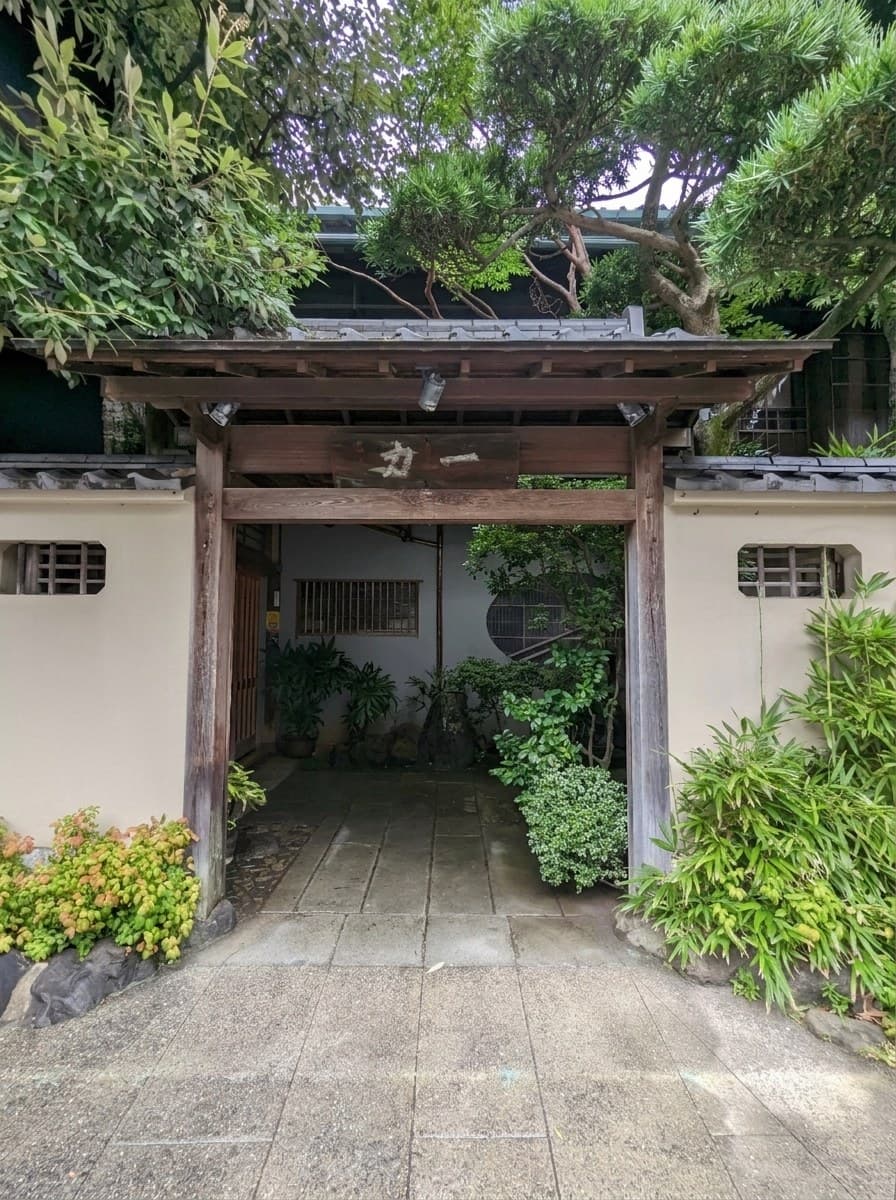
A red-tiled wooden house standing alone among Naha's office towers, where the court cuisine of the Ryukyu kingdom has been cooked without interruption since 1958.
By SHOKU NOREN TeamFacts last verified September 2026How we check
In shortCourt cuisine of the Ryukyu kingdom, kept by one kitchen since 1958. Reservations run in Japanese and are hard to place from abroad, so our Tokyo desk requests the table for you, by phone and in Japanese.
Sundays and Mondays · New Year (Jan 1–3) · the old-calendar Obon
Seats
38 seats in six private rooms, for 1–12 guests (joinable to 22)
Private rooms
Yes — the house is six private rooms in its entirety
Payment
Visa and Mastercard · no e-money
Getting there
5 minutes on foot from Kencho-mae station (Yui Rail) · no parking
Okinawa was not always Japan: until 1879 it was the Ryukyu kingdom, a tributary court trading between China and Edo, with a palace cuisine of its own. Mie is where that cuisine is still cooked. It opened in 1958, founded by Tomi Kohagura, born in Shuri — the old royal capital — in 1912; her recipes descend from the circle around Baron Shō Jun, fourth son of the last king, through the prewar study group that worked to record the kingdom’s cooking before it vanished. In 1960 the restaurant moved into the house it still keeps: a red‑tiled, lime‑plastered wooden residence in Kumoji that now stands alone among Naha’s office towers, awarded the city’s Landscape Prize in 1996. In 2016, to save it, Mie passed into the care of the Okinawa Churashima Foundation — recipes, lacquerware and documents preserved and studied while the kitchen cooks on — and the prefecture certifies the house under its program for successors of Ryukyu cuisine.
What you eat
On the top deigo course comes the tundabun, the kingdom’s lacquered presentation tray, bearing seven works: decorated cuttlefish, kajiki (marlin) rolled in kombu kelp, three kamaboko (fish‑paste cakes) of gurukun, Okinawa’s banana fish, pōpō crêpes rolled around pork miso, burdock wrapped in pork. In between: minudaru, pork loin steamed under a black‑sesame coat; rafute, pork belly simmered half a day in soy and awamori, Okinawa’s indigenous rice spirit; and nakami soup, pork innards washed dozens of times until the broth runs clear, scented with island pepper. At the close, tofuyo — tofu fermented in awamori and red kōji to a cheese‑like density — taken a grain at a time.
The booking reality
The house is six private rooms and nothing else — thirty‑eight seats, in rooms for one to twelve guests — so it does not fill seat by seat; it fills room by room, and once the rooms are spoken for the house may simply stop taking the day. Even a single guest is given a room. The telephone is the only door and it is answered in Japanese; Sundays, Mondays, the New Year and the old‑calendar Obon it rests, and children twelve and under are not seated. One call in Japanese settles the room, the course tier and the timing — which is the call our desk places.
Want the one cuisine in Japan that answers to a different royal court — or a dinner in Naha that no izakaya version of Okinawan food resembles, in the last old house on the street.
Free release-date alerts: the day before, on the morning of release day (08:00 JST) and about 30 minutes before when the time is known — or a weekly summary if the house opens a little every day.
Mie: common questions
Can you book Mie from abroad?
Yes, through our Tokyo desk. Phone only (098-867-1356), answered in Japanese. Even a single guest is given a room, and the house may stop taking the day's tables once its rooms are spoken for. Our desk places the call. We call the restaurant for you, in Japanese, and the ¥6,000-per-seat fee is charged only if we confirm your table — no seat, no fee.
Some of these links are referral links: if you book through them we may earn a small commission, at no extra cost to you. Restaurants never pay us to be listed or ranked. Editorial policy
Cite this page
Facts on this page were checked by our Tokyo desk. You are welcome to quote them with a link: