A sanctuary of the Okinawan izakaya, open since the year the islands returned to Japan — home cooking to court cuisine, and every distillery's awamori.
By SHOKU NOREN TeamFacts last verified September 2026How we check
In shortRyukyu cooking, home dishes to court dishes, and the island's awamori. Reservations run in Japanese and are hard to place from abroad, so our Tokyo desk requests the table for you, by phone and in Japanese.
Price
À la carte.
Hours
17:30–24:00 nightly (last order 23:30)
Closed
Open year-round; holidays confirmed when booking
Seats
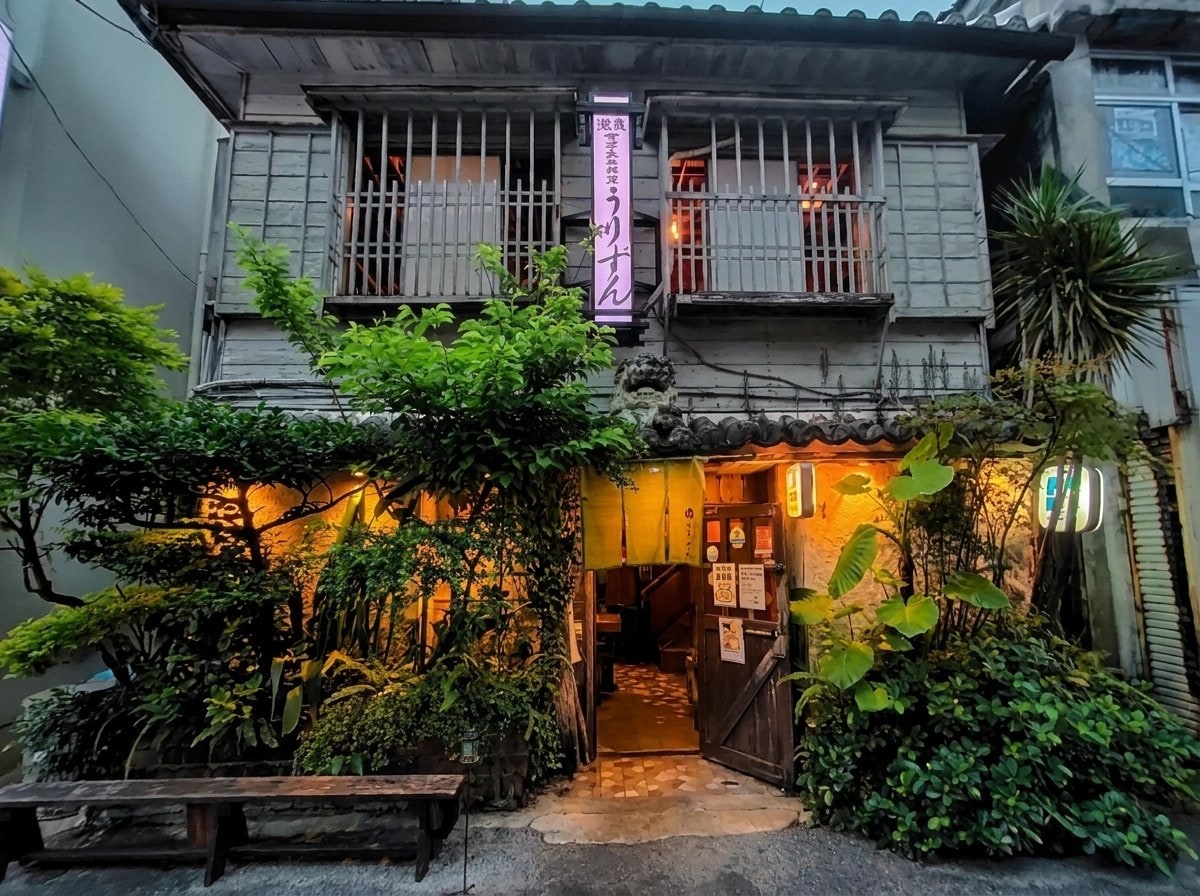
110 in an old wooden house — a small counter of about 10, tatami rooms, tables
Okinawa cooks from a different pantry than the mainland — pork down to
the ears, bitter melon, taro, kombu it never grew but ate for
centuries via the China trade — and Urizun is where a traveler meets
that kitchen whole. The house opened on August 15, 1972, in the very
year the islands returned to Japan, under its late founder Saneyuki
Tsuchiya, and it did two things no one else was doing. It invented
duru‑ten — a croquette of mashed ta‑imo (paddy‑grown taro) folded
with pork and mushrooms, adapted from the old festive dish
duruwakashii — which then spread across the island and became a
Ryukyu standard. And it went distillery by distillery collecting
awamori — Okinawa’s indigenous rice spirit, distilled here since
the 15th century — until every one of the prefecture’s makers, all 47,
stood behind the counter, reviving the near‑lost habit of drinking it
as kusu, awamori aged in clay pots for years.
What you eat
Order à la carte, island‑style: the duru‑ten first, because this is
its birthplace; rafute, pork belly simmered soft in awamori and
brown sugar; sea‑grapes (umibudo, a popping seaweed); dishes that
descend from the Ryukyu court kitchen alongside plain home cooking.
Then drink across the island — the staff will steer you from a light
young pour toward a rounder kusu. Most evenings settle around
Which is part of why locals never stopped coming.
The booking reality
The house is a creaking wooden building near the Sakaemachi market
with 110 seats — counter, tatami rooms, tables — open nightly from
17:30 to midnight, year‑round. That sounds easy; it is not, because
Naha itself treats Urizun as its regular haunt. Booking is by telephone, in Japanese, or online through Hotpepper (a Japanese‑only site), and a few days out is normally enough — exactly
the call our desk makes, along with flagging a tatami room or the
counter and any dishes you want held.
Want Okinawa’s food and its spirit explained by the house that
preserved both — and would rather spend the evening eating than
standing in the queue that forms where reservations weren’t made.
Free release-date alerts: the day before, on the morning of release day (08:00 JST) and about 30 minutes before when the time is known — or a weekly summary if the house opens a little every day.
Urizun: common questions
Can you book Urizun from abroad?
Yes, through our Tokyo desk. Phone in Japanese or Hotpepper online (Japanese); 110 seats, open nightly — book ahead anyway. We call the restaurant for you, in Japanese, and the ¥6,000-per-seat fee is charged only if we confirm your table — no seat, no fee.
Some of these links are referral links: if you book through them we may earn a small commission, at no extra cost to you. Restaurants never pay us to be listed or ranked. Editorial policy
Cite this page
Facts on this page were checked by our Tokyo desk. You are welcome to quote them with a link: