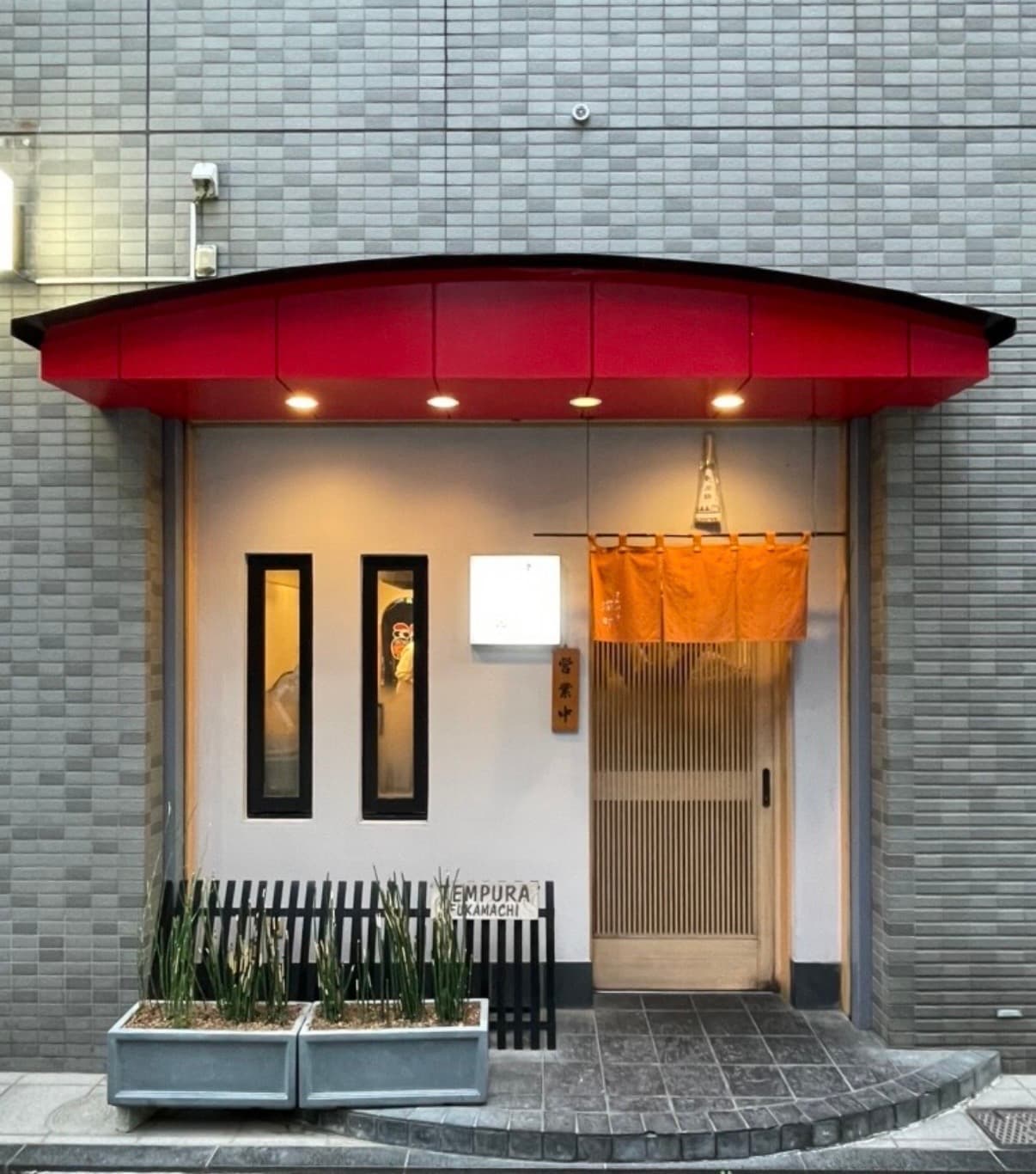
A tempura counter looks calmer than a sushi counter: one chef, one pot of oil, a paper‑lined plate in front of you. It is in fact the faster of the two. Everything below comes down to keeping up with the fryer.
The twenty‑second rule
At a serious counter the chef fries one piece at a time and times it to land as you finish the last. A piece is at its best for about twenty seconds — the batter is dry and crackling, the inside still steaming. After that the steam softens the shell from within and the piece is merely good. So: eat it as it arrives. A second for a photo is fine; a piece left while you finish a story is not, and the chef will slow the next one to match you.
Eat with chopsticks. Larger pieces — a whole shrimp, a slab of eel — can be bitten in two; the chef does not expect one mouthful here.
Salt, tentsuyu or lemon: follow the cue
Three seasonings sit in front of you: a small mound of salt, a dish of tentsuyu (the dashi‑soy‑mirin dipping sauce) and sometimes a wedge of citrus. Each piece is served with a cue — the chef says “salt”, or “sauce”, or sets the piece nearer one dish — and the etiquette is simply to follow it.
The logic is easy to learn. Lean, sweet things (shrimp, white fish, a scallop) take salt, which keeps the batter crisp. Vegetables and richer, wetter things (eggplant, sweet potato, anago) take sauce. A squeeze of sudachi or lemon goes on a few specific pieces, and the chef will say which. What to avoid: salt and sauce on one piece, and dunking so the batter soaks. Touch the tip in, or the underside.
Daikon and the sauce dish
The white heap beside the tentsuyu is grated daikon radish, sometimes with a little grated ginger. It goes into your sauce dish, as much as you like, to lighten the sauce and cut the richness of the fry. It does not go on the tempura itself. If the sauce grows cloudy or cold the staff will change it — you need not ask.
The paper, the plate and the counter
Each piece lands on folded kaishi paper that draws off the last of the oil. Leave the paper where it is; the staff swap it. The counter itself is usually bare wood, and the rules from counter manners apply in full: phone away, bag in the basket below, nothing with a hard edge on the wood. A tempura counter adds one thing — the oil. Jackets and knits will carry the smell home, so most guests give their coat to the staff at the door.
Do not steer the course
As with sushi, the sequence is the chef’s. It moves from delicate to rich, with vegetables between the seafood to rest the palate. Do not ask to skip ahead or swap a piece mid‑meal. Allergies, a fish you cannot eat, and a firm dislike belong at the booking — see dietary needs at Japanese counters — and a good house will rebuild the course around them with a week’s notice.
The one decision that is yours: the shime
Near the end the chef will ask how you want to finish. The usual choices are tendon (tempura over rice with a sweet‑soy sauce), tencha (tempura over rice with dashi or tea poured over, eaten like a soup) and kakiage — a fritter of small shrimp and vegetables — either over rice or on its own with a small bowl. This is the moment to say if you are full; a half portion is normal and no one will mind. Miso soup and pickles come with it, and the meal ends there.
The rest
Everything else follows the general rules in Japan restaurant etiquette: arrive early, skip the perfume (the chef judges the oil by nose), ask before you photograph, and never no‑show — a tempura house has bought and shelled your shrimp before you arrive. For which counters are actually reachable from abroad, see the best tempura in Japan you can book.