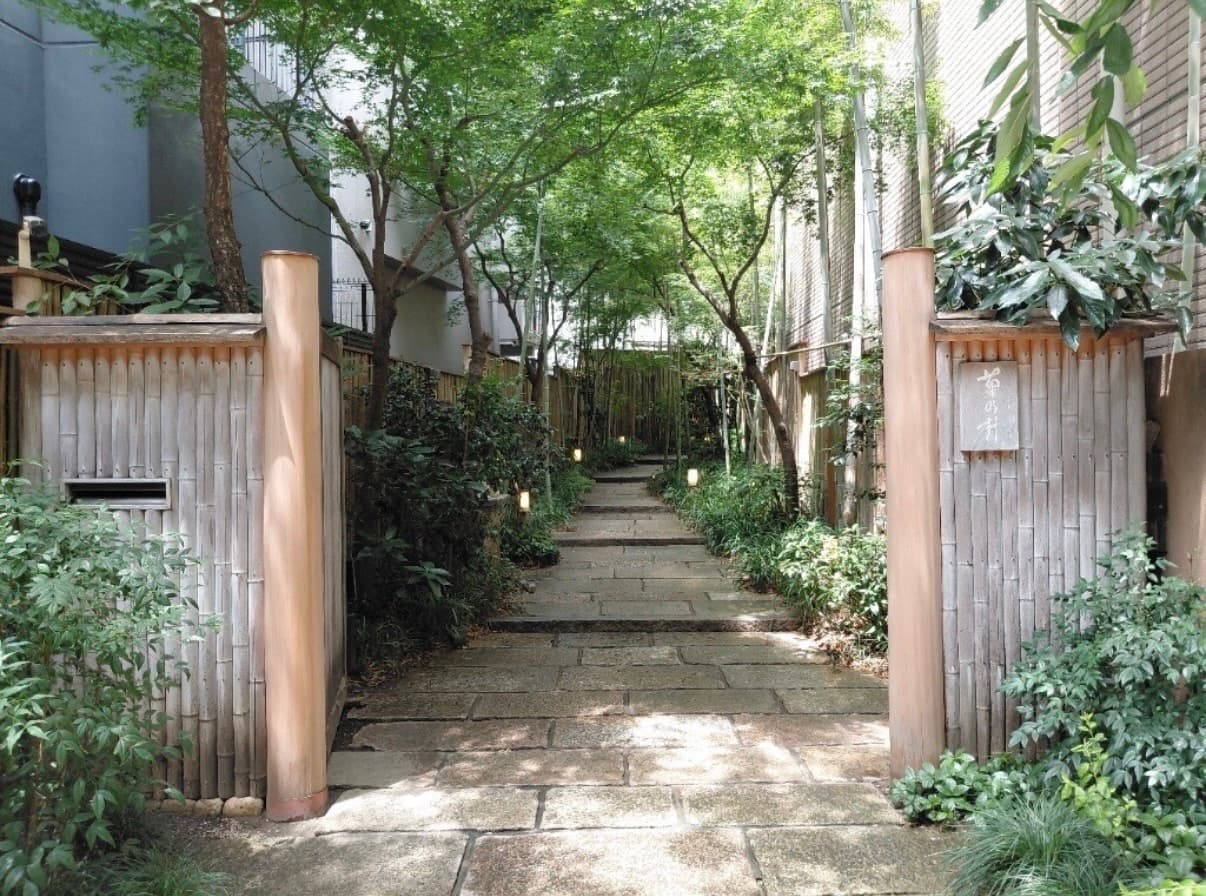
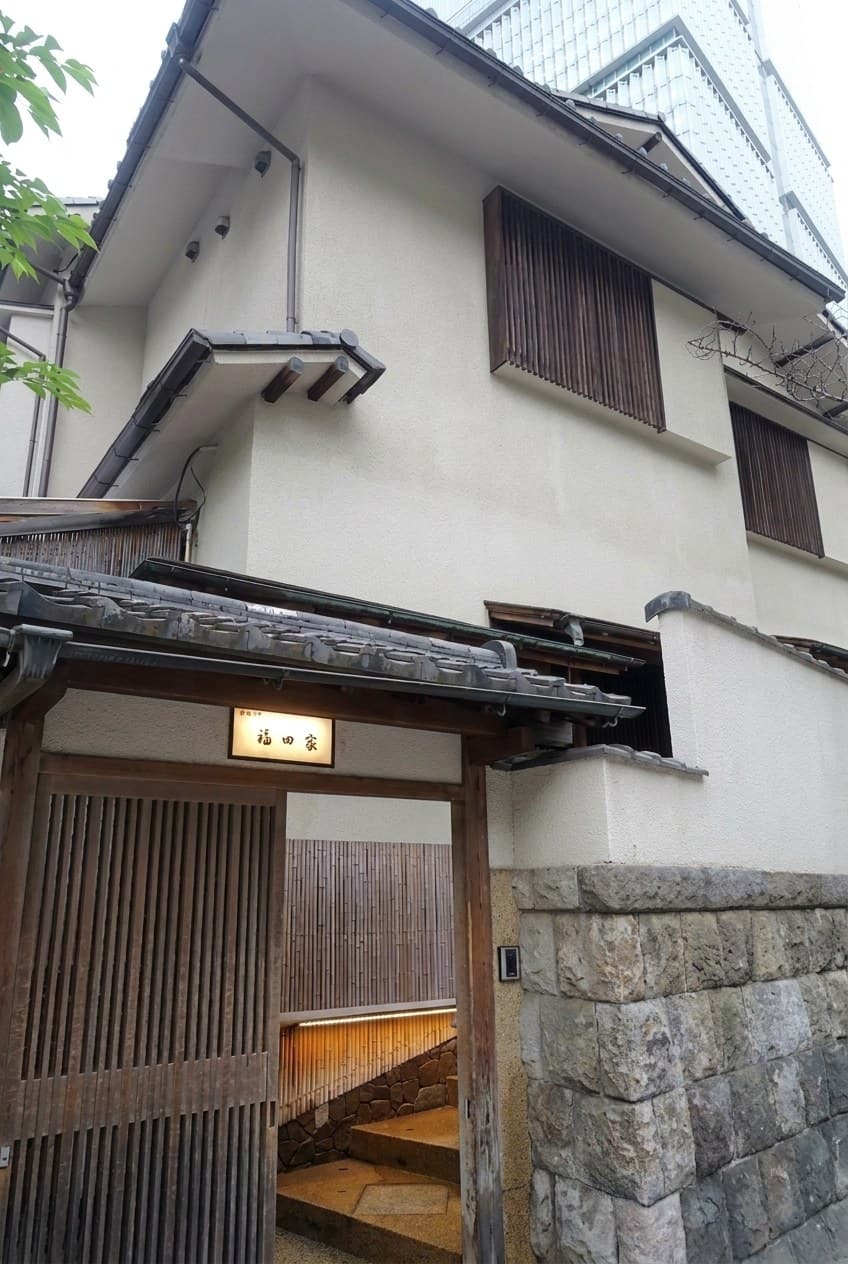
Most of Tokyo’s grandest Japanese kitchens have closed their doors to strangers. Akasaka Kikunoi has not. It is the Tokyo house of Kikunoi, the Kyoto ryotei founded in 1912 and led since 1993 by third‑generation master Yoshihiro Murata — the man behind Japanese cuisine’s UNESCO listing, whose Higashiyama honten we cover in our Kyoto guide. Opened in 2004 on a 160-tsubo plot in a quiet corner of Akasaka, the building is a proper Kyoto sukiya (数寄屋 — tea‑house‑style architecture) said to be the work of the Kyoto workshop founded by the great sukiya carpenter Sotoji Nakamura (who died in 1997), reached along a stone path through a bamboo grove. It holds Two MICHELIN Stars (MICHELIN Guide Japan 2026), and it is a house in our collection.
Inside, the room offers what the Kyoto honten cannot: a 13-seat counter facing the bamboo garden, plus a smaller six‑seat counter, tables, sunken‑floor raised seating and four zashiki tatami rooms (one a tea room) for three to twenty. The house says its Kyoto produce arrives twice a week, and that its floor staff work comfortably in English — a rarity at a ryotei of this rank.
The exact system
- Phone: 03‑3568‑6055 (+81‑3‑3568‑6055 from abroad), reception 10:00–22:00, in Japanese. The house also takes inquiries by email.
- The house’s official route for overseas guests: the Kikunoi English site directs overseas guests to TABLEALL and My Concierge Japan. Both take prepayment, open bookings about two months ahead, and add a booking fee of their own.
- Ikyu carries a listing, but in early October 2026 it showed no bookable dates.
- There is no release day to watch for.
- Lunch entry 12:00–12:30 (closes 14:00), served on the ground floor only. Dinner entry 17:00–19:00 (closes 22:00).
- Closed Sundays and Mondays, plus summer and New Year breaks.
- Prices: lunch ¥14,300 / ¥17,600 / ¥22,000 plus 10% service; dinner kaiseki ¥33,000 / ¥55,000 / ¥77,000, with a shorter ¥22,000 course of fewer dishes, plus 15% (20% in a private room, where the ¥22,000 course is the minimum). Prices include tax.
- Rules: men are asked not to wear shorts or sandals, and guests are asked not to wear perfume or cologne; fully non‑smoking. Bookings made on Ikyu are charged in full for cancellations or changes from seven days out; see how Japanese cancellation policies work.
The strategy
- Book weeks ahead, not days. Ordinary weekday dinners are findable a few weeks out; Fridays, Saturdays and the November‑foliage and April‑blossom peaks deserve as much notice as you can give.
- Ask for the counter by name. The bamboo‑garden counter is the seat that makes Akasaka different from Kyoto; the tatami rooms are dinner‑only, for occasions and groups.
- Consider lunch. The same kitchen, the same garden, from ¥14,300 — the connoisseur’s entry to a kaiseki house of this rank.
- Declare dietary needs at booking. Kikunoi handles them graciously in advance; the mechanics are here.
Compared with the lottery‑style top tables elsewhere in the city, this is a door that opens to a calendar and a little planning.
If the dates are already gone
Popular dates go early, and time zones make the phone hard to catch at Japanese reception hours. Akasaka Kikunoi is in our collection, so you can ask us: put your dates on the request form and our Tokyo desk calls the house in Japanese — seat, course, a private room, dietary needs. The fee is ¥6,000 per seat, charged only if we secure the table and you approve it; no seat, no fee. Courses, seating and the house’s rules are on its page.