Ask a Fukuoka local why their sushi is good and you will not hear about technique first. You will hear two words: Genkai‑nada — the Genkai Sea. Tokyo built its sushi on a bay; Fukuoka built its own school on a strait, and the difference is on the plate.
What the Genkai Sea actually is
The Genkai‑nada is the open water off northern Kyushu, spanning the coasts of Fukuoka and Saga, bounded by the Tsushima and Iki straits to the west. Three facts of geography make it a great larder:
- A warm river in the sea. The Tsushima Current — a branch of the Kuroshio, the great warm current of the Pacific — swings around Kyushu and pours through these narrow straits, carrying warmth and nutrients north into the Sea of Japan.
- A shallow, sunlit shelf. Most of the Genkai‑nada sits on continental shelf only some 60–100 meters deep. Sunlight, oxygen and nutrients meet, and plankton bloom in quantities that feed everything above them.
- Fast water. Squeezed through straits, the current runs hard. Fish that live against moving water build firmer flesh — the taut, springy texture that Kyushu cooks prize — and feed richly enough to develop real depth of flavor.
The result: sea bream and horse mackerel of national reputation, squid of glassy clarity around Karatsu and Yobuko, mackerel that Fukuoka eats raw with a confidence that startles Tokyo visitors, and a port city — Hakata — whose fish market ranks among the busiest in Japan.
How the sea became a school: Hakata‑mae
“Edomae” once meant simply “in front of Edo”: the bay whose catch defined Tokyo sushi and whose cures and vinegars evolved to serve it. Hakata‑mae is the same logic run on different water. With the Genkai Sea hours away, Fukuoka’s sushi masters never needed Edo’s heavier preservation; what they built instead was a grammar of gentle emphasis:
- A deliberate touch on the fish — a light cure, a brush of the region’s gently sweet soy, a breath of citrus — rather than raw and bare.
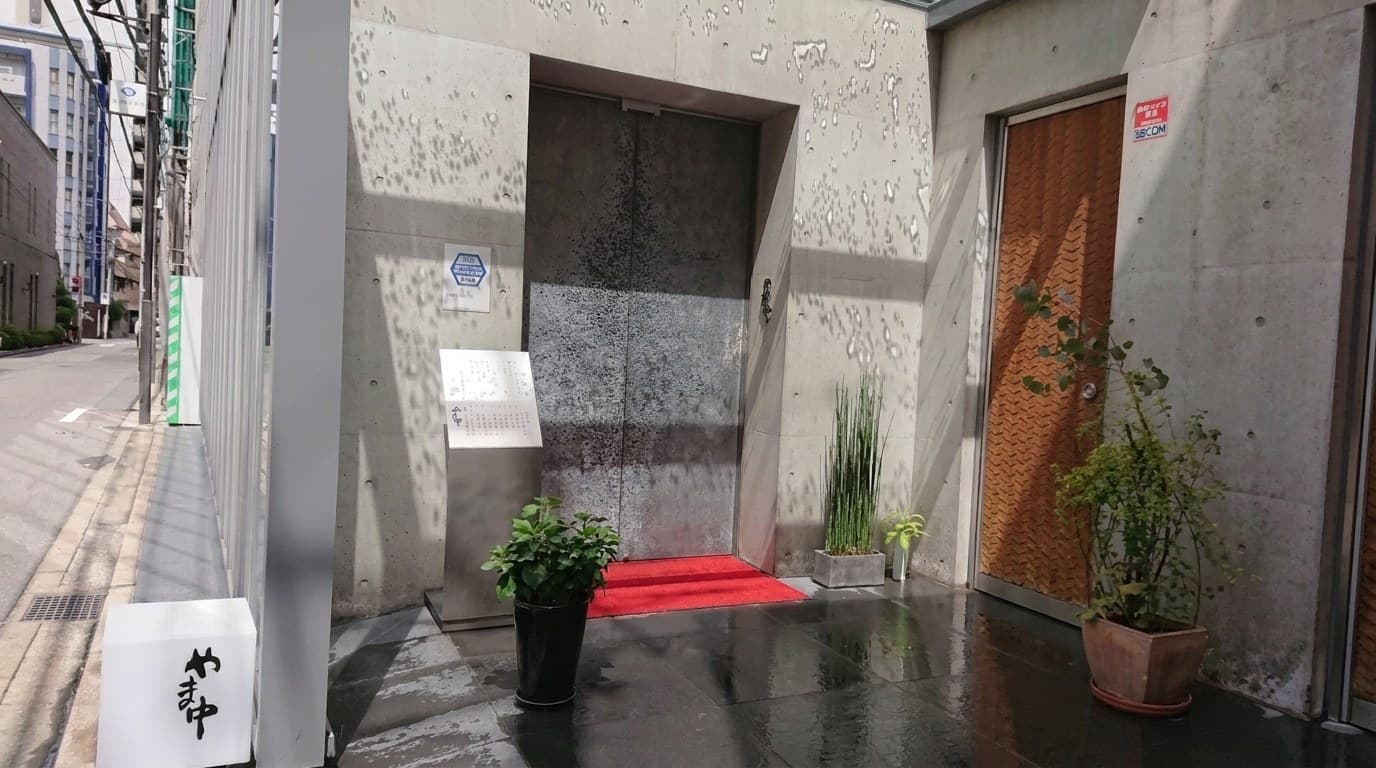
- Rice built for rich fish. The school’s grand house, Yamanaka Honten, seasons its shari with black vinegar — its own formulation, deeper and rounder than white‑vinegar rice, distinct from the red akazu of Tokyo’s counters — designed to stand up to fat and freshness at once. Up the coast in Kokura, the same instinct produced nigiri finished with kabosu citrus and salt. Different answers, one question: what does this sea’s fish actually need?
Tasting it
Fukuoka is Japan’s easiest great food city to enter — a major airport a few subway stops from downtown, the Shinkansen’s western gate — and its defining sushi is, unusually, bookable like an ordinary restaurant — online through Tabelog or Ikyu, or by phone in Japanese (closed Sundays). For the wider route, our Fukuoka guide maps the city’s houses; for the table itself, tell us your dates on the request form and we will handle the booking.