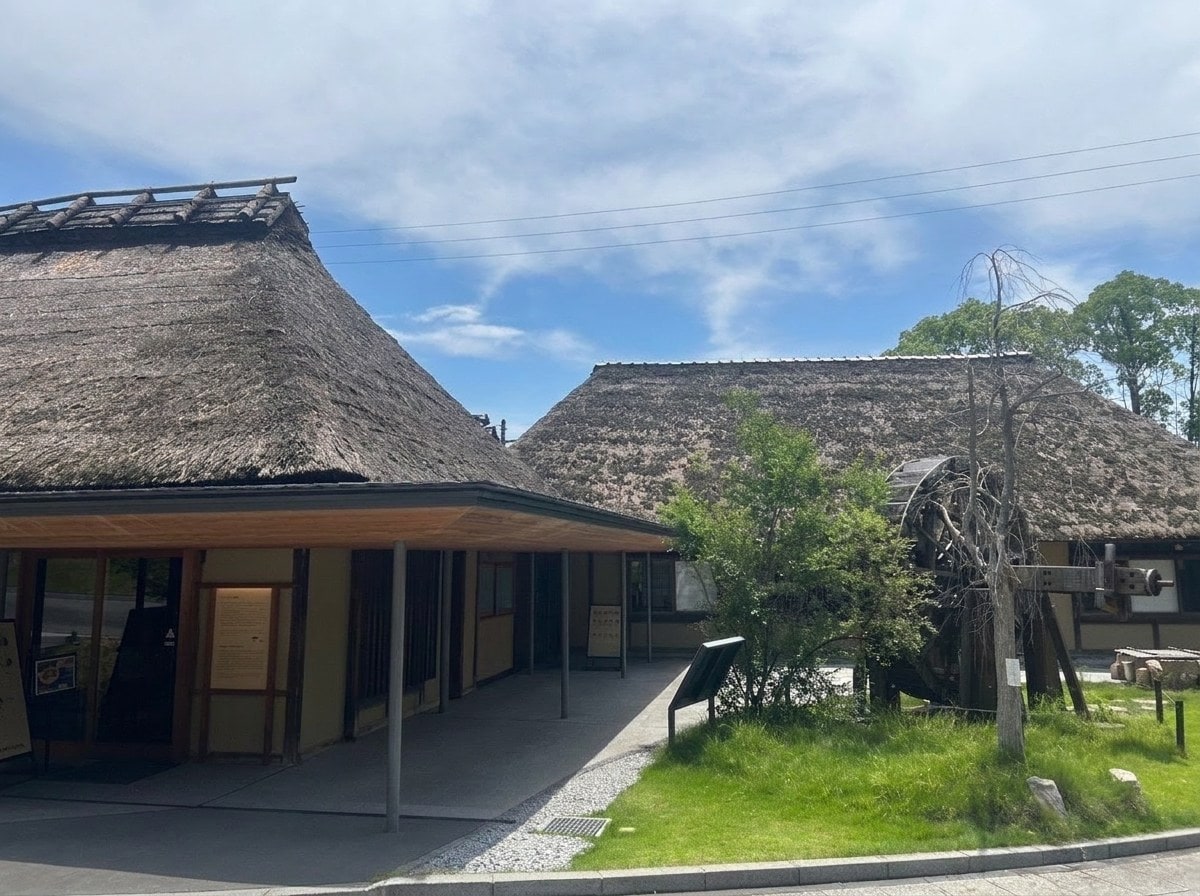
Kagawa, the small prefecture on the Seto Inland Sea, eats more udon — Japan’s thick white wheat noodle — per head than anywhere else in the country, and Wara‑ya is one of the houses the region measures itself by. Serving since 1975 at the foot of Yashima, the table‑topped mountain east of central Takamatsu, it stands at the gate of Shikoku Mura, an open‑air museum of relocated historic buildings — and the restaurant is one of them: a thatched farmhouse from the late Edo period, dismantled in the mountains of Tokushima and rebuilt here beam by beam. The name nods to zaigo, the Sanuki dialect word for the kind of country village the building left behind.
What you eat
Order kamaage udon: noodles boiled to order in a cauldron and brought still in their cooking water, undrained, so the surface stays silken while the core keeps koshi — the dense, springy chew Sanuki udon is judged on. You dip each mouthful in hot tsuke‑dashi, a soy‑and‑dried- fish dipping broth poured from a tall ceramic tokkuri (flask); the blend is the one recipe the house does not discuss. A small bowl is Everyday food. held at landmark level, not a splurge.
How it books — it doesn’t
There is no reservation book at all, and no phone call changes that: Sanuki udon runs on queues. What the arithmetic gives you instead is speed. Around 160 seats and a kitchen built for volume mean even the noon line moves in well under an hour; hours run 9:30–17:30 (last order 17:00), open year‑round, and before 11:30 or after 13:30 you often walk straight in. This is the rare house on our list where the desk’s work is not a phone call but a plan — we slot Wara‑ya into your Takamatsu day, between Ritsurin garden, the Yashima lookout and the museum next door, at the hour the queue is shortest.
Go if you
Want to eat the dish Kagawa actually eats, under a thatched roof rather than at a station stand — and will happily trade a reservation for a short, fast‑moving line and a ¥630 masterpiece.