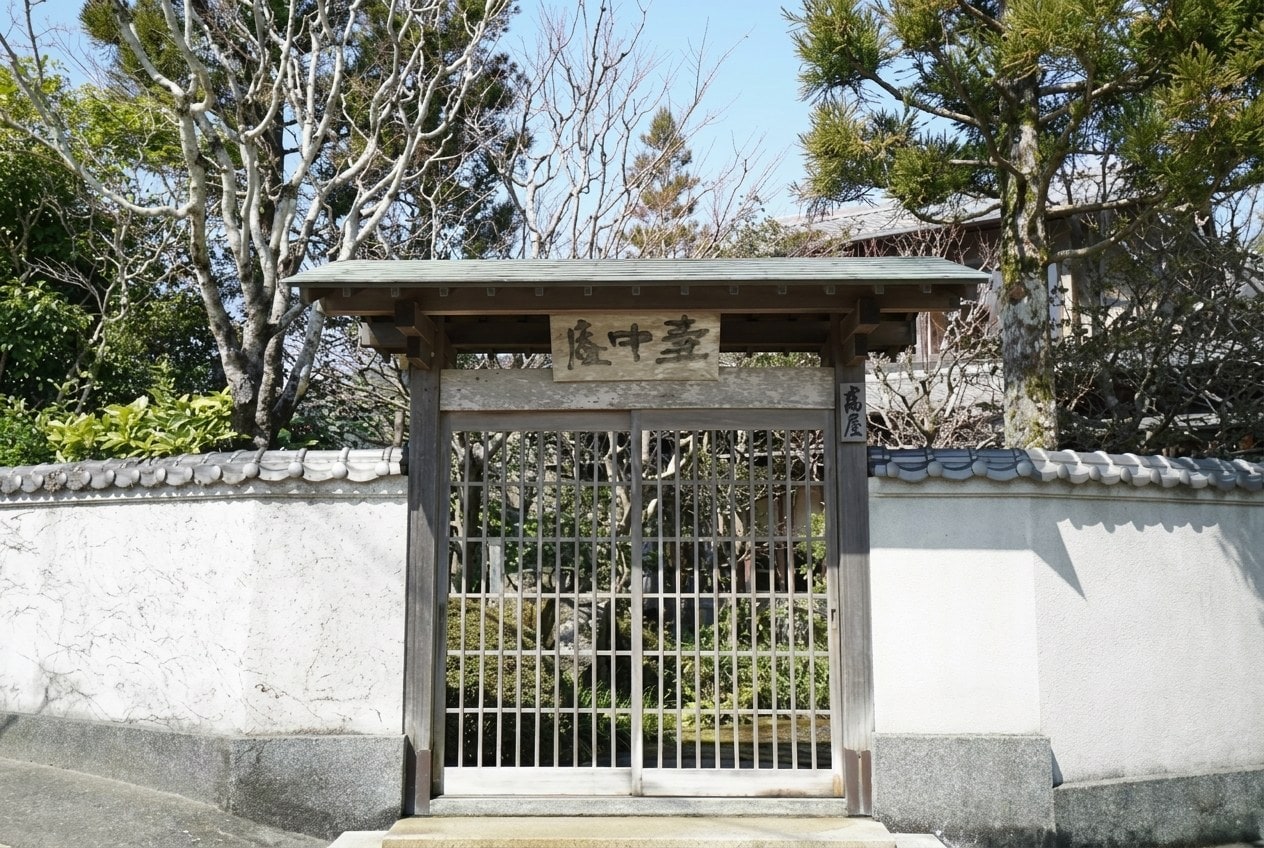
In shortKaiseki — Kitcho-trained, mountain-hermit edition. Reservations run in Japanese and are hard to place from abroad, so our Tokyo desk requests the table for you, by phone and in Japanese.
Price
Lunch ¥14,000 or ¥19,000. Prices are indicative, as listed on Ikyu (October 2026). · Dinner ¥19,000 (Ikyu, tax included, no service charge) Prices are indicative, as listed on Ikyu (October 2026).
Hours
Lunch 12:00 · Dinner 18:00 — one seating each, all guests start together, by reservation only
Closed
Irregular
Seats
About 15 across three private rooms, zashiki or table — no counter
Private rooms
All private rooms — three in all
Payment
Cards accepted
Getting there
Sanagochi village, 30–40 min by car from Tokushima City — fly Haneda→Tokushima (75 min); we arrange the driver
The name means “the world inside the jar” — an old Chinese tale of a
hermit whose tiny vessel held a paradise. It fits. Koji Iwamoto spent
his formative years at Arashiyama Kitcho, the Kyoto house that set the
modern standard for kaiseki — Japan’s formal multi‑course cuisine —
under its founder Teiichi Yuki. In 1985 he went home to Sanagochi, a
river village in the Tokushima mountains, rebuilt his family’s old
inn, and has spent forty years distilling Kitcho’s lessons to their
essence beside the Sonose River.
What you eat
His phrase is “deliciousness that doesn’t overreach”: broths built on
kelp and salt, soy sauce used in drops, a spareness critics compare to
ink‑brush painting. The wan — the clear‑soup course by which any
kaiseki kitchen is judged — holds a crab dumpling in that ringing
broth, and it is what regulars cross the country for. In summer he
serves ayu — sweetfish, the river fish of the Japanese summer — that
he catches himself, from rivers whose individual flavors he tells
apart; wild eel he has hooked becomes a closing tea‑rice. Autumn is
matsutake, the pine mushroom; winter, mountain venison. Gault &
Millau has kept him at three toques for five straight years.
The booking reality
The mechanics are strict and simple: reserve by phone in Japanese
(088‑679‑2305) or on Ikyu’s Japanese‑language booking page, no
later than the day before (cancellations cost 100% from three days out), and everyone starts together — lunch at
12:00, dinner at 18:00, one seating each, roughly three parties a
night in private rooms. Arrive late and the meal has left without you.
The booking, though, is the easy half. Sanagochi has no train, no bus
worth planning around, no taxi rank; the restaurant sits 30–40 minutes
by car from Tokushima City. What actually needs arranging is the
driver, the timing against your flight, and the call itself — one
Japanese phone conversation that fixes the date, the course, and any
dietary notes, which is precisely the package our desk assembles.
Have eaten the Kyoto canon and want to taste what one of its heirs
does with a mountain of his own — with a river past the window, and
Tokushima’s rewards (the Naruto whirlpools, the Iya Valley’s vine
bridges, the indigo workshops of “Japan blue”) bracketing the meal.
The house's cancellation charge
From 00:00 JST, 3 days before100%
Same day, with notice100%
Same day, no notice (no-show)100%
Charged by the house, not by us. A plan's own policy takes precedence.
Free release-date alerts: the day before, on the morning of release day (08:00 JST) and about 30 minutes before when the time is known — or a weekly summary if the house opens a little every day.
Toraya Kochuan: common questions
Can you book Toraya Kochuan from abroad?
Yes, through our Tokyo desk. Phone in Japanese (088-679-2305) or online on Ikyu (Japanese-language site), by the day before at the latest; 100% cancellation charge from three days before; lunch and dinner each start all together, at 12:00 and 18:00. Deep in a village with no public transport — the car and driver are part of the reservation. We call the restaurant for you, in Japanese, and the ¥6,000-per-seat fee is charged only if we confirm your table — no seat, no fee.
Some of these links are referral links: if you book through them we may earn a small commission, at no extra cost to you. Restaurants never pay us to be listed or ranked. Editorial policy
Cite this page
Facts on this page were checked by our Tokyo desk. You are welcome to quote them with a link: