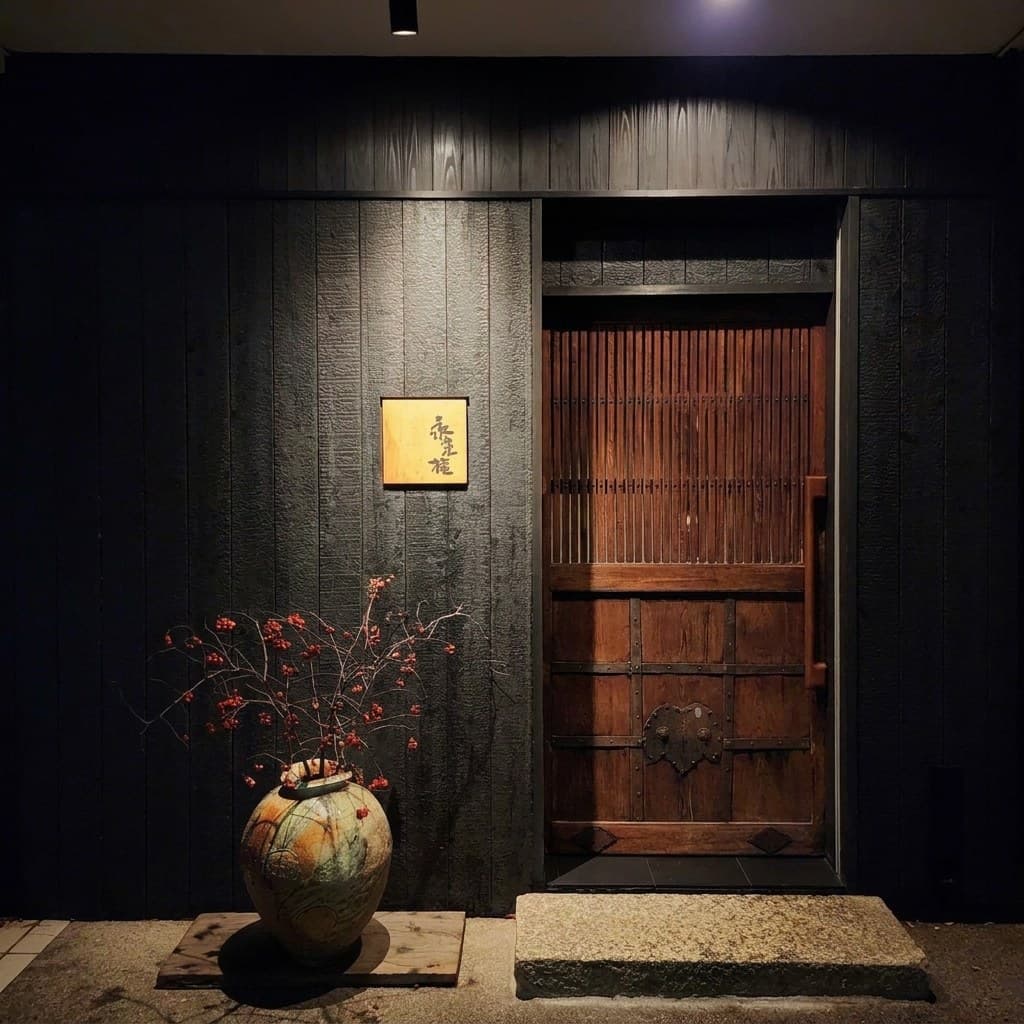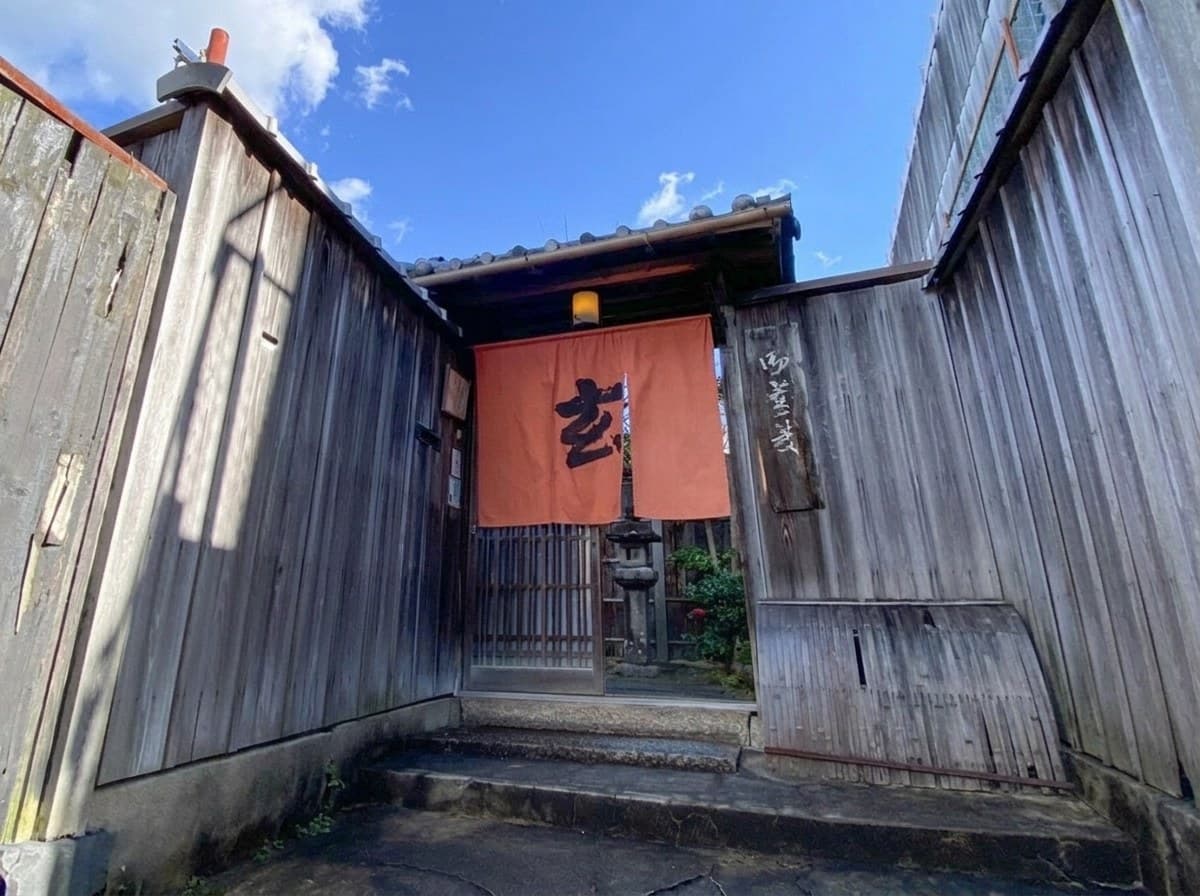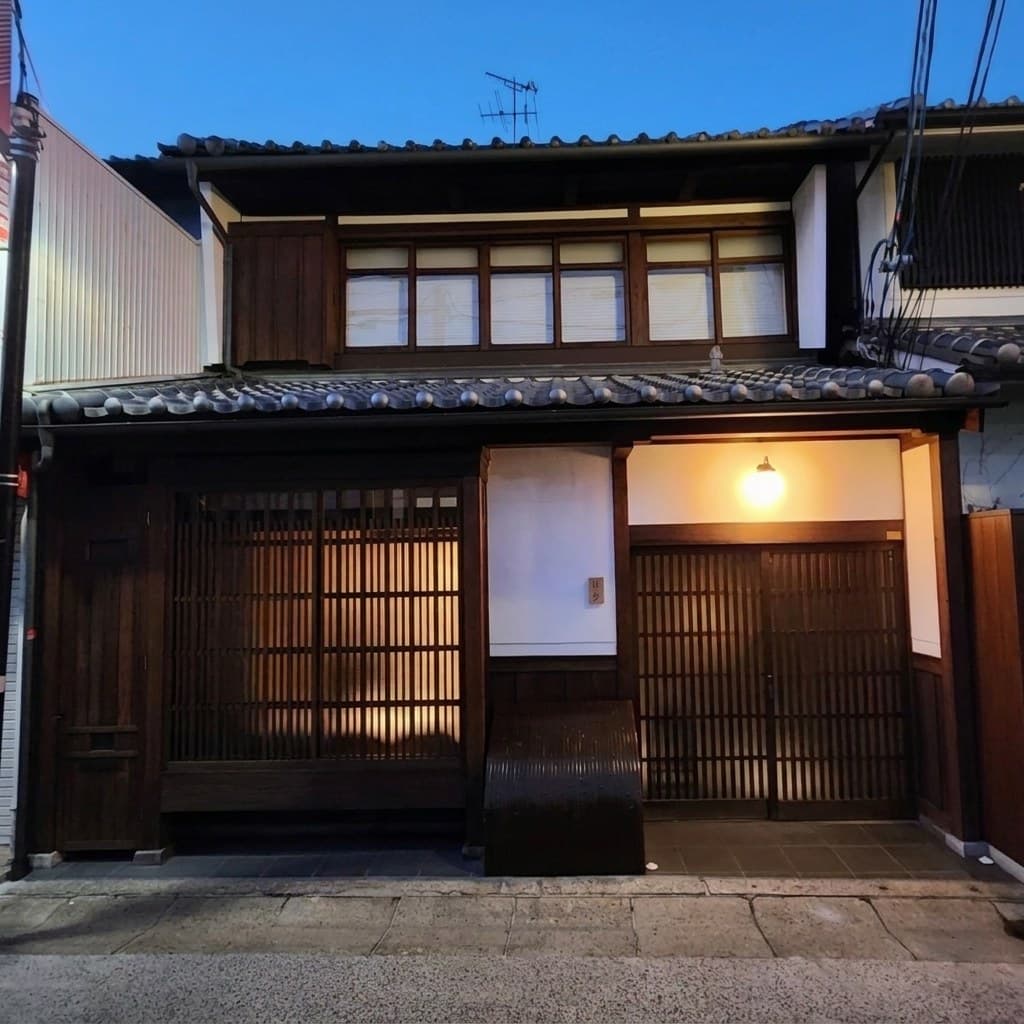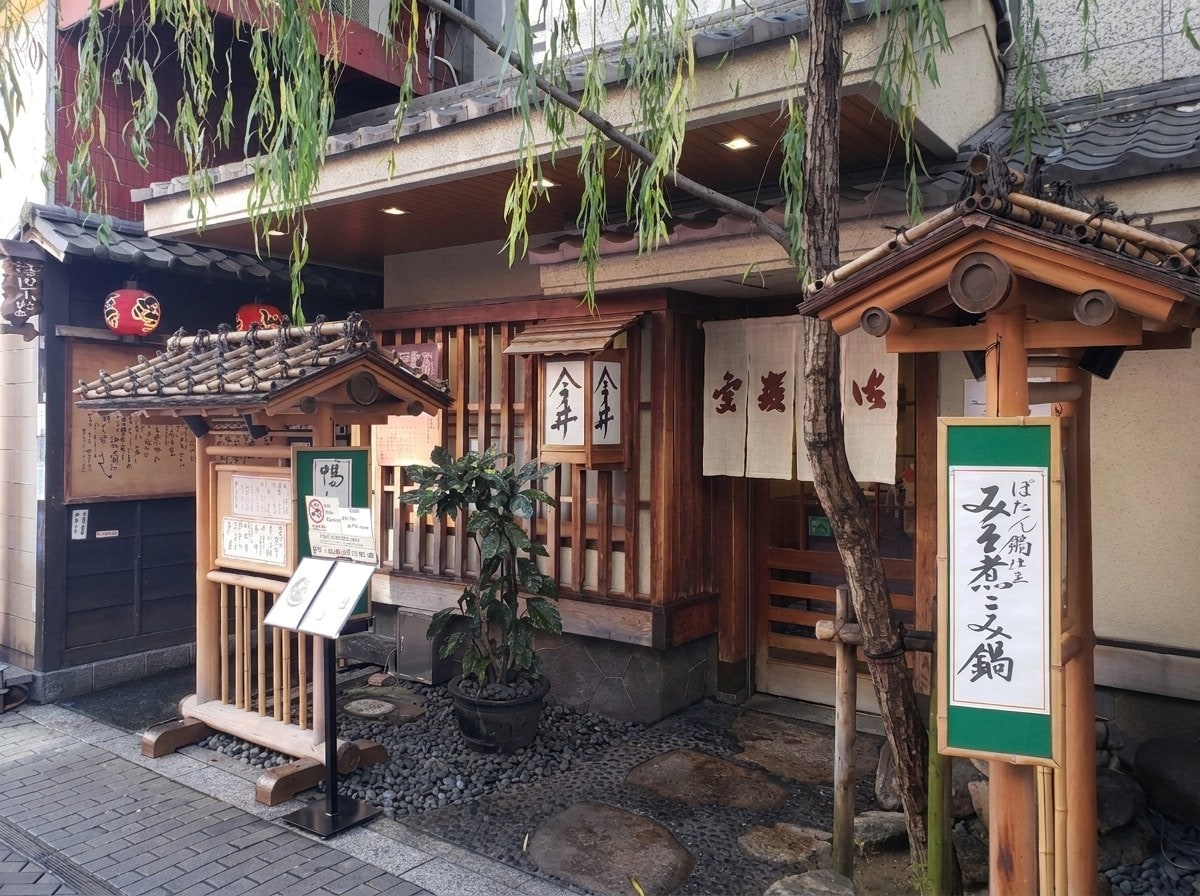
On the loudest stretch of Dotonbori, where the canal glows with neon and signboards, one storefront lowers its voice: a willow tree, a paper lantern, a curtain. Dotonbori Imai opened here in 1946, though its family traces further back — to Inatake, a theater teahouse founded in 1838, in the days when this street was Osaka’s playhouse district. Step through the curtain and the noise falls away.
What you eat
The house bowl is kitsune udon: soft, gently springy noodles under a slick of sweet fried tofu. The soul of it is the dashi: natural makombu from southern Hokkaido drawn with saba‑bushi (mackerel) and urume‑bushi (round herring) at one to two (souda‑katsuo is on the list too), brewed as it is needed rather than held in a pot all day. It arrives pale gold and almost clear, and it is the reason Osakans speak of Imai the way others speak of a shrine.
The kitsune is ¥930 including tax here at the honten — pocket change for a dish this argued‑over — and the rest of the menu keeps pace: tempura udon, soba for the contrarians, a proper oyakodon — chicken and egg over rice — and in the cold months seasonal bowls the regulars watch for. Whatever you choose, drink the broth to the bottom. That is the point of the exercise.
Honten, and the others
Imai’s name travels. There are branch counters on the restaurant floors of department stores — Hankyu Umeda among them — and boxes of its dashi and noodles sell as gifts across Kansai. But the honten, the main house, is this one. Between the teahouse era and the noodles, the family spent decades here as a musical‑instrument shop; after the raids of 1945 burned them out, they came back to Dotonbori in 1946 selling sweets and seasonal fare. Noodles sold on the side grew into a soba and udon shop, and in 1949 Machiko Imai completed the dashi. If you have seen the name elsewhere, this doorway under the willow is where it starts.
How a visit works
For a bowl of udon there are no reservations — the queue is the system (only course meals such as the udon yosenabe hotpot can be booked, by the day before, by phone in Japanese or by fax — never by email). Doors open at 11:30 and service runs straight through to 21:30 (last food order 21:00; hotpot 19:30), so the trick is timing: come right at opening, or drift in mid‑afternoon when the line thins to nothing. Peak lunch and the evening surge bring a queue on the sidewalk, but the room is large and it moves steadily. The shop closes on Wednesdays (open when a Wednesday is a national holiday) and on the fourth Tuesday of each month except December, and cards and e‑money are fine; only QR payments are not. Getting there is simple: the honten stands mid‑block on the Dotonbori strip, a few minutes on foot from Osaka Metro Namba — surface at Ebisubashi bridge and walk east along the canal until the neon gives way to a willow.
The quiet doorway
The contrast is the experience. Outside is the full carnival of Dotonbori; inside is a hushed room with tatami seating and the smell of kelp broth. The willow and the lantern out front have become a landmark in their own right — a fixed point of old Osaka on a street that reinvents itself every few years. Even in the queue, no one seems to mind the wait: the willow shades the line, and the room ahead is quiet.
Save it for
The moment mid‑trip when the spectacle of Dotonbori starts to wear, and you want one warm, honest bowl that has been made the same way since long before the neon arrived.