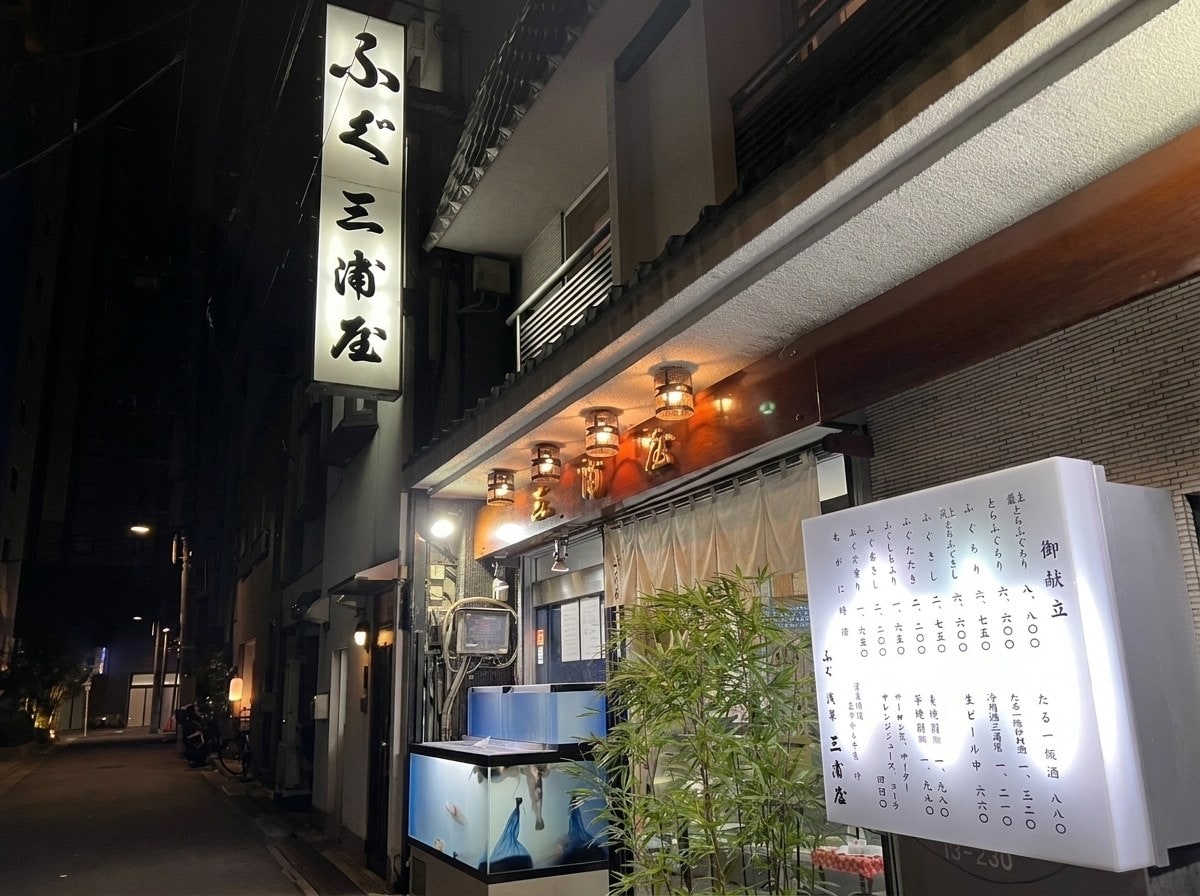
In shortFugu — à la carte only, two species at two price tiers. Reservations run in Japanese and are hard to place from abroad, so our Tokyo desk requests the table for you, by phone and in Japanese.
Price
Shōsai-fugu sashimi or hot pot ¥3,300 · torafugu hot pot ¥6,600–8,800 · top-grade torafugu sashimi ¥7,150
Summer break each year (14 Jul–3 Sept in 2026) · year-end break late Dec–early Jan · Wed & Thu (Apr–Jul, Sep–Oct); Thu only (Nov–Mar)
Seats
66 in use — ground floor counter 8 and sunken-hearth seats 18; first floor tables 40
Private rooms
None
Payment
Cards accepted — Visa, Mastercard, JCB (no e-money or QR codes)
Getting there
Asakusa (Tsukuba Express), 3 min — in Kannon-ura, the geisha quarter behind the temple
Fugu — the pufferfish whose toxin only licensed chefs may handle —
usually comes robed in ritual: fixed courses, hushed rooms, price
tags to match the poison’s reputation. Miuraya, serving Asakusa
since 1963, keeps the older spirit. The Edo townsman’s verse ran "I
want to eat fugu, but I want to live," and when they ate it anyway,
they ate it casually. There is no course menu. The house creed
is fugu at popular prices, ordered dish by dish — as much sashimi,
as much hot pot as you actually want.
What you eat
Fugu bought each morning at Toyosu, and — the detail that tells you
this house is honest — two species on one menu. Shōsai‑fugu,
the smaller everyday pufferfish, puts tessa (paper‑thin sashimi,
fanned like a chrysanthemum) or tecchiri (the hot pot, finished
as rice porridge) on your table for ¥3,300 a plate. Torafugu, the
prized tiger pufferfish, runs ¥6,600–8,800 for the pot and ¥7,150
for the top‑grade sashimi, cut thick enough to roll around chives.
Around them: chewy skin sashimi, fried “spare ribs,” nikogori
(the fish’s own broth set into a cold jelly), and in deep winter
the prize — shirako, the milt, grilled to a custard crisp for
¥3,520, the reason regulars watch the calendar.
The booking reality
The telephone, in Japanese, and nothing else — no booking platform
carries this house. The rhythm matters more than the race: Miuraya
sleeps all summer (14 July to 3 September in 2026) and wakes with
the fish; November through February the 66 seats fill, and last
entry is 19:00 sharp. A Japanese call settles the things the phone
line exists for — which species, which tier, hearth seats or the
counter — which is exactly what a desk in Tokyo does before you land.
Winter visitors doing fugu for the first time without the
formal‑course markup, eaters who like a menu that admits its own
price tiers, and anyone exploring Kannon‑ura — the lantern‑lit
geisha lanes behind Sensō-ji — after dark.
Free release-date alerts: the day before, on the morning of release day (08:00 JST) and about 30 minutes before when the time is known — or a weekly summary if the house opens a little every day.
Miuraya: common questions
Can you book Miuraya from abroad?
Yes, through our Tokyo desk. Phone only, in Japanese. Winter — the fugu season — books out; the house closes entirely each summer (in 2026, 14 Jul–3 Sep). We call the restaurant for you, in Japanese, and the ¥6,000-per-seat fee is charged only if we confirm your table — no seat, no fee.
Some of these links are referral links: if you book through them we may earn a small commission, at no extra cost to you. Restaurants never pay us to be listed or ranked. Editorial policy
Cite this page
Facts on this page were checked by our Tokyo desk. You are welcome to quote them with a link:
Miuraya — Asakusa (Kannon-ura), Tokyo — SHOKU NOREN (checked September 2026). https://shokunoren.com/restaurants/miuraya-asakusa