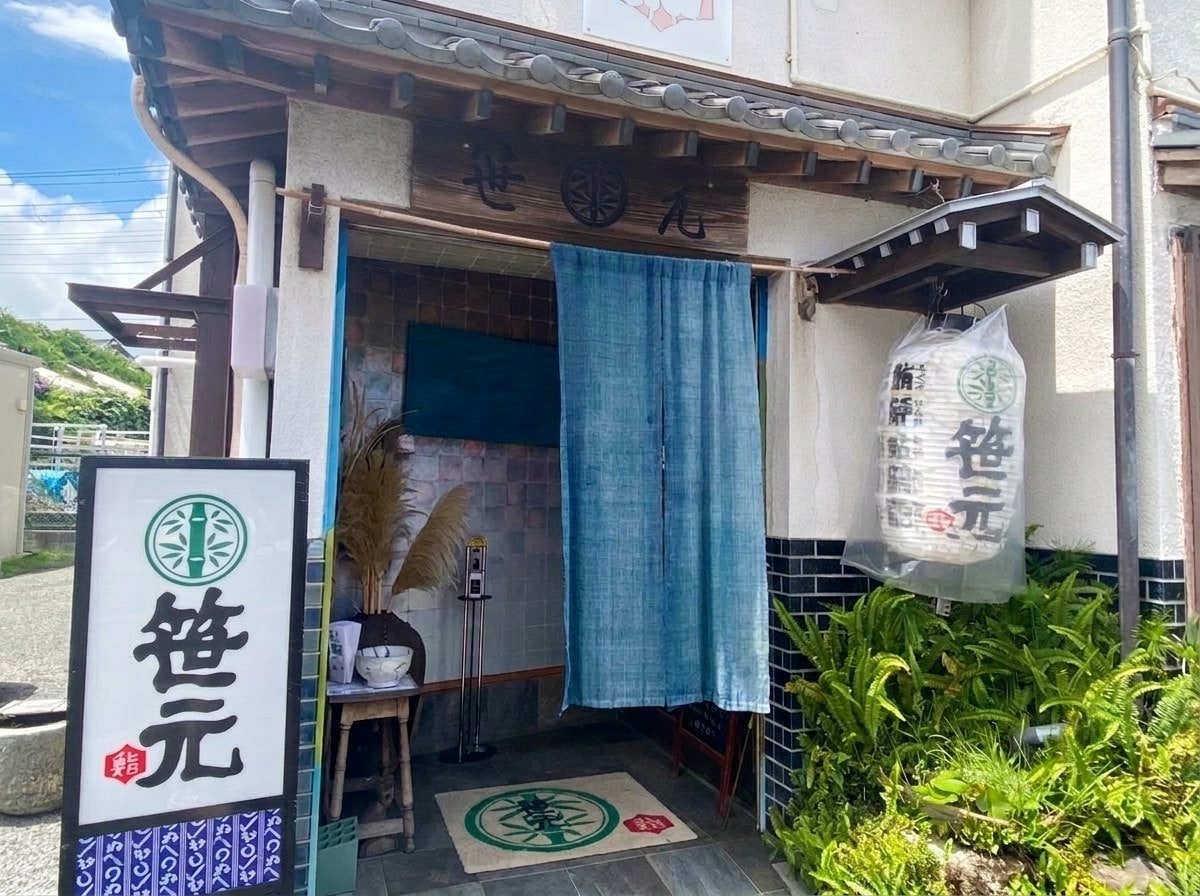
In shortBoso-coast Edomae sushi with a charcoal-grilled signature. Reservations run in Japanese and are hard to place from abroad, so our Tokyo desk requests the table for you, by phone and in Japanese.
Price
Sets from ~¥1,600 · local-fish sushi (8 pieces + hand roll) ¥3,800 · omakase ¥5,000 · weekday bara-chirashi ¥2,100
Hours
11:00–14:15 · 17:00–20:30 (last orders may move earlier with the day's catch)
Closed
Tuesdays (open when a national holiday falls on one; a few consecutive-day closures a year)
Seats
About 45 — a 9–10 seat counter and first-floor tatami, plus rooms upstairs
Private rooms
Rooms for 2, 8, and 10–20
Payment
Cards (VISA · Mastercard · JCB · AMEX · Diners) · e-money and QR codes accepted
Getting there
About a 5-minute walk from Awa-Kamogawa Station on the JR Uchibō / Sotobō lines
Dress code
No dress code
Most great sushi asks you to come to the city. Sasamoto asks you to
go to the sea. Kamogawa sits at the far end of the Boso peninsula,
the arm of land that shelters Tokyo Bay, and the fish here comes off
boats working the coast outside the door — which is why the menu
tracks the day’s landings rather than a Tsukiji‑descended market
list, and why last orders genuinely move earlier when the boats come
in light. The house has run on that arithmetic since 1977.
What you eat
The signature is ganso yaki‑zushi — literally "the original grilled
sushi," a dish this house invented: the skin side of a local fish is
seared over charcoal before the slice is pressed onto rice as nigiri
(the hand‑formed piece you know). The sear renders the fat under the
skin and puts smoke where soy usually goes — a mechanism, not a
garnish, and one a Tokyo counter has no reason to replicate because
Tokyo fish arrives filleted from a market, not whole from a beach.
Around it: local‑fish nigiri sets, a ¥5,000 omakase (chef’s‑choice
course), and a weekday bara‑chirashi — scattered sushi over rice —
that makes the two‑hour train ride feel rational.
The booking reality
Here is the detail that matters: the counter cannot be reserved.
The restaurant takes bookings by phone or online through Tabelog or Ikyu, but those bookings are for the
tatami rooms and tables — the nine or ten counter seats are first‑come only. A week ahead is usually enough, and when the website shows full, a call often still finds a seat. So the workable plan from abroad is a Japanese
phone call that secures a room for a set time, confirms that
Tuesday‑closure and holiday‑swap calendar, and asks what the boats
have been bringing in — then an early arrival if the counter is the
point. That is a conversation, not a form, and it is the kind our
desk has daily.
You want a day on the Boso coast — the sea road, Kamogawa’s shoreline,
maybe the surf towns — anchored by sushi whose logic is the beach
outside, not a metropolitan supply chain. Bring an appetite for the
grilled piece; it exists nowhere else.
Free release-date alerts: the day before, on the morning of release day (08:00 JST) and about 30 minutes before when the time is known — or a weekly summary if the house opens a little every day.
Sushi Sasamoto: common questions
Can you book Sushi Sasamoto from abroad?
Yes, through our Tokyo desk. Phone in Japanese, or online via Tabelog (which has English pages) or Ikyu — tables and tatami rooms only; the counter is first-come and never reserved. We call the restaurant for you, in Japanese, and the ¥6,000-per-seat fee is charged only if we confirm your table — no seat, no fee.
Some of these links are referral links: if you book through them we may earn a small commission, at no extra cost to you. Restaurants never pay us to be listed or ranked. Editorial policy
Cite this page
Facts on this page were checked by our Tokyo desk. You are welcome to quote them with a link: