In shortEdo tempura — sesame oil, one secret kakiage. Reservations run in Japanese and are hard to place from abroad, so our Tokyo desk requests the table for you, by phone and in Japanese.
Price
Set meals from ¥3,850 · private-room courses ¥8,800–22,000 (+10%)
60 in the hall — plus six private rooms and a 28-guest banquet room
Private rooms
Yes — six garden rooms (4 to 16) and a 28-guest hall; private rooms take course bookings only
Payment
Cards accepted (no e-money or QR codes) · +10% service
Getting there
Asakusa Stn, 5 min walk — beside the Asakusa Public Hall, two lanes from Sensō-ji
Dress code
No dress code
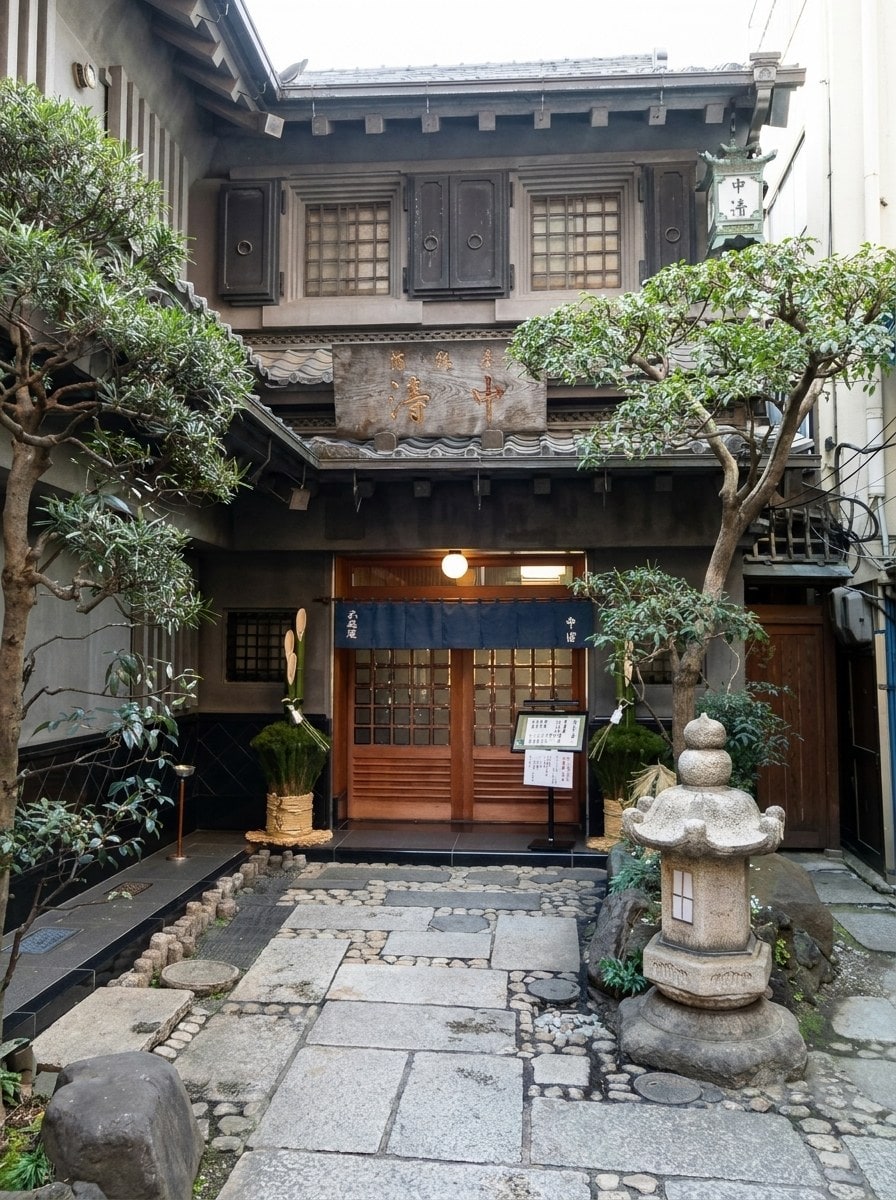
A samurai from Suruga came to Edo — the old name for Tokyo — at the fall
of the shogunate and started frying tempura from a street stall. By 1870
his family had a shophouse in Asakusa, and they are still there: burned
down by the 1923 earthquake and again by the war, rebuilt twice, five
generations in. The novelist Kafū Nagai wrote the place into his fiction;
Shōtarō Ikenami, the great chronicler of old Edo, was brought here as a
boy by his grandfather. Behind the storefront hides what no passerby
suspects — a courtyard koi pond ringed by sukiya‑style rooms, the
tea‑house architecture of restrained wood and paper.
What you eat
Edo‑style tempura fried in sesame oil — the old Tokyo method, which fries
darker and more fragrant than the pale, neutral‑oil style — served in the
house’s Wajima lacquer boxes. The legend is the Raijin‑age, the
“thunder‑god fritter”: a dome of shiba shrimp and scallop, named for the
drum of the Kaminarimon gate a few lanes away. Its frying technique
passes to one heir per generation and has never been written down. Order
it as the centerpiece of a garden‑room course, or over rice at the
everyday tables.
The booking reality
The house runs two systems side by side. The sixty‑seat hall takes no
reservations of any kind: you queue like a local, which at lunch on a
weekday is a short wait. The six garden rooms around the pond seat four
to sixteen, take course bookings only (¥8,800–22,000, plus 10 percent
service), and can be booked by phone in Japanese or online on Ikyu and
Tabelog, both Japanese‑language sites; a conversation about the
occasion, the menu or children still goes best by telephone.
Cancellation costs 50% the day before and 100% on the day, and a
table thirty minutes late without word is released. Tuesday and Wednesday are dark, and weekends run
continuous service from 11:30. That phone call, in Japanese, with the
course agreed in advance, is precisely what our desk does — and it turns
a queue‑and‑point lunch into a room of your own beside the pond.
Asakusa day‑trippers upgrading their lunch; literature lovers following
Kafū's Tokyo; families marking an occasion — the house has welcomed
children’s celebrations for generations, and the private rooms exist for
exactly that.
The house's cancellation charge
From 1 day before50%
Same day, with notice100%
Same day, no notice (no-show)100%
Charged by the house, not by us. A plan's own policy takes precedence.
Free release-date alerts: the day before, on the morning of release day (08:00 JST) and about 30 minutes before when the time is known — or a weekly summary if the house opens a little every day.
Tempura Nakasei: common questions
Can you book Tempura Nakasei from abroad?
Yes, through our Tokyo desk. The garden rooms take course-only bookings by phone in Japanese or online on Ikyu and Tabelog (Japanese-language sites); the regular tables take no reservations at all. We call the restaurant for you, in Japanese, and the ¥6,000-per-seat fee is charged only if we confirm your table — no seat, no fee.
Some of these links are referral links: if you book through them we may earn a small commission, at no extra cost to you. Restaurants never pay us to be listed or ranked. Editorial policy
Cite this page
Facts on this page were checked by our Tokyo desk. You are welcome to quote them with a link:
Tempura Nakasei — Asakusa, Tokyo — SHOKU NOREN (checked September 2026). https://shokunoren.com/restaurants/nakasei-asakusa