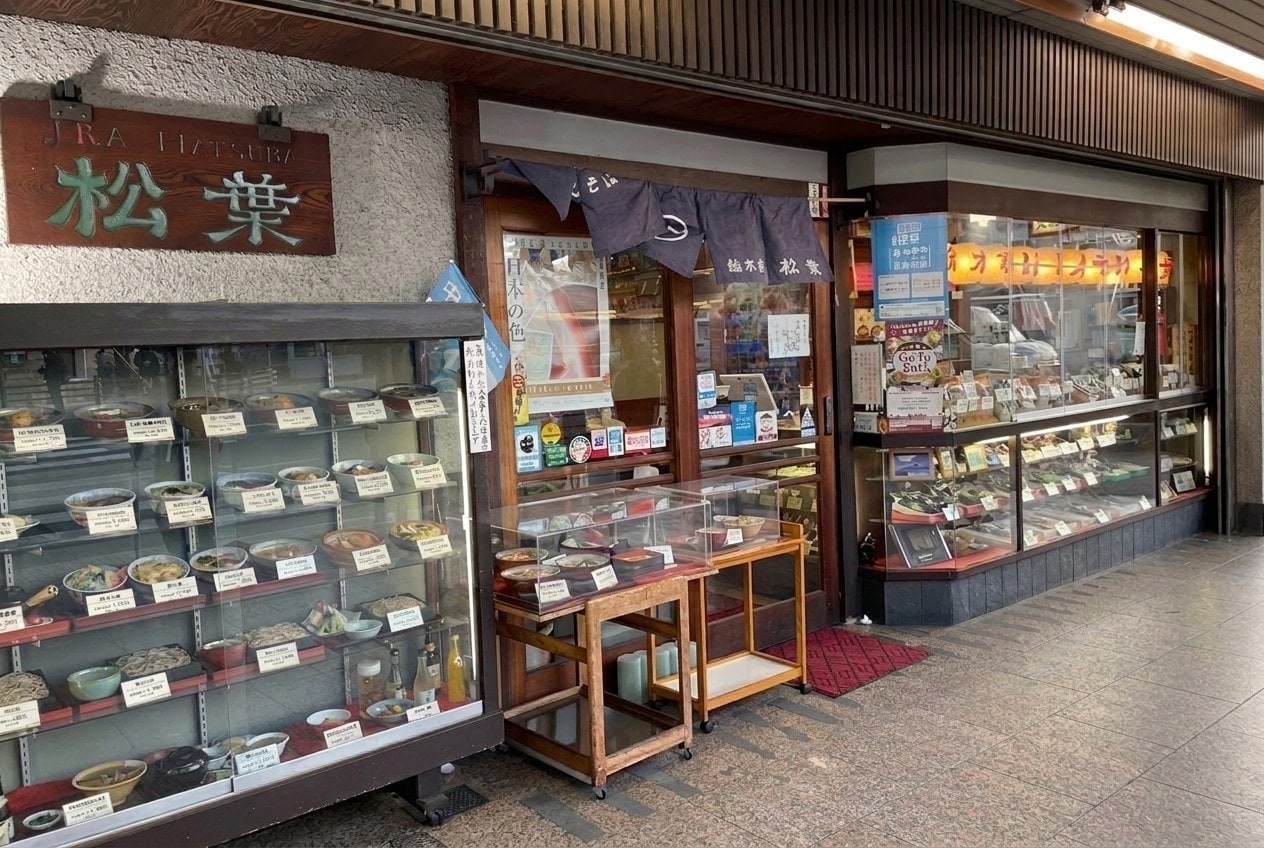
Matsuba is where nishin soba — dried herring simmered soft and laid over hot buckwheat noodles — was invented, and it has not moved an inch since. The first Matsuno opened a soba shop beside the Minamiza, Kyoto’s kabuki theater (kabuki — Japan’s classical theater, still staged there today), in 1861. In 1882 his son, second‑generation Yosakichi Matsuno, put the two halves of the dish together. The logic was geography: Kyoto sits ringed by mountains, far from any coast, so for centuries its protein arrived preserved — and herring came as migaki‑nishin, fish dried hard in Hokkaido and carried down the Japan Sea by kitamaebune, the coastal trading ships, then inland by lake and river to the city. Yosakichi’s problem was the bones; his answer was to simmer the dried fish sweet and dark until bones and all gave way, then set it over soba. The bowl carried across the whole city within years, and it still defines the dish.
What you eat
Nishin soba, ¥1,870. The herring is cooked to the house’s guarded recipe — the same preparation it sells on its own as nishin bōni (whole simmered herring, a registered trademark of the house). It comes out glossy, sweet‑salty, soft to the spine. It goes over buckwheat noodles in a kelp‑based Kyoto broth, and the fish’s oil bleeds slowly into the dashi as you eat, so the bowl deepens from first sip to last. Made originally for theatergoers, it still eats like something between acts: one bowl, complete.
The walk‑in reality
Matsuba takes no reservations for its soba — for a bowl of noodles you simply walk in. The exception is its boxed meals and set meals, such as the Hanamichi bento: those are reservation‑only, by phone to the main shop (075‑561‑1451) by the day before. The room is bigger than the storefront suggests, with upper‑floor and tatami seating, and turnover is quick; outside peak lunch you generally walk straight in. The pinch points are predictable: midday in tourist season, and December, when the Minamiza’s year‑end kabuki program fills the block and year‑end soba custom fills the shop. What a desk adds here is timing — steering you to an off‑peak hour, or folding the bowl into a Gion day where the reservations that do exist actually land. Closed Wednesdays; open through the evening to 20:30 last order, when the room is calmest.
Go if you
You want to eat a dish standing in the exact spot it was invented, for the price of a bowl of noodles — and you would rather understand why herring is in Kyoto at all than be told something is famous.